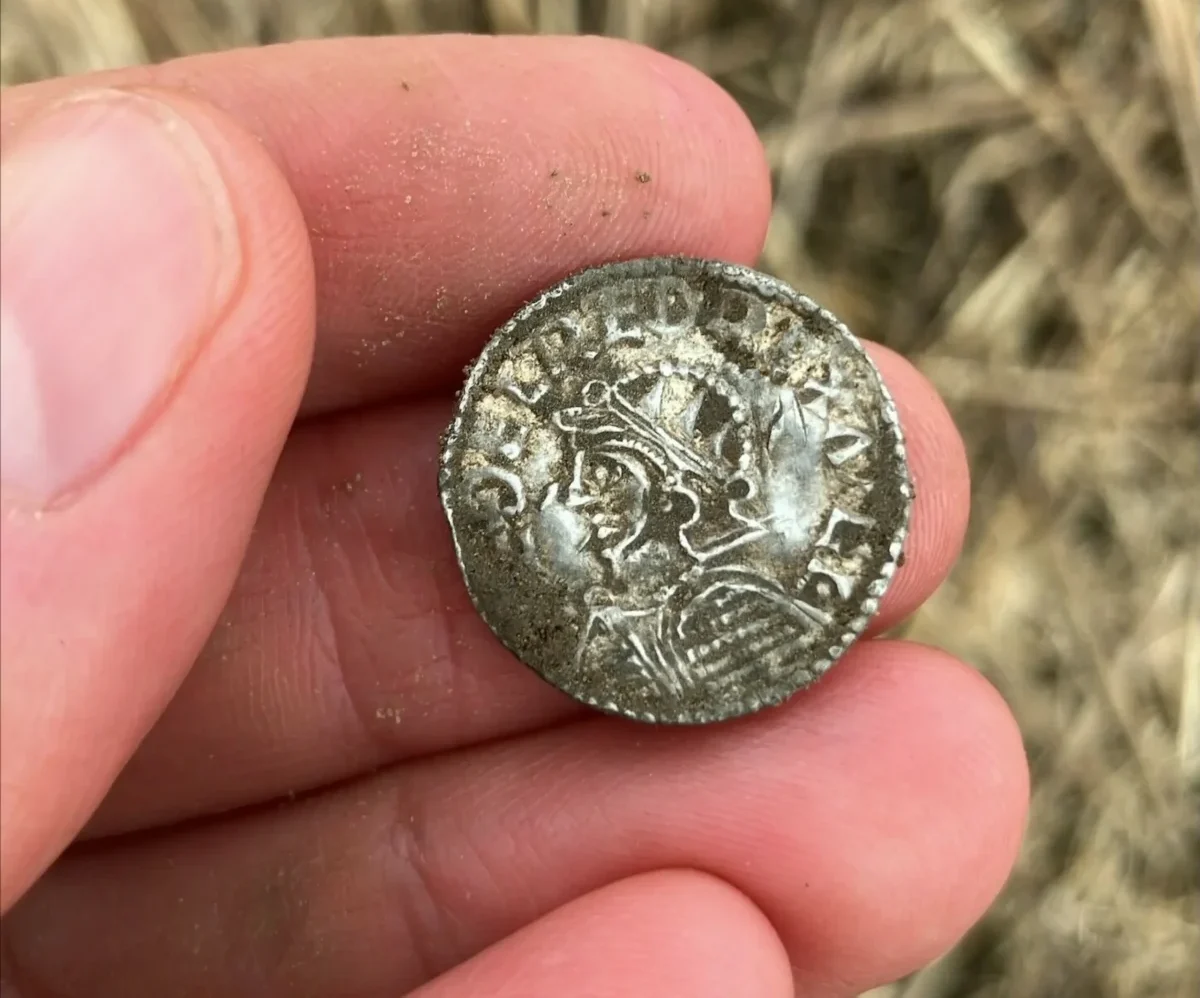
The first signal revealed only a handful of silver coins. Then the field near Rena kept answering.
What began on April 10 as a metal detector discovery in eastern Norway has grown into one of the most important archaeological finds ever made in the country: more than 3,000 coins from the late Viking Age. The treasure, now known as the Mørstad Hoard, has been identified as Norway’s largest known Viking Age coin hoard, surpassing all previous finds of its kind.
Detectorists Vegard Sørlie and Rune Sætre first uncovered 19 silver coins in a field near the Mørstad farm, close to Rena in Innlandet County. They quickly understood that the discovery required professional attention and stopped the search. Archaeologists were brought in, and the scale of the find soon changed dramatically.
By the end of the first day of archaeological work, the number had risen to around 70 coins. Then it kept climbing. Hundreds became thousands. This week, the count passed 3,000, and the detectors were still producing signals from the soil.
For May-Tove Smiseth, the archaeologist responsible for metal detector finds in Innlandet County Municipality, the discovery has been extraordinary in both size and preservation. She described the find as completely unprecedented, noting that many of the coins appear almost newly minted.
A record-breaking treasure beneath an ordinary field
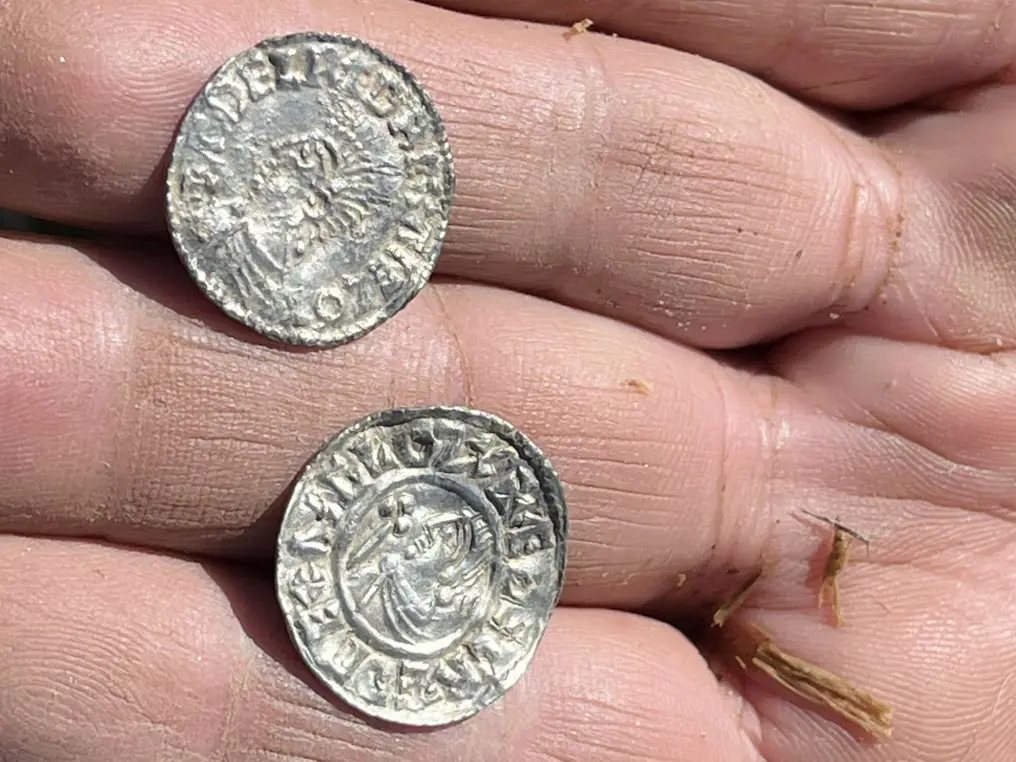
The Mørstad Hoard did not emerge from a royal burial, a fortress or a known settlement site. It came from a field that had never previously been searched by metal detectorists. That makes the discovery even more striking.
Archaeologists believe the coins were originally buried together, probably inside a leather pouch or another container made from organic material. Over the centuries, that container decayed. Later farming likely disturbed the deposit, spreading the coins across the ploughed field.
This explains why the treasure did not appear as one compact mass. Instead, it surfaced gradually, signal by signal, as detectorists and archaeologists traced the scattered silver through the soil.
The condition of the coins is unusually good. The field’s soil contains very little stone, which may have helped protect the silver from heavy damage. For researchers, this preservation is crucial. Coin inscriptions, mint marks, weight, wear and metal composition can all reveal how money moved across northern Europe more than 900 years ago.
English, German and Norwegian coins in one hoard
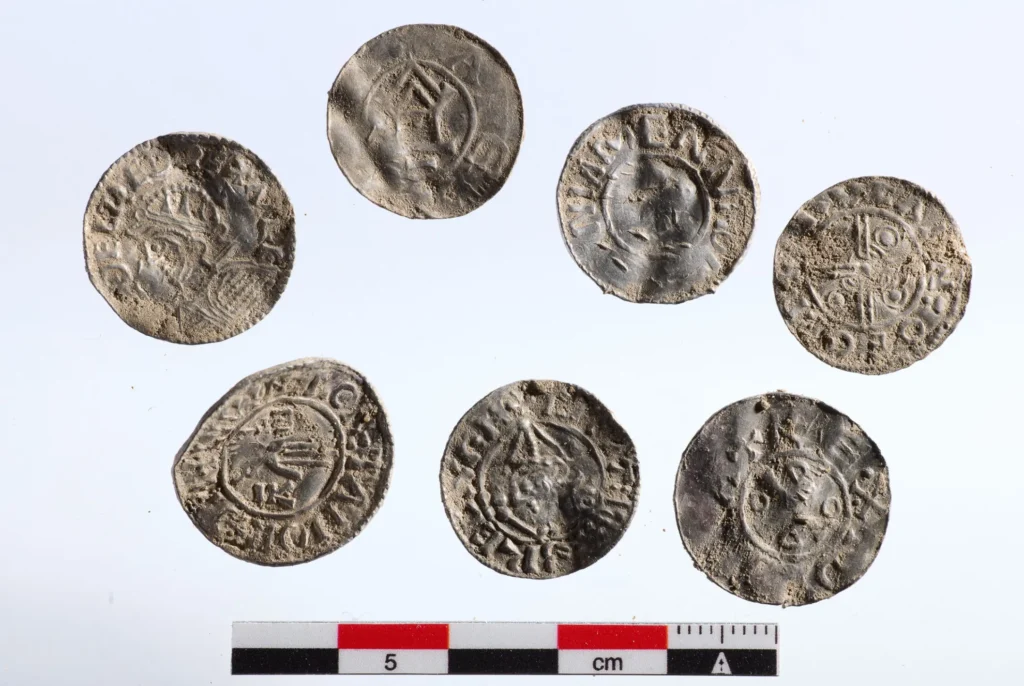
Most of the coins identified so far appear to be German and English issues from the late Viking period. That fits a wider pattern seen across Scandinavia and northern Europe. Foreign coins often travelled long distances through trade, political payments, tribute, raiding networks and the movement of silver by weight.
In that sense, the Mørstad Hoard is not only a Norwegian discovery. It is evidence of a wider economic world in which silver connected communities across seas, kingdoms and trading routes.
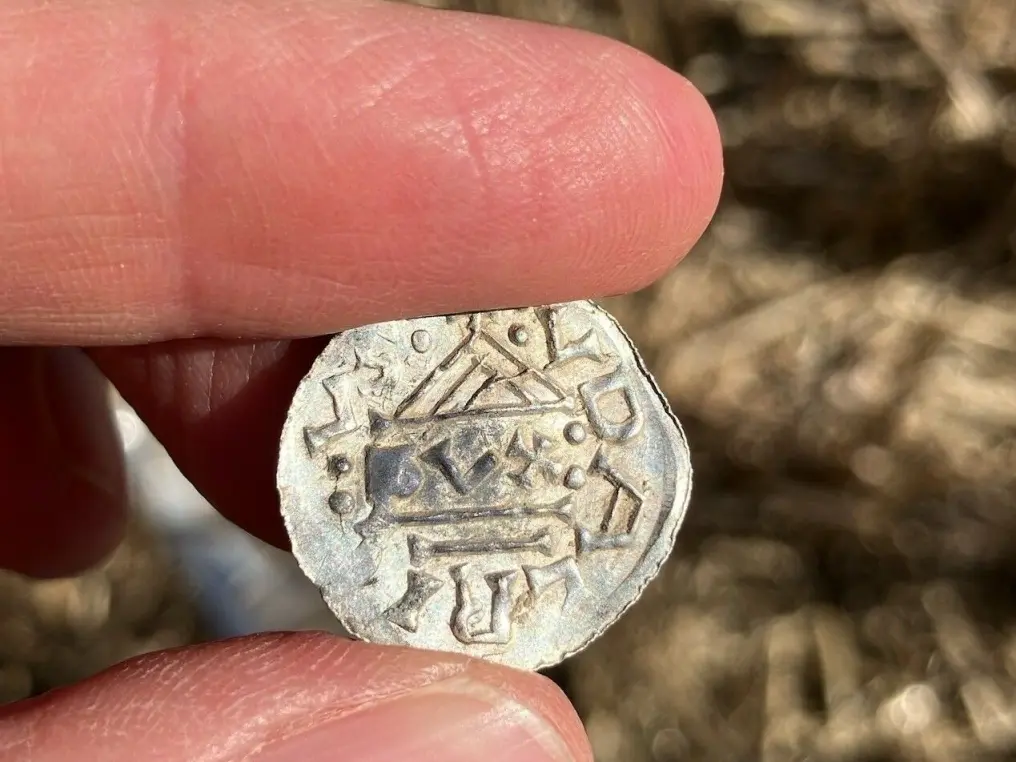
Professor Svein Harald Gullbekk, a coin expert at the Museum of Cultural History in Oslo, has described the hoard as truly exceptional. Previous Viking Age coin hoards in Norway have reached around 2,000 coins, but none had passed the 3,000 mark until now.
One of the most important details is the presence of Norwegian coins. These pieces were likely newly minted when the treasure was placed in the ground. Their inclusion links the hoard to a significant moment in Norwegian history, when royal coinage was beginning to take firmer shape.
Harald Hardrada, who returned from Byzantium around 1045, is closely associated with the development of a Norwegian national minting system. If the Mørstad Hoard was buried around 1050, as experts currently suggest, it belongs to this decisive period. Norway was still deeply tied to the silver economy of the Viking world, but royal authority was also becoming more visible through coin production.
Its importance lies not only in the number of coins, but in the moment they represent.
Why would someone bury such wealth?
The question at the heart of the discovery is simple: why did someone place more than 3,000 coins in the ground?
During the Viking Age, burying valuables was not unusual. Some deposits may have had ritual meaning. Others were probably hidden for safety during times of conflict, travel, political uncertainty or personal danger. In a world without banks, the ground could serve as the safest place to protect wealth.
Gullbekk has compared the Mørstad Hoard to a kind of safe deposit box. Someone, perhaps an individual, a household or a family group, hid a major fortune in the earth. The plan may have been to return later. For reasons that remain unknown, that never happened.
The original value of the hoard is difficult to measure. Written price records from Viking Age Norway are limited. Still, comparisons with later medieval property transactions suggest that a treasure of this scale may have been enough to buy a farm. This was not a small personal reserve. It was a serious store of wealth.
The search is not over
Archaeologists have already surveyed the area with ground-penetrating radar, but so far no clear buildings or buried structures have been identified near the findspot. That absence does not make the site less important. The landscape may have held meaning for the person who buried the treasure, even if those markers have disappeared.
The field and surrounding area are expected to remain under investigation for future seasons. More coins may still be present, especially if the original deposit was widely disturbed by ploughing. Every additional piece could help researchers refine the date, origin and composition of the hoard.
For now, the Mørstad Hoard has already changed the record of Viking Age archaeology in Norway. What began with 19 coins has become the country’s largest known coin treasure from the period, a rare silver archive from the final phase of the Viking world.
The field near Rena may look ordinary from the surface. Beneath it, however, someone once placed a fortune that waited almost a thousand years to be found.
Cover Image Credit: Museum of Cultural History / Innlandet County Municipality