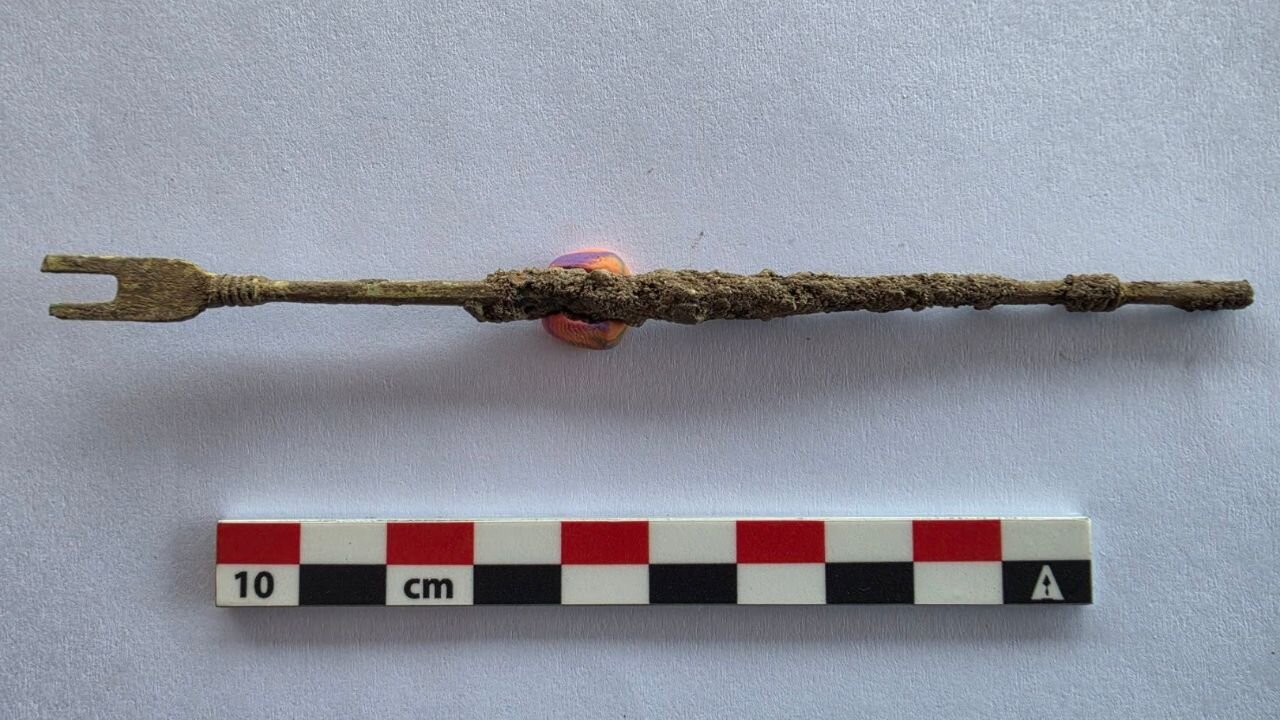
Archaeologists excavating the ancient city of Heraclea Sintica in southwestern Bulgaria have uncovered an exceptionally rare Roman-era surgical instrument used to remove bladder stones — a small bronze object linked to one of the most painful and risky operations known in ancient medicine.
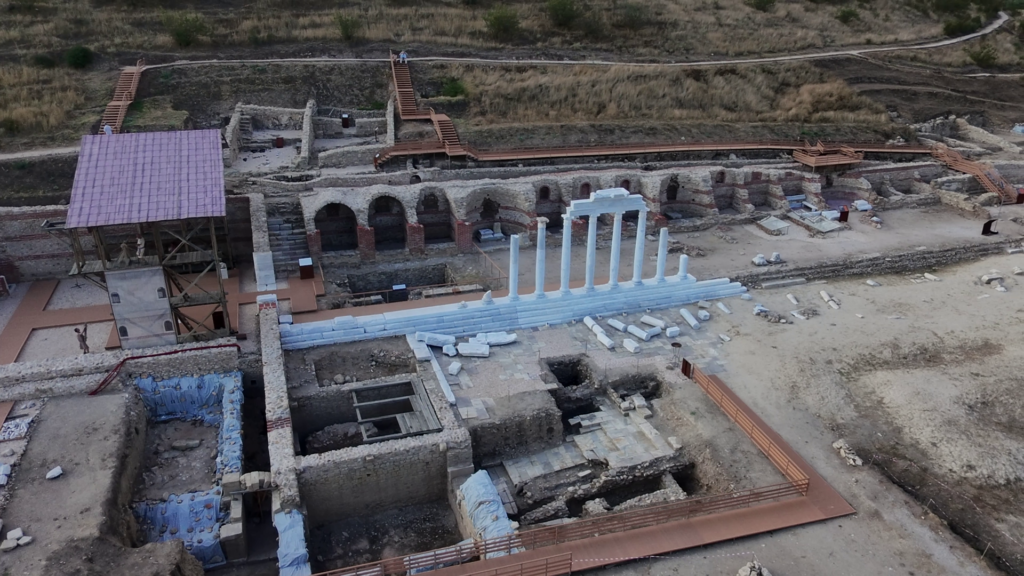
The instrument was found in a room adjoining the Temple of Heracles, the Greek hero later identified by the Romans with Hercules. According to excavation director Prof. Lyudmil Vagalinski, the object is a lithoulkos, a specialized tool used in lithotomy, the surgical removal of stones from the bladder.
Vagalinski told the Bulgarian News Agency that the find is extremely rare not only for Bulgaria, but also internationally. Based on the available scientific literature, he said, only one other comparable example is known, discovered in Italy.
A small tool from a dangerous operation
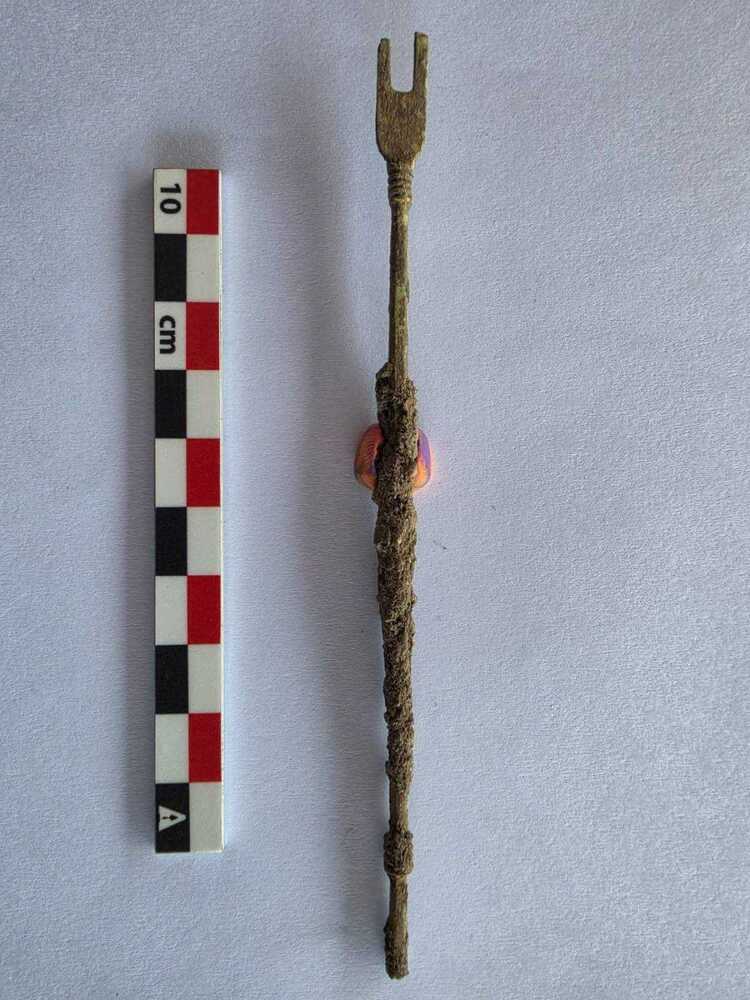
The newly discovered instrument is incomplete. The curved ends of the double hook are missing, but its bronze handle has survived in good condition. It is decorated with a series of raised rings, a detail that helped archaeologists identify it as a specialized medical instrument rather than an ordinary bronze fitting.
Ancient physicians used many surgical tools, including scalpels, needles, curettes, probes and spoons. A tool designed specifically for bladder stone surgery is much less common in the archaeological record.
Bladder stones were a severe and painful condition in antiquity. Without modern anesthesia, antibiotics, imaging or sterile operating rooms, surgery carried major risks. In serious cases, however, an operation could be the only possible treatment.
The Heraclea Sintica find suggests that specialized medical knowledge may have been present in the city during the Roman period. It does not prove the identity of a specific physician or medical school, but it does show that complex surgical instruments could reach a provincial urban center far from Rome.
Medicine beside a temple
The location of the discovery adds another layer of interest.
The instrument was found in a room next to the Temple of Heracles. For the excavation team, this raises a cautious possibility: the building may have been connected not only with worship, but also with healing or medical care.
In the ancient Mediterranean, religion and medicine were often closely linked. People suffering from illness might seek divine help at sanctuaries, while practical treatment could exist alongside ritual healing. At Heraclea Sintica, the discovery of a surgical instrument beside a temple does not prove that the room functioned as a clinic, but it gives archaeologists a clear reason to examine that possibility.
Vagalinski has presented the idea as a hypothesis rather than a conclusion. Sick people may have come to the sanctuary seeking the help of the mythical hero while also receiving treatment from trained practitioners. Further study of the room, its architecture and associated finds will be needed before the building’s function can be defined more securely.
Heraclea Sintica in its Roman age
Heraclea Sintica lies near Petrich in southwestern Bulgaria, in a region that linked Thracian, Greek, Macedonian and Roman cultural worlds. During the Roman era, the city developed as an important urban center, with public buildings, temples and monumental architecture.
The surgical instrument has been dated stratigraphically to the 3rd century AD, a period when Heraclea Sintica was experiencing significant prosperity under Roman rule. That context matters. A rare medical tool found in a controlled excavation is more than an isolated object; it helps document the range of skills and services available in a Roman provincial city.
The discovery also fits into a broader picture emerging from recent excavations around the temple. Inscriptions and architectural remains have already helped clarify the religious life of Heraclea Sintica. The lithoulkos adds a different kind of evidence: not a public inscription or monument, but a tool connected to pain, treatment and the practical limits of ancient healthcare.
An ancient tradition of “stone cutting”
Bladder stone surgery had a long history before the Roman period. Ancient medical traditions associated the treatment of bladder stones with Ammonius of Alexandria, a 3rd-century BC physician later known as “Lithotomos,” or “the Stone Cutter.”
His name was linked to surgical techniques and instruments used to break or remove stones from the bladder. The Heraclea Sintica instrument should not be treated as direct evidence for Ammonius himself, but it places the find within a longer medical tradition known from ancient texts.
That is what makes the object important. Many ancient surgical tools are general instruments that could be used in different procedures. A lithoulkos points to a much more specific operation, one that required training, anatomical knowledge and a high tolerance for risk.
Excavations at Heraclea Sintica are continuing with a team of seven archaeologists and 34 workers. Heavy river sediments around the temple area are being removed mechanically before archaeologists continue by hand, exposing and documenting the ancient architecture.
The bronze handle from Heraclea Sintica is a small object, but it points to a difficult part of ancient life: pain that could not be ignored, surgery that carried real danger, and medical skill practiced in a city where religion and treatment may have stood close together. As work continues around the Temple of Heracles, the find gives archaeologists rare physical evidence for one of the most specialized procedures in Roman medicine.
Cover Photo: A rare Roman-era surgical instrument unearthed during excavations at Heraclea Sintica in southern Bulgaria. Credit: Archaeologia Bulgarica