
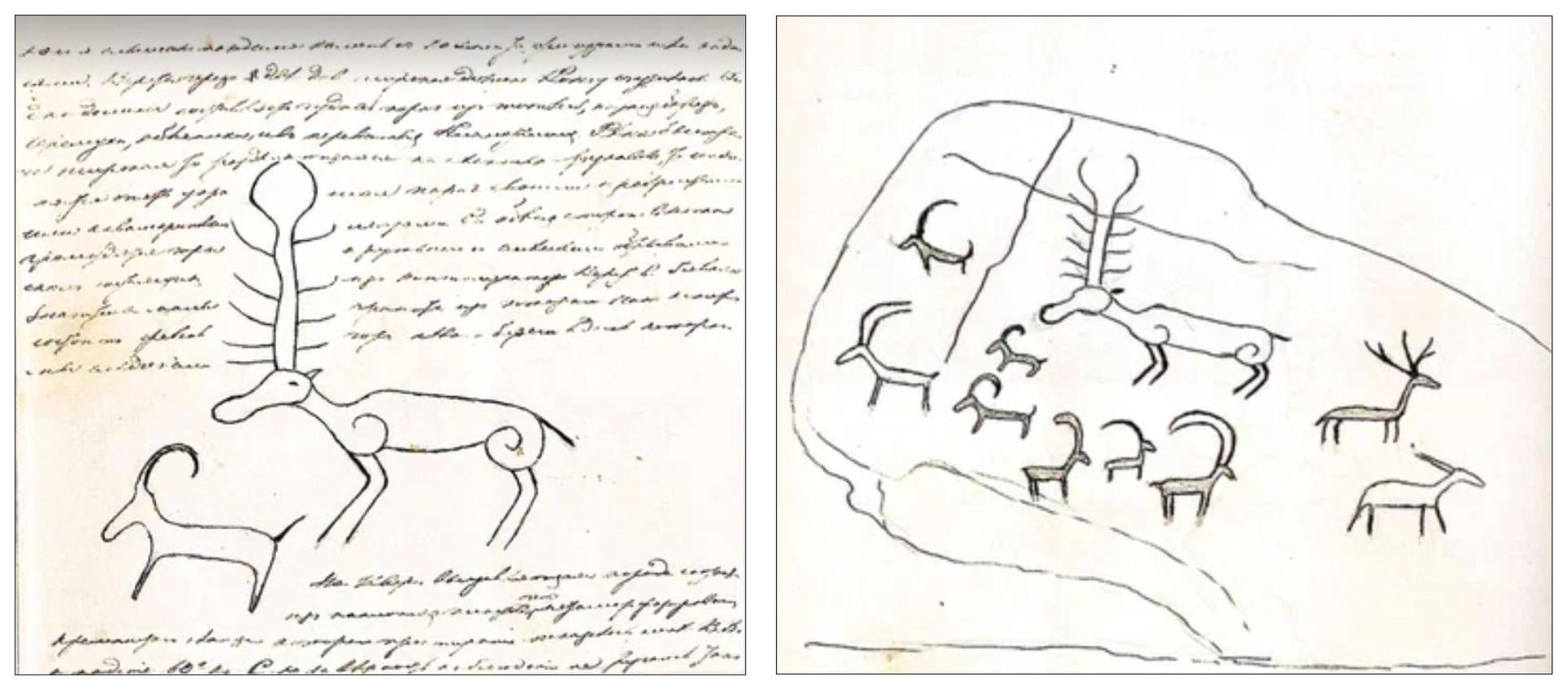
Archaeologists in Kazakhstan have rediscovered ancient rock carvings first recorded by a Russian explorer in 1856, including an extraordinary deer with towering, branching antlers. The 170-year-old sketches proved remarkably accurate, leading researchers to a site associated with the early Saka culture of Central Asia.
A series of animal figures carved into rocks along Kazakhstan’s Koksu River remained unlocated for 170 years, despite having been carefully recorded by one of the nineteenth century’s most prominent explorers. Now, a Russian-Kazakh archaeological expedition has identified the original stones, revealing a remarkable connection between historical travel journals and ancient Saka art.
The most striking discovery is a large deer with elaborate branching antlers, carved into a massive boulder. Researchers believe the image belongs to the early Saka artistic tradition, which flourished among the nomadic peoples of Central Asia during the first millennium BCE. Its distinctive appearance closely resembles deer motifs found on ancient gold ornaments and other prestigious objects.
How a 170-Year-Old Drawing Helped Locate the Carvings
On August 26, 1856, Russian geographer Pyotr Semyonov-Tyan-Shansky traveled through the Koksu valley after hearing about a rock covered with unusual figures. He eventually located the carvings and sketched several animals in his travel diary, recording the surrounding landscape without providing precise coordinates.
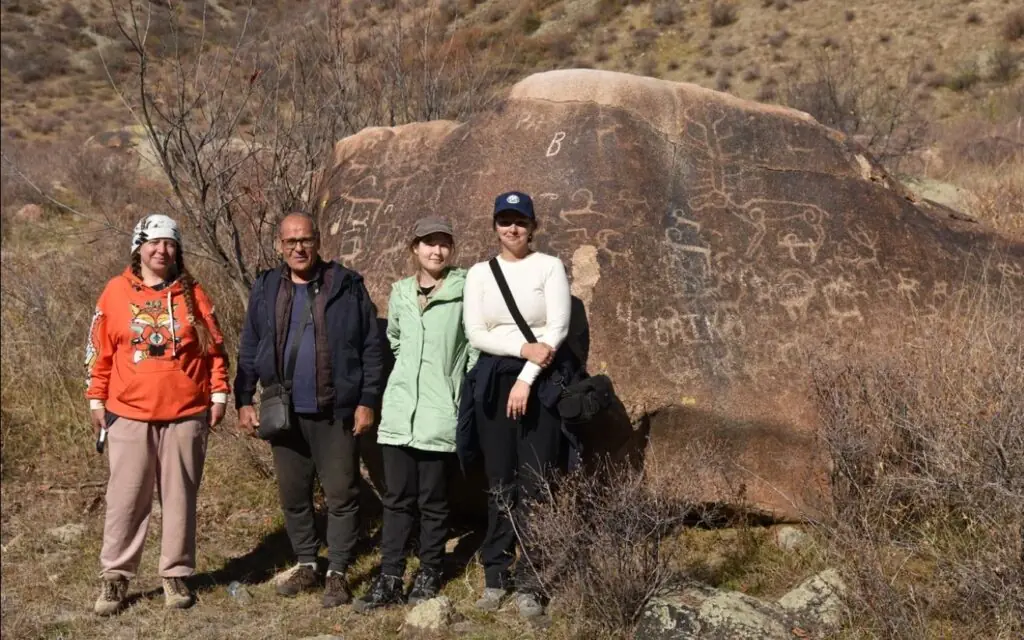
Those sketches became crucial to a new expedition organized by the Russian Geographical Society. Archaeologists from the Institute of Archaeology of the Russian Academy of Sciences and Kazakhstan’s Tanbaly Museum-Reserve retraced parts of the explorer’s historical route, examining locations described in his nineteenth-century accounts.
What surprised the researchers was the remarkable accuracy of the original drawings. Although Semyonov-Tyan-Shansky had no formal archaeological training, his sketches closely matched the surviving petroglyphs, while his detailed descriptions of the river valley helped the team identify their location.
Alexey Rogozhinsky, a senior researcher at the Tanbaly Museum-Reserve, explained that the geographical observations were so precise that finding the site proved relatively straightforward once the expedition reached the correct area.
A Remarkable Example of Early Saka Animal Art
Among the carvings, the largest deer figure attracted particular attention because of its unusually tall, branching antlers. Elena Levanova, head of the Center for Paleoart at the Russian Academy of Sciences’ Institute of Archaeology, identified the image as a distinctive example of early Saka art.
The Saka were ancient nomadic groups who inhabited extensive parts of Central Asia during the first millennium BCE. Their artistic traditions are particularly famous for stylized representations of deer, wild goats, predators, and other animals, frequently depicted on gold ornaments, weapons, and objects associated with elite burials.
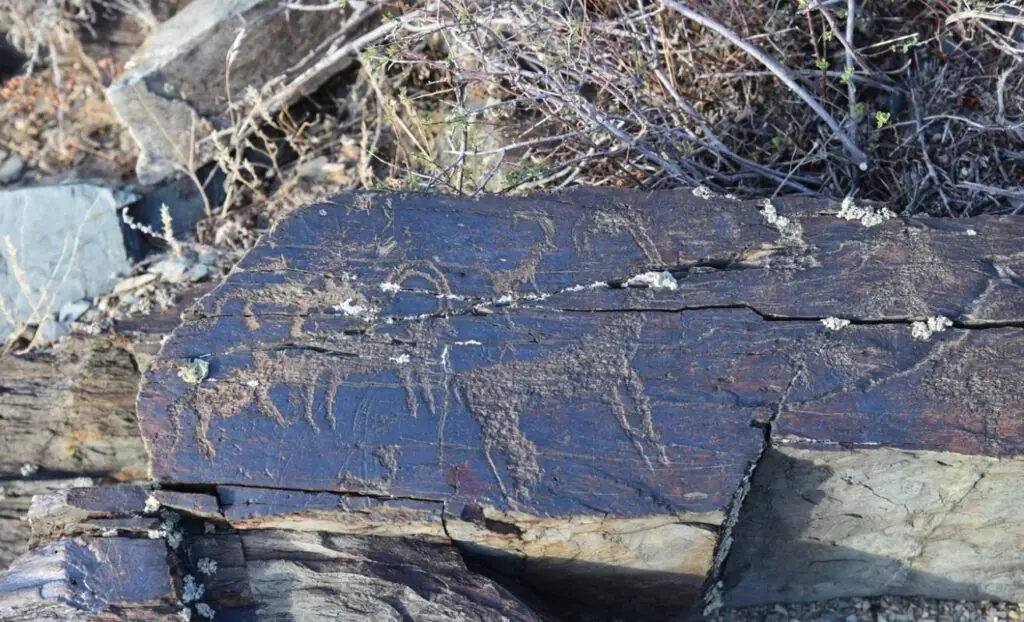
According to the archaeologists, the Koksu deer shares artistic characteristics with Saka jewelry from Kazakhstan and Tuva. Comparable imagery also appears among objects from the Zhalauly treasure, an important collection of ancient gold ornaments discovered in southeastern Kazakhstan.
These similarities provide a valuable connection between images carved into the natural landscape and the sophisticated metalworking traditions of ancient steppe societies. They also offer researchers an opportunity to examine how recognizable animal motifs circulated across different artistic media.
Was the Deer Carving Part of an Ancient Sacred Landscape?
The deer’s size and its position on an enormous boulder have prompted researchers to consider whether the carving once held religious significance. According to the expedition team, the image may have served as an object of veneration among Saka communities traveling through the region.
However, the carving’s precise purpose remains uncertain. Its association with Saka artistic traditions does not necessarily establish that the site functioned as a sanctuary, and further archaeological investigation will be needed to explore that possibility.
The surrounding rock art also reveals a longer history of activity in the valley. Researchers identified figures of sheep, goats, and deer dating to different periods, from the Early Iron Age to the Middle Ages, indicating that the carvings cannot all be attributed to a single phase of occupation.
Archaeologists Create a Modern Record of the Ancient Site
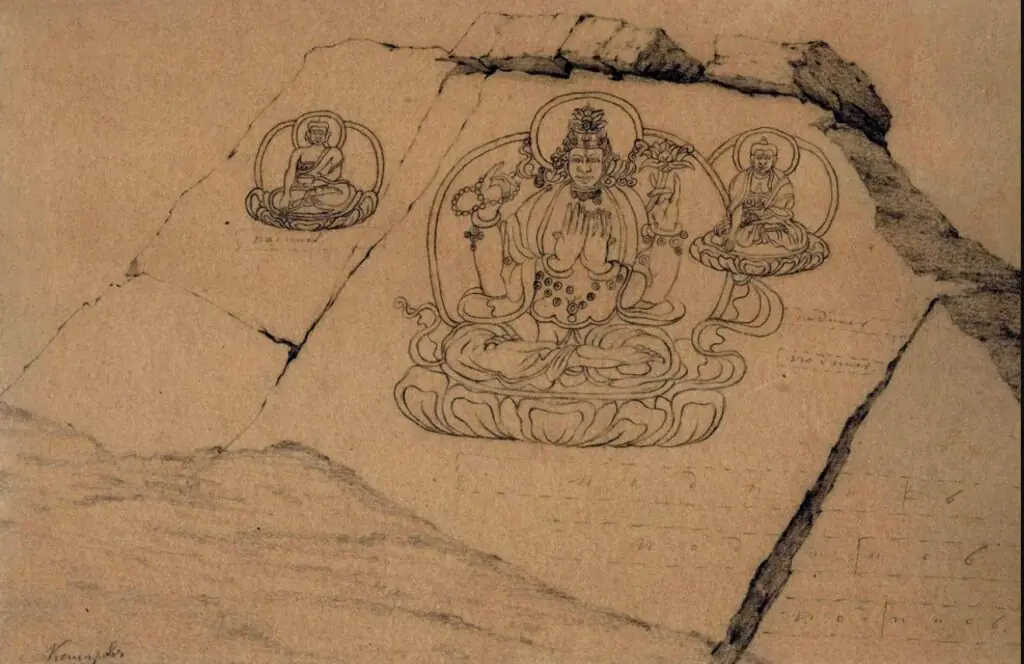
The rediscovery formed part of a nearly 600-kilometer expedition through Kazakhstan’s Almaty and Jetisu regions, following routes associated with Semyonov-Tyan-Shansky’s journeys in 1856 and 1857. Researchers also examined other historical monuments, using nineteenth-century drawings and landscape descriptions to identify surviving archaeological features.
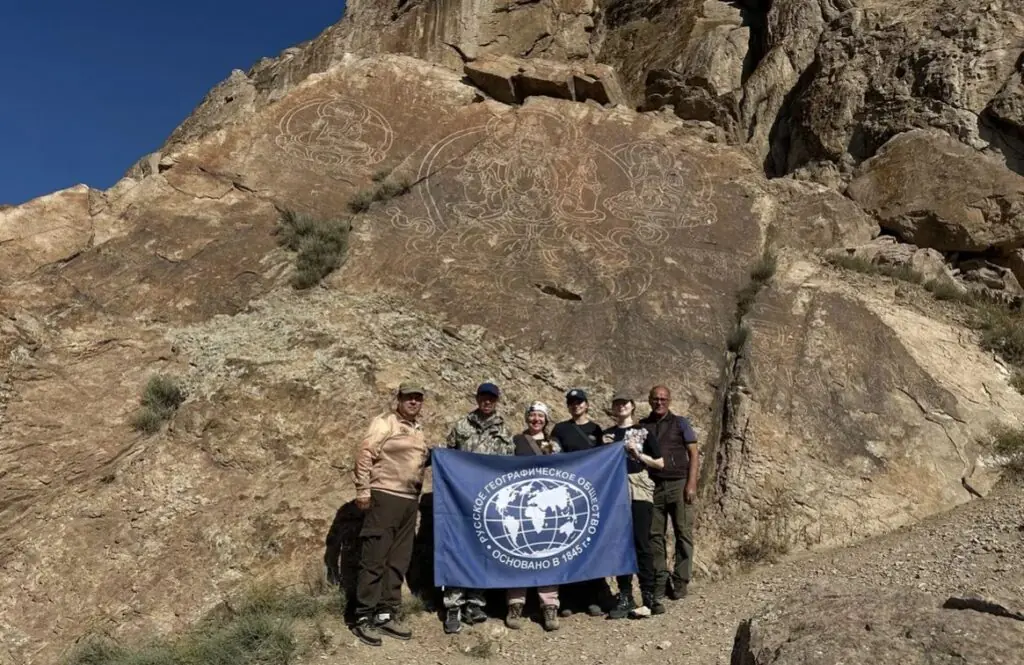
Unlike the original explorers, the modern team used geodetic mapping, aerial photography, and three-dimensional recording to document important monuments and their surroundings. These methods provide precise spatial information and create digital records that can support future archaeological research.
The fieldwork has concluded, and specialists are now processing the collected material and preparing 3D models. The project will also produce an interactive map of Semyonov-Tyan-Shansky’s route through southeastern Kazakhstan, bringing together historical documentation and modern scientific observations.
Cover Image: Original nineteenth-century sketches by Pyotr Semyonov-Tyan-Shansky showing the deer and other animal figures carved into rocks along Kazakhstan’s Koksu River. The drawings helped archaeologists relocate the petroglyphs 170 years later. Credit: Institute of Archaeology, Russian Academy of Sciences.