
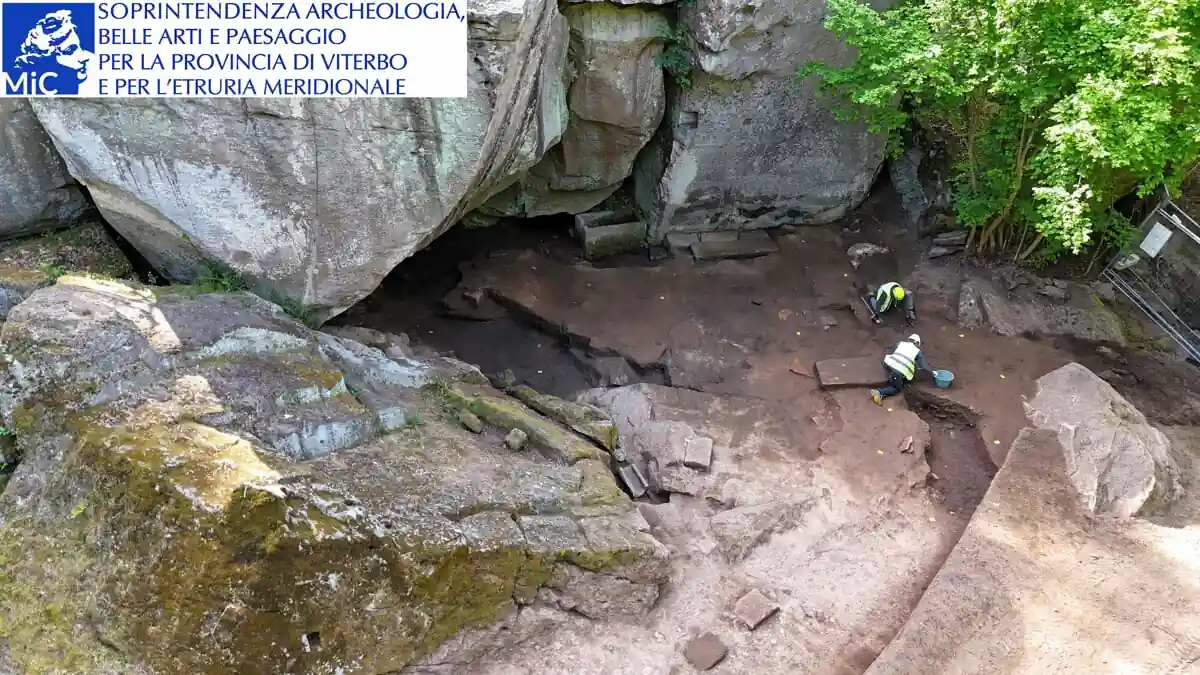
New archaeological excavations at a secluded sanctuary in central Italy have revealed evidence of human activity predating its known Etruscan and Roman phases. The discoveries extend the history of a remarkable religious complex where worshippers once left offerings to a goddess associated with fertility, agriculture, and healing.
Hidden among the wooded hills of Vetralla, about 60 kilometers north of Rome, the Sanctuary of Demeter at Macchia delle Valli has revealed a previously unknown chapter of its history. Recent excavations have identified traces of protohistoric activity, indicating that people used the area long before the surviving sanctuary developed during the Etruscan period.
The discoveries emerged during archaeological investigations directed by Italy’s Superintendency of Archaeology, Fine Arts and Landscape for the Province of Viterbo and Southern Etruria. Alongside the earlier evidence, archaeologists documented previously unknown quarrying activity and established a clearer sequence of the sanctuary’s architectural development. The findings expand the site’s history beyond its traditionally recognized period of use, from the late third century BC to the early second century AD.
Archaeologists Trace the Site’s History Beyond the Etruscans
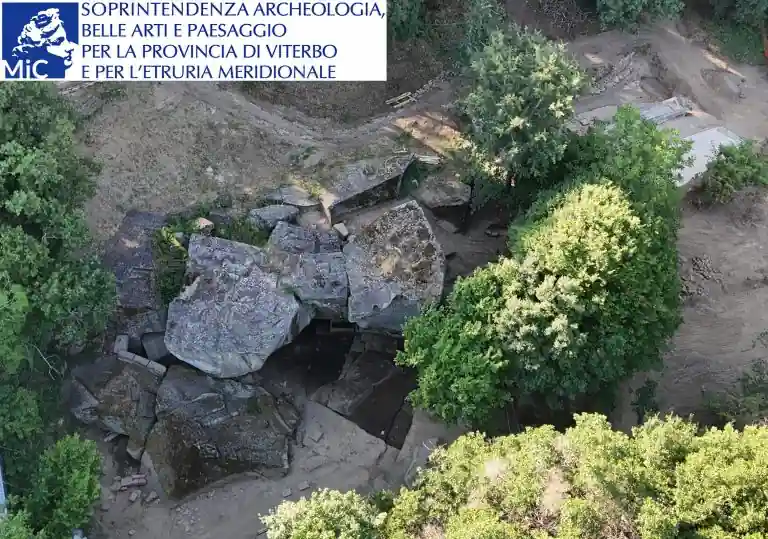
Until the latest investigations, archaeological evidence placed the sanctuary’s documented religious activity primarily within the Late Etruscan and Roman periods. Newly recovered materials now demonstrate that people were present in the area during protohistory, although researchers have not yet announced a precise date for this earlier occupation.
The distinction is significant. While the discoveries establish a longer history of human activity, they do not necessarily indicate that a sanctuary dedicated to Demeter existed before the Etruscans. Instead, they provide a new chronological framework for investigating how the landscape was used before its transformation into a formal religious complex.
Excavations continued down to the natural bedrock, revealing traces of ancient stone extraction in previously undocumented sectors. These findings suggest that the surrounding rock formations were exploited more extensively than archaeologists had recognized. The new evidence also helps clarify the relationship between quarrying activities, the site’s distinctive architecture, and the successive communities that occupied the area.
A Remarkably Preserved Shrine Discovered in 2006
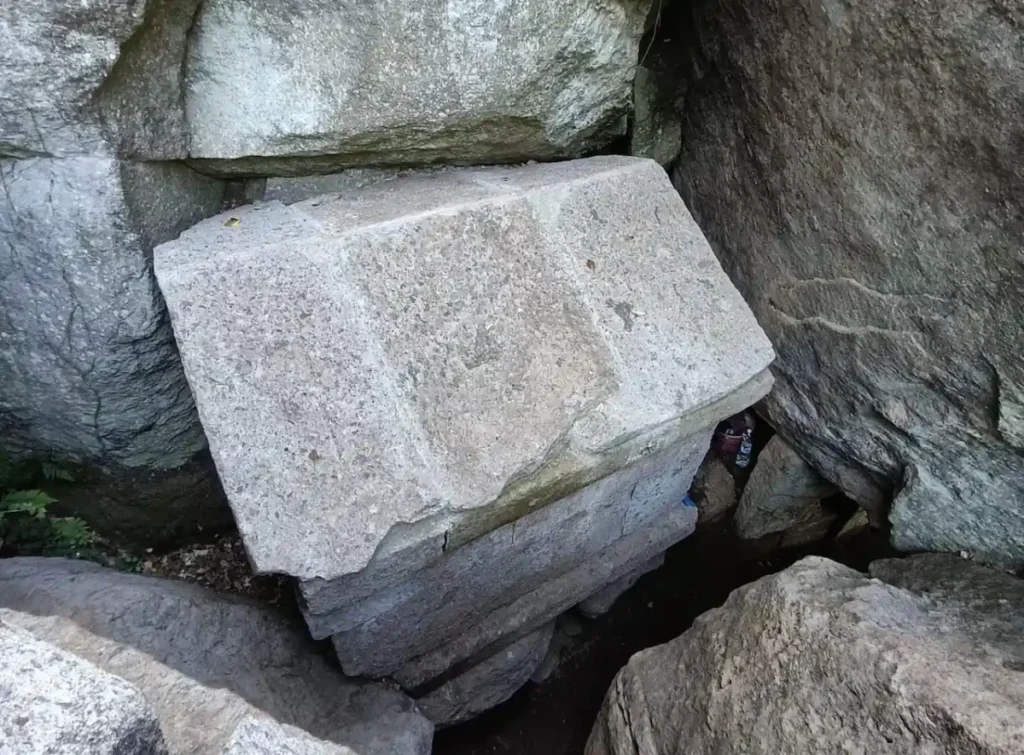
The sanctuary first attracted archaeological attention in 2006, when an investigation following reports of illegal digging revealed an exceptionally preserved religious complex concealed within the rocky terrain. Its central feature was a small shrine, or cella, constructed from slabs of local volcanic stone known as peperino and positioned inside a natural rock recess.
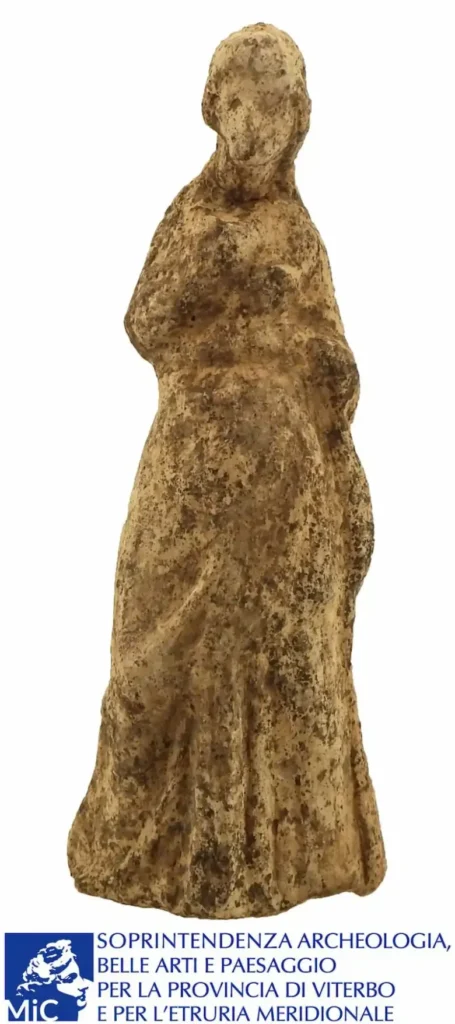
The shrine contained a terracotta statue of a seated female deity, identified as Demeter, the Greek goddess of agriculture and fertility, associated with the Etruscan Vei and Roman Ceres. The figure holds a shallow offering vessel called a patera in her right hand, while her damaged left hand probably once carried a bundle of grain. The statue originally rested on a single massive stone bench against the rear wall of the chamber.
The building retained unusually detailed evidence of its religious function. Its pitched roof featured decorated gables, while a small ritual table stood against one wall beside an altar. Outside the chamber, archaeologists documented a water basin, another altar, a grinding stone, and a hearth, providing rare physical evidence of the activities that took place around the shrine.
Ritual Offerings Reveal Fertility and Healing Practices
Among the sanctuary’s most revealing discoveries are anatomical votive offerings, objects shaped to represent parts of the human body. Such offerings were commonly dedicated in ancient religious contexts to request divine assistance with illness, reproduction, or physical recovery. Their presence at Macchia delle Valli indicates that the sanctuary’s religious functions extended beyond agricultural fertility to include healing.
The complex’s proximity to a natural spring reinforces this interpretation. Water held particular significance in religious traditions associated with fertility, purification, and therapeutic powers, while the sanctuary’s location within a secluded rocky landscape provided a distinctive setting for worship. The evidence suggests that natural features were integral to the sanctuary’s religious identity rather than simply forming its surroundings.
Other finds preserve more specific details of ritual practice. Beneath a small table inside the shrine, excavators discovered four ceramic objects deliberately placed upside down, including two oil lamps dating to the reign of Emperor Nero, who ruled from AD 54 to 68. A bronze imperial coin rested on a nearby altar, an object that archaeologists have interpreted as a possible final offering before the sanctuary was deliberately abandoned.
These discoveries are especially valuable because several objects remained within their original ritual setting. Their positions allow archaeologists to examine how worshippers arranged offerings and religious furnishings during the sanctuary’s final period of use, rather than relying solely on artifacts recovered from disturbed deposits.
Ancient Quarrying and Water Systems Reveal a Changing Landscape
The latest excavations have also expanded understanding of how people modified the surrounding terrain. Previously undocumented quarrying traces show that stone extraction formed a more substantial part of the site’s history than earlier investigations had established. The evidence adds an important economic and practical dimension to a landscape primarily known for its religious significance.
Conservation work has meanwhile restored a historic fountain and associated hydraulic structures, together with terraces extending across the hillside. These features demonstrate how water management and the use of natural resources continued to shape the area in later periods, including the modern era. They also help place the ancient sanctuary within a broader landscape that served different purposes across successive centuries.
The investigations formed part of a research and restoration program funded through Italy’s National Recovery and Resilience Plan. Archaeologists and conservation specialists have combined excavation with structural protection and improvements to the visitor route, allowing the sanctuary’s remains to be understood alongside the forest and geological formations surrounding them.
The sanctuary is scheduled to reopen to visitors on October 24, 2026, when the recent discoveries and conservation work will be presented to the public.
Yet one of its most compelling archaeological details comes from the shrine’s final ancient phase. The overturned ceramic vessels, Roman oil lamps, and bronze coin were preserved in positions that may reflect the sanctuary’s deliberate closure. More than eighteen centuries later, these objects still offer a rare view of how worshippers left a sacred place that had served their community for generations.
Cover Image: Archaeologists excavating the rock-cut Sanctuary of Demeter at Macchia delle Valli near Vetralla, Italy, where recent investigations have identified evidence of activity predating the Etruscan period. Credit: Soprintendenza ABAP per la provincia di Viterbo e per l’Etruria meridionale.