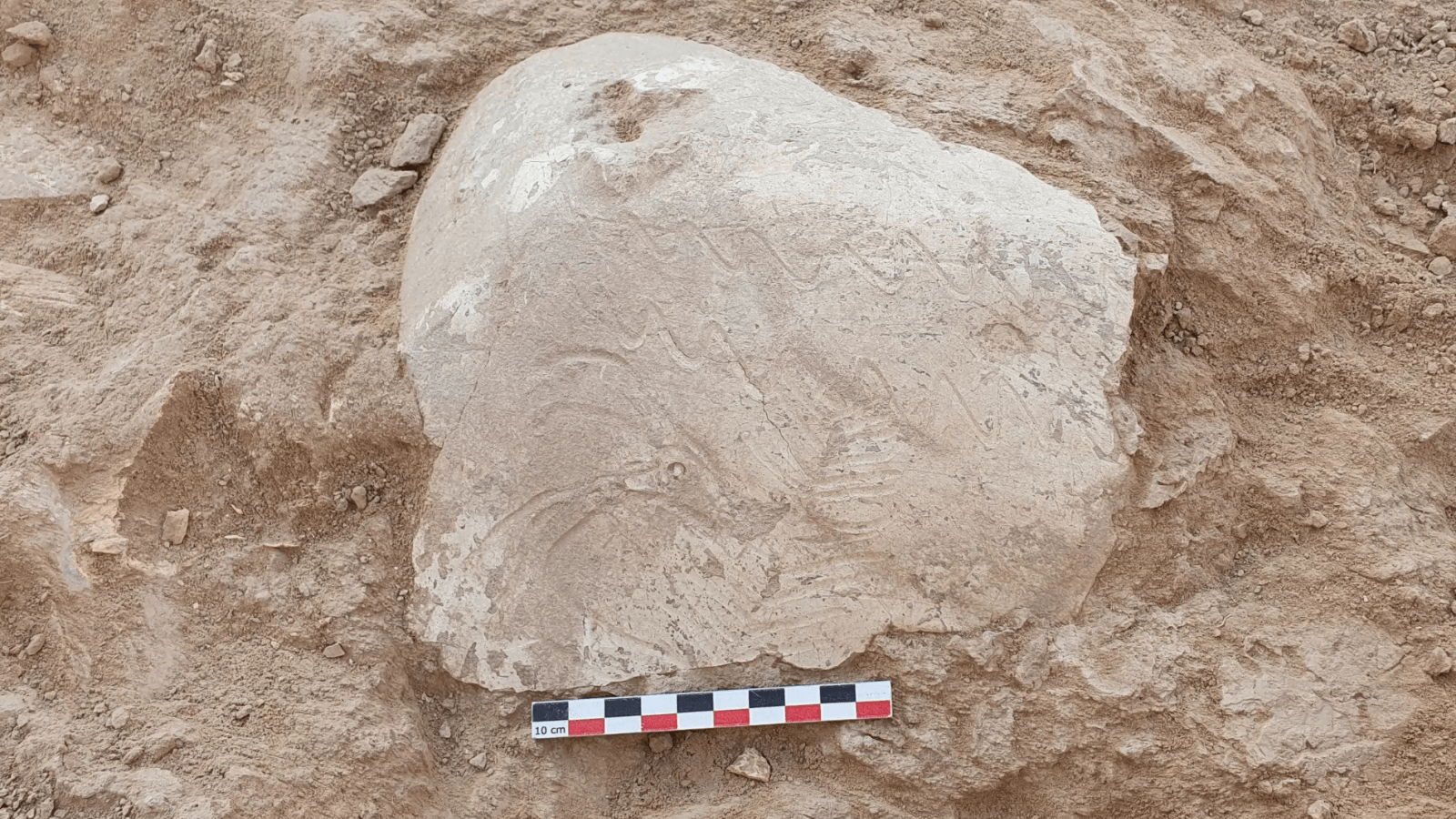
Archaeologists excavating the ancient settlement of Odirmon in southern Uzbekistan have uncovered a decorated ossuary and a ritual altar still bearing traces of fire. Dating from a period between the third century BC and the third century AD, the discoveries could reveal how the settlement’s inhabitants honored their dead and maintained their ceremonial traditions.
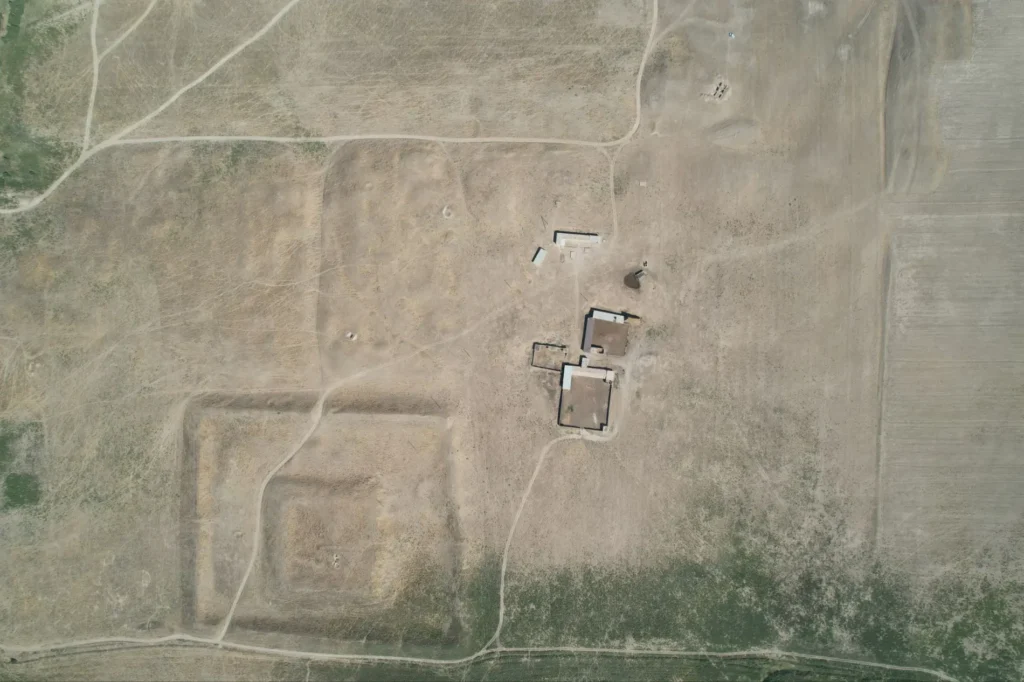
The finds were made in the Kamashi district of Uzbekistan’s Kashkadarya region. Archaeologist Sanjar Abdurakhimov of the Samarkand Institute of Archaeology is leading the first excavation campaign conducted at Odirmon this year.
Traces of fire survived on the altar
Archaeologists uncovered the altar in the northeastern part of Odirmon. Standing approximately 70 centimeters high and 90 centimeters wide, the structure preserves visible evidence of repeated burning on its surface.
Its floor was laid with fired rectangular bricks measuring 18 by 28 centimeters and only 2.5 centimeters thick. A layer of clay plaster between 2.5 and 3 centimeters thick covered the area around the structure.
Close examination showed that the plaster had been renewed several times. This detail suggests the altar remained in use for an extended period and was repaired whenever its surface became worn or damaged.
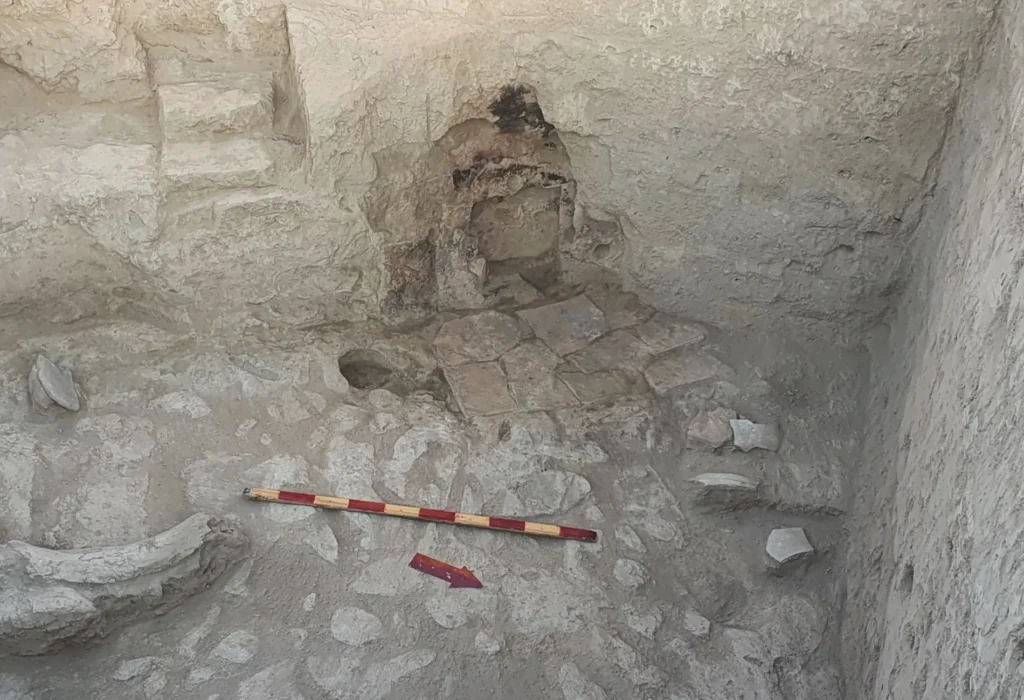
The fire marks add another important clue. Although researchers have not yet connected the altar with a particular religion, the evidence indicates that fire played a role in ceremonies performed at this part of the settlement.
A deer and tree appear on the ossuary
The ossuary found at Odirmon may prove even more intriguing. Created to hold human bones following an earlier stage of burial treatment, such containers often preserve valuable information about ancient attitudes toward death and remembrance.
Its exterior carries decorative forms that appear to represent a deer and an archa, a variety of juniper native to Central Asia. Conservation work is still required before archaeologists can examine the designs in full detail, and the Uzbekistan Cultural Heritage Agency has not yet offered a definitive interpretation of them. Elsewhere in the wider region, a 3,600-year-old kurgan discovered in Azerbaijan has similarly revealed how burial objects could express status, identity and beliefs surrounding death.
The imagery nevertheless makes the object exceptional. Deer and tree motifs appeared in different artistic and religious traditions across ancient Central Asia, but their presence alone does not establish who created the ossuary or what the figures meant to its makers.
Once conservators clean and stabilize the surface, smaller details may help researchers determine whether the images formed part of a broader scene. The work could also allow comparisons with decorated funerary containers discovered elsewhere in the region.
Two discoveries from the same ritual landscape
The altar and ossuary reveal different parts of life at Odirmon. One retains physical evidence of ceremonies involving fire, while the other belonged to practices surrounding death and the care of human remains.
Their discovery at the same site does not necessarily mean they were used together. Establishing their precise dates and archaeological relationship will require further excavation, but both finds indicate that ritual activity occupied an important place within the settlement.
The Cultural Heritage Agency of the Republic of Uzbekistan considers the objects significant sources for studying the religious ideas, ceremonies and burial traditions of Odirmon’s ancient population. Specialists have deliberately avoided assigning the discoveries to a specific faith before the excavation and conservation work has progressed.
Odirmon begins to reveal its past
Researchers currently date the Odirmon archaeological site broadly from the third century BC to the third century AD, a span of roughly six centuries. Future excavations may show how the settlement changed during that long period and whether its ritual spaces continued to serve the same communities.
The altar’s repeatedly renewed plaster already points to careful maintenance over time. Beside it, the decorated ossuary preserves a more personal connection with the dead through images of a deer and a tree—symbols whose meaning remains buried within Odirmon’s still-unfolding history.
Cover Image: The decorated ossuary uncovered at Odirmon bears motifs resembling a deer and an archa tree. Further details are expected to emerge after conservation. Credit: Cultural Heritage Agency of the Republic of Uzbekistan