
JERUSALEM — Recent archaeological work near Jerusalem’s Temple Mount has yielded two exceptional discoveries that illuminate different eras of the city’s turbulent past.
First, a tiny 2,600-year-old clay seal inscribed with a biblical name was uncovered during the Temple Mount Sifting Project. Experts date the seal to the late 7th century BCE, likely from King Josiah’s reign. The inscription, carved in early Hebrew or Aramaic script, likely belonged to an official referenced in biblical books such as II Kings and II Chronicles. This artifact offers rare physical evidence of the administrative systems in place during a critical period of Judean history.
In a separate find, archaeologists discovered a rare bronze coin from the last years of the Great Jewish Revolt against Roman rule (69–70 CE). The coin, minted during the revolt’s fourth year, bears an inscription in ancient Hebrew reading “For the Redemption of Zion” — a powerful expression of hope amid the siege of Jerusalem.
The coin’s obverse depicts a chalice surrounded by the inscription, while the reverse features ritual symbols associated with the Sukkot festival: a lulav (palm frond) and two etrogs (citrons), alongside the phrase “Year Four,” indicating the revolt’s fourth year. This rare coin provides critical insight into the rebels’ shifting mindset, from initial aspirations of freedom to a desperate plea for redemption as the city faced imminent destruction.
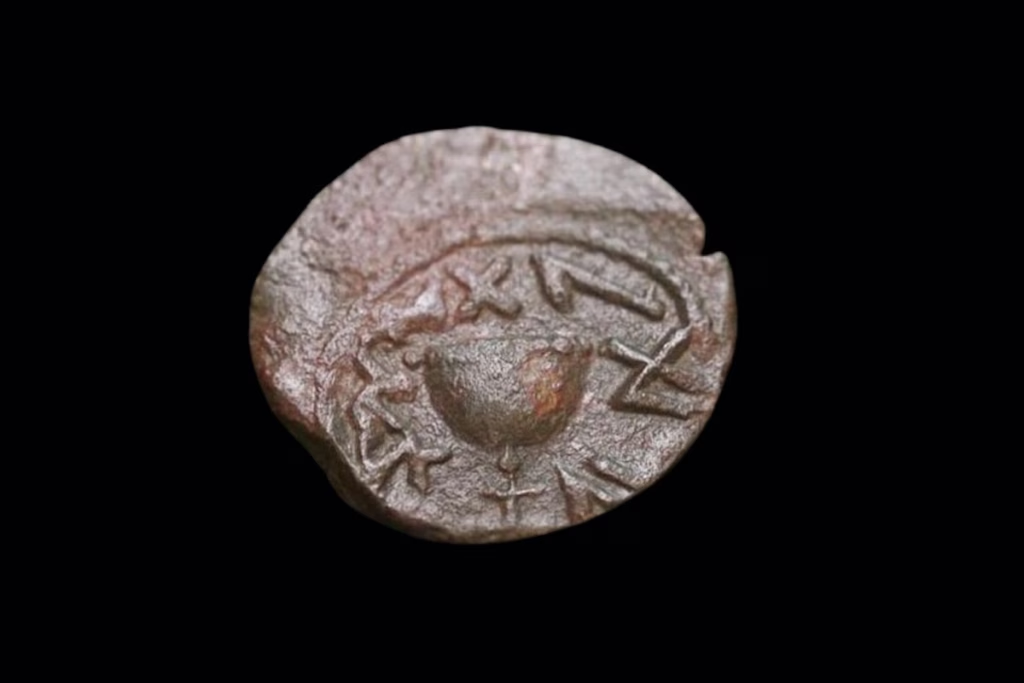
Dr. Yuval Baruch, director of the ongoing excavations, noted:
“The change in inscription from ‘For the Freedom of Zion’ to ‘For the Redemption of Zion’ marks a profound shift in the rebels’ morale during the final months before Jerusalem’s fall on Tisha B’Av in 70 CE.”
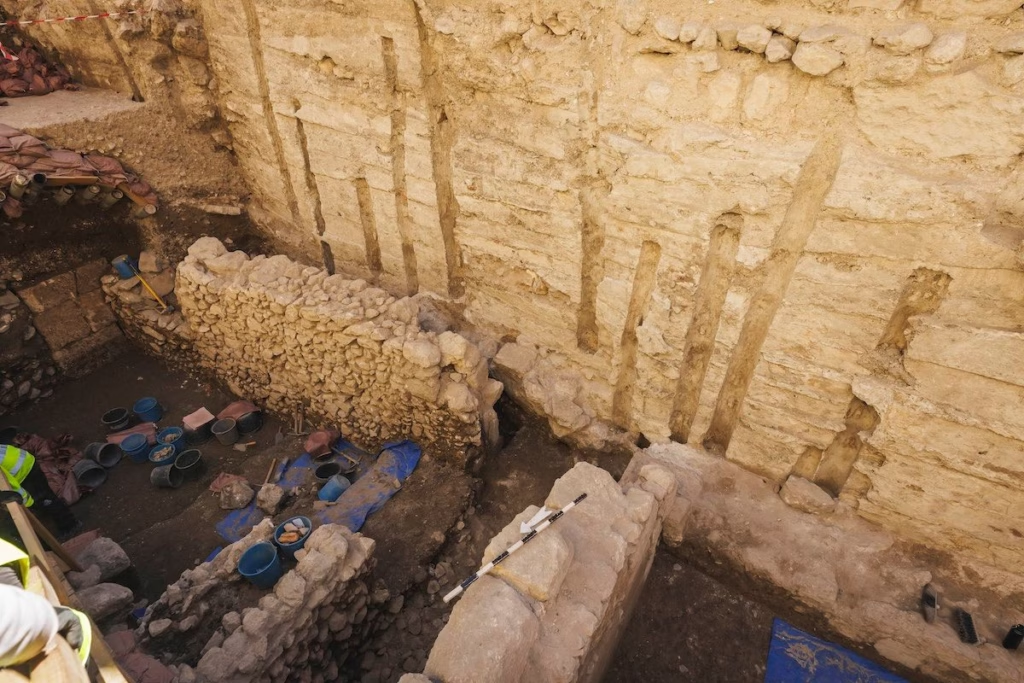
The coin was discovered near the southwest corner of the Temple Mount, in an area rich with remains spanning from the Second Temple period to the Umayyad era.
These findings highlight Jerusalem’s enduring significance as both a religious and political center, offering tangible connections to moments of crisis and resilience in its ancient history.
Israeli Minister of Heritage Rabbi Amichai Eliyahu remarked on the symbolic timing of the discovery:
“Finding this coin just before Tisha B’Av is a moving reminder of the Jewish people’s centuries-long yearning for redemption and freedom.”
Together, the clay seal and the coin deepen our understanding of Jerusalem’s layered history, revealing the persistent cultural and spiritual threads that have defined the city for millennia.
Cover Image Credit: A rare first-century coin discovered in Jerusalem bears the inscription “For the Salvation of Zion.” Yanniv David Levy with the coin he discovered. (Photo: Emil Aladjem/Israel Antiquities Authority).