
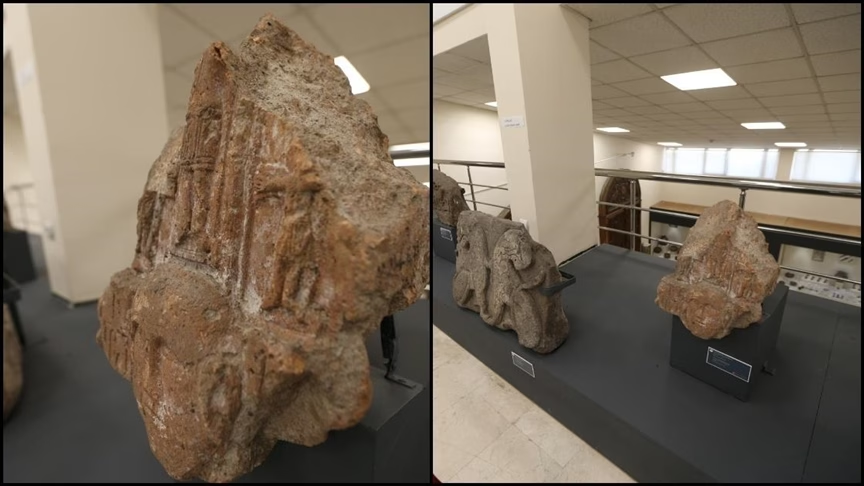
A rare stone relief depicting Jesus Christ, unearthed in 1892 during excavations at the UNESCO World Heritage Site of Ani, is being displayed to the public for the first time at the Kars Archaeology and Ethnography Museum.
The artifact was discovered by Russian archaeologist Nikolai Yarkovlevich Marr during the late 19th-century excavations at Ani, an ancient medieval city often referred to as the “Gateway from the Caucasus to Anatolia.” Founded over a millennium ago, Ani served as a political, commercial, and religious hub, hosting more than 23 civilizations and a remarkable variety of structures — from mosques, cathedrals, and churches to palaces, baths, and defensive walls.
A 130-Year Wait
For more than a century, the relief remained in the museum’s storage, protected from public view. It has now been included in the “Ani’s Story” exhibition, organized under the Turkish Ministry of Culture and Tourism’s 100+2 Temporary Museum Exhibitions Project. The exhibition features 244 artifacts in total, 196 of which are being displayed for the first time.
Artistic and Iconographic Details
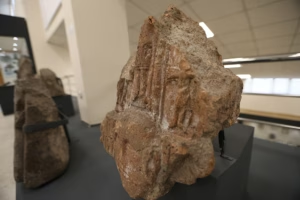
The stone panel presents a striking composition: in the central upper section, Christ is depicted frontally, standing on a throne. Flanking Him on both sides are two soldiers offering altar vessels, while the lower portion contains a portrait of a saint. This combination of sacred and ceremonial imagery reflects the blend of religious symbolism that characterized medieval Ani — a city at the crossroads of Byzantine, Armenian, and regional artistic traditions.
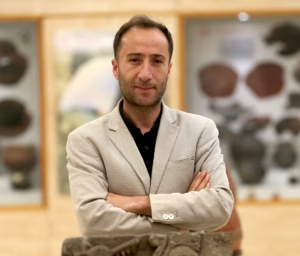
Hakim Aslan, Acting Director of the Kars Archaeology and Ethnography Museum, emphasized the significance of the piece:
“This is one of the most important artifacts ever displayed in our museum. Its discovery dates back around 130 years, yet it has never been presented to the public until now.”
Ani’s Cultural Legacy
Today, Ani’s ruins — including its walls, cathedral, mosque, palaces, churches, monasteries, baths, bridges, and a partially collapsed covered passage — stand as an enduring testament to the region’s layered history. Excavations continue each year, contributing to our understanding of life at this strategic and multicultural medieval city.
The unveiling of the Christ relief adds a new dimension to Ani’s story, offering visitors a rare glimpse into the religious art and spiritual identity of the city’s medieval past.