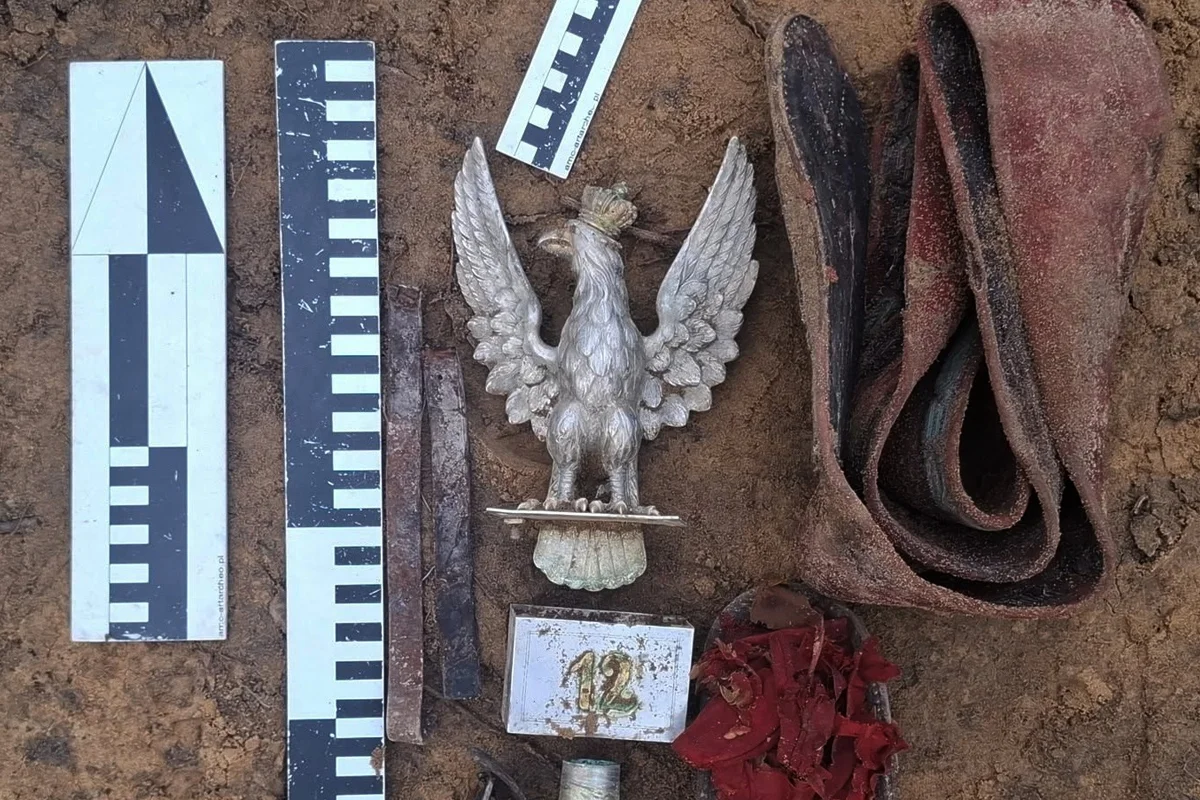
In a quiet stretch of woodland near Starachowice in southeastern Poland, a routine search unexpectedly opened a direct window onto the opening days of World War II. Members of the Fort Monuments Protection Group have recovered a long-lost military eagle standard belonging to the 12th Light Artillery Regiment, a unit whose fate was sealed during the German invasion of Poland in 1939.
The find is more than a wartime relic. It is a rare surviving symbol of a regiment that was annihilated in combat and deliberately erased from the battlefield to prevent its capture.
A buried symbol of honour
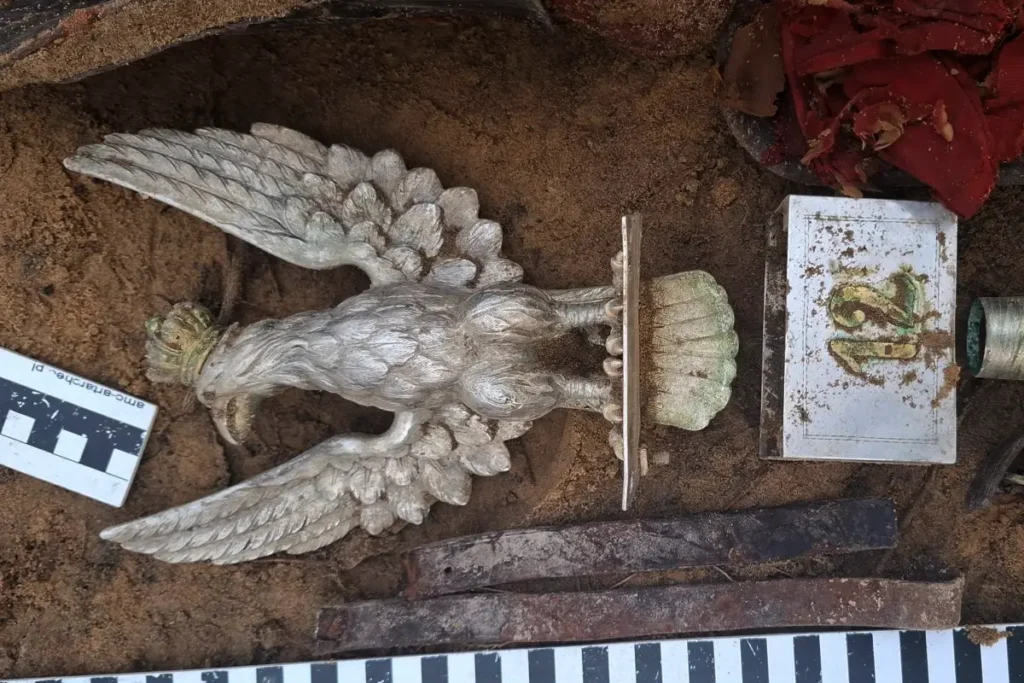
Polish military standards are not decorative objects. Each eagle, modeled on the white eagle of Poland’s coat of arms, embodies the core values of “Honour and Fatherland.” Cast with a golden beak, talons, and crown, such standards were treated as sacred insignia. Allowing one to fall into enemy hands was considered unthinkable.
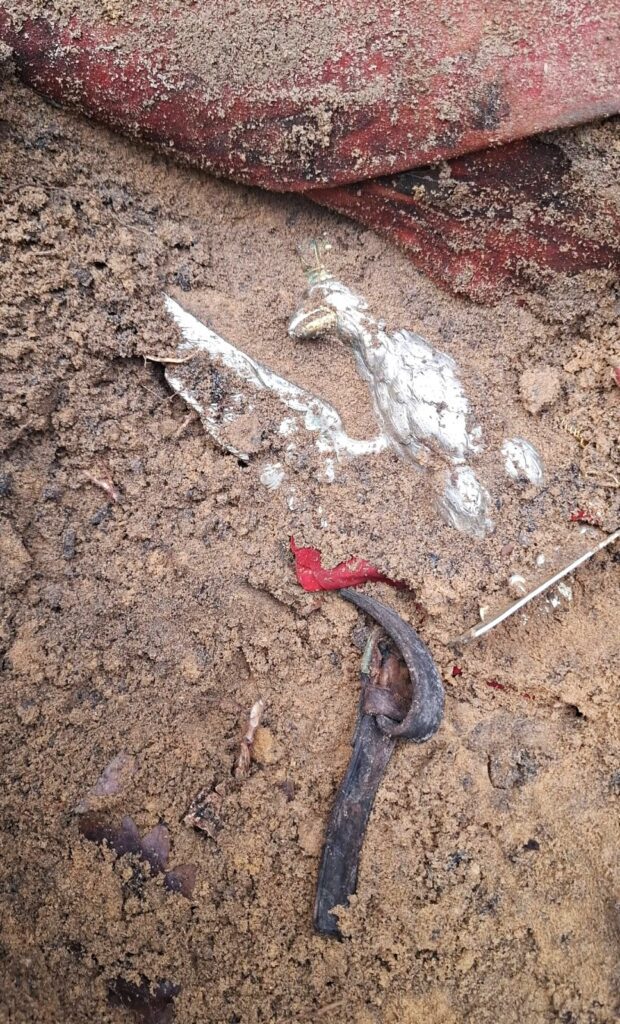
Experts believe the newly discovered eagle was intentionally buried by Polish soldiers during the chaos of September 1939, likely in the final moments before their unit was overrun. By hiding the standard, the regiment preserved its dignity even in defeat, ensuring it would not become a German war trophy.
From the Blue Army to Poland’s last stand
The regiment behind the eagle traces its origins to 1919, when it emerged from the Polish Blue Army formed in France during the final phase of the First World War. After returning to a newly independent Poland, the unit was reorganized as part of the 12th Infantry Division and quickly found itself fighting in the Polish–Soviet War.
Two decades later, history turned against it. During Germany’s invasion of Poland, the regiment was assigned to the southern group of the Prusy Army, tasked with slowing the German advance. Near Radom, the unit was encircled and effectively destroyed, marking the end of its operational existence.
A commander lost to Katyn
At the time of its destruction, the regiment was commanded by Lieutenant Colonel Józef Kuberski of Tarnopol. His story reflects the wider tragedy of Poland’s officer corps. Captured after the collapse of organized resistance, Kuberski was later murdered in the Katyn Massacre, where Soviet forces executed thousands of Polish officers in the spring of 1940.
The survival of the eagle standard therefore connects two defining traumas of Polish wartime history: the defeat of 1939 and the systematic elimination of the country’s military leadership.
Objects that confirm the story
The eagle was not found alone. Nearby, detectorists uncovered a leather belt and fragments of a ceremonial sash bearing the inscription “12th PAL,” reinforcing the identification of the regiment. Together, these objects form a rare assemblage, offering tangible proof of how Polish soldiers attempted to protect their symbols amid collapse and retreat.
For historians, such finds are invaluable. Written records describe the desperate measures taken to hide standards, but physical examples are exceedingly rare. This discovery transforms those accounts from abstraction into material reality.
From forest soil to national memory
The artifacts have now been transferred for professional conservation and will be formally registered as historical monuments. The Fort Monuments Protection Group is continuing its work in close cooperation with local museums, expanding surveys around Starachowice in the hope that further traces of Poland’s wartime past may still lie hidden beneath the forest floor.
More than eight decades after it was buried, the eagle has returned. Silent, weathered, and intact, it stands as a powerful reminder that even in defeat, the Polish Army sought to protect its honour — trusting that history would one day uncover the truth.
Source: Fort Monuments Protection Group