
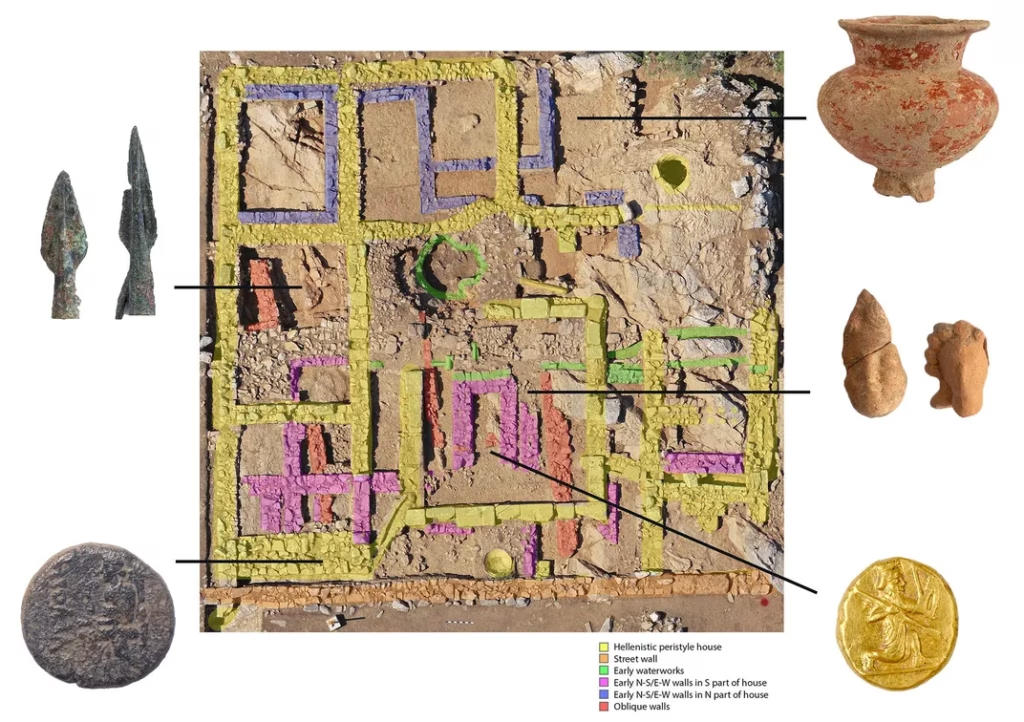
Archaeologists in western Turkey have uncovered a rare hoard of gold coins in the ancient Greek city of Notion, offering new insight into the turbulent power struggles of the fifth century B.C. The coins, buried in a small ceramic vessel and left untouched for over 2,400 years, are believed to represent payments intended for mercenary forces or naval projects during a period when the city shifted between Persian and Greek control.
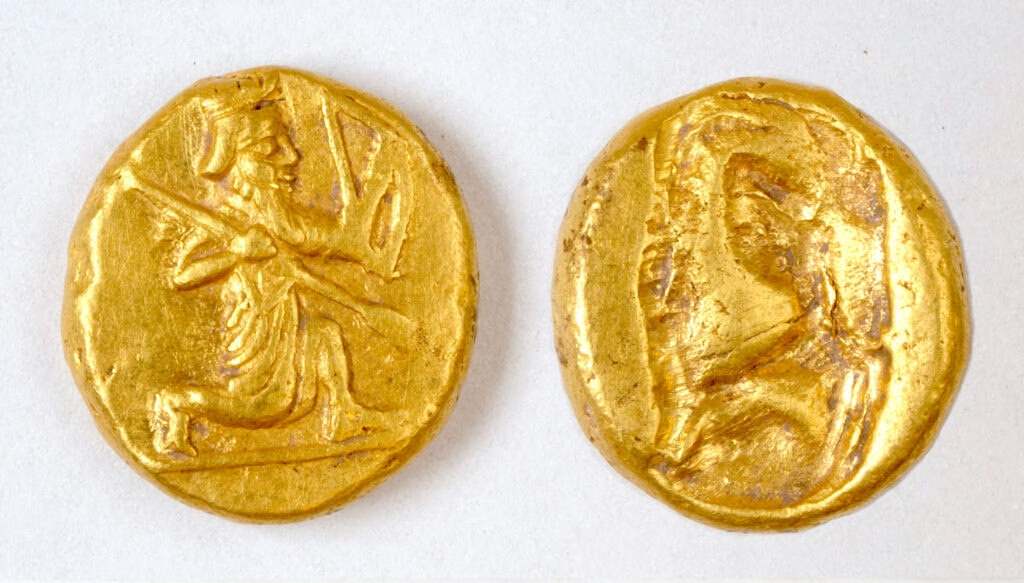
The discovery was made by a team from the University of Michigan, whose Notion Archaeological Survey has been systematically studying the city’s remains. The hoard, first excavated in 2023 but only recently approved for publication by Turkey’s Ministry of Culture and Tourism, contains Achaemenid darics—gold coins bearing the image of a kneeling archer, the hallmark of the Persian Empire’s currency system.
“Finding a hoard of gold coins in a controlled excavation is exceptionally rare,” said Professor Christopher Ratte, director of the Notion Archaeological Survey. “No one buries precious metal coins without intending to retrieve them. Their survival points to an event of grave misfortune, likely tied to the region’s violent history.”
A City on the Frontlines of Empire
Strategically located on the Aegean coast, Notion became a key maritime and military hub during centuries of conflict. Originally part of the Persian Empire in the sixth century B.C., the city briefly fell under Greek influence in the early fifth century, only to be reclaimed by Persia before Alexander the Great’s conquest in 334 B.C. This constant shift of power turned Notion into a battleground for Persian and Athenian forces, often supported by hired mercenaries.
Greek historian Xenophon recorded that a single daric was equal to a month’s wages for a soldier. The scale of the hoard suggests it could have been a payment cache for troops stationed at Notion or funding for naval infrastructure in its busy harbor. Its burial—and subsequent abandonment—may indicate that its owner perished or fled before retrieving the treasure.
The Significance of the Daric Hoard
The daric was introduced by Darius I in the sixth century B.C. and remained in use until Alexander’s campaigns ended Persian dominance. The consistent design of the coins makes them a valuable chronological tool for numismatists.
“This find provides an anchor point for refining the chronology of Achaemenid gold coinage,” said Dr. Andrew Meadows, former curator at the British Museum and now a professor at Oxford University. “It is one of the most important discoveries of Persian-era currency in decades.”
The hoard’s careful study will help trace stylistic changes in daric coinage and shed light on Persian economic strategies during a period when gold was critical to maintaining imperial control and financing military campaigns.
Why This Discovery Matters
Such finds are exceedingly rare in controlled excavations, offering a unique window into ancient finance, warfare, and trade networks. Notion’s prominence as both a naval base and contested city-state underscores how currency like the daric functioned as both political leverage and military power.
This treasure, buried in haste but never reclaimed, has now become a historical time capsule—capturing a moment of turmoil on the Aegean frontier of the Persian Empire.