
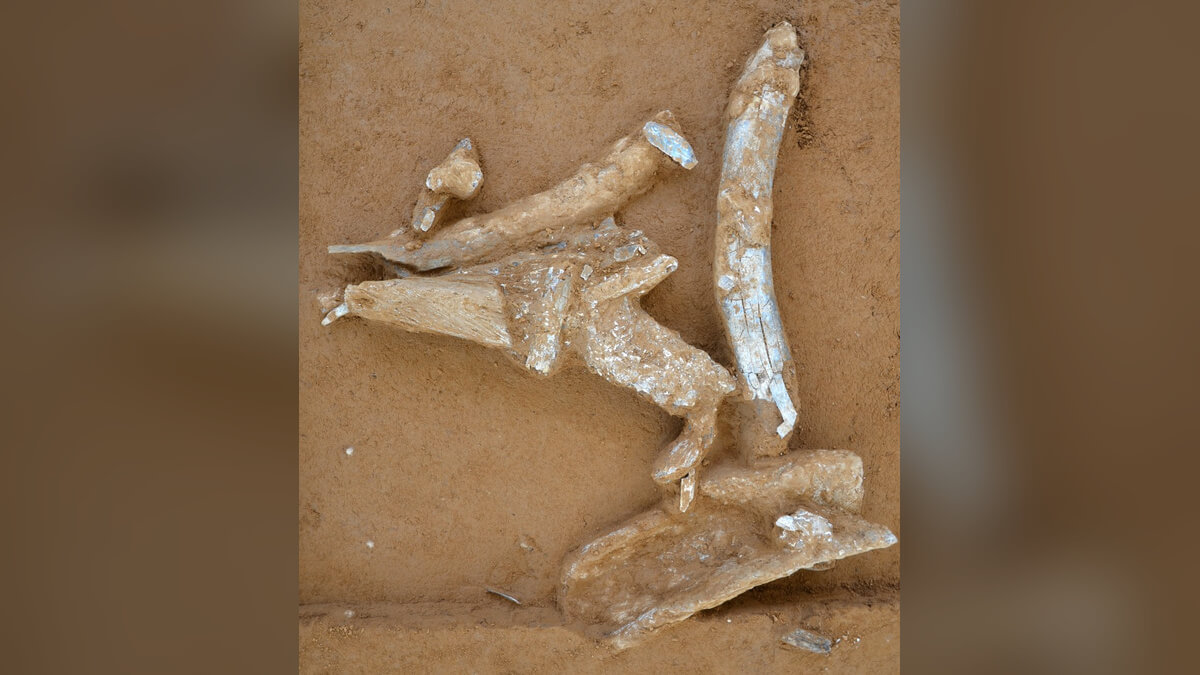
A remarkable concentration of mammoth bones discovered at a 30,000-year-old settlement in Germany is challenging a long-standing interpretation of Ice Age life. Cut marks on the remains suggest that early modern humans may have hunted and butchered mammoths rather than simply collecting ivory from animals that had died long before.
Archaeologists working at Breitenbach in the German state of Saxony-Anhalt have uncovered substantial deposits of mammoth bones for the first time since excavations conducted nearly a century ago. The discoveries include large tusk fragments, worked ivory, and evidence suggesting that these enormous animals may have played a more direct role in the lives of prehistoric hunter-gatherers than previously believed.
The findings come from excavations conducted between July and October 2026 by researchers from the Leibniz Centre for Archaeology (LEIZA) and the Saxony-Anhalt State Office for Heritage Management and Archaeology. They raise new questions about hunting strategies, food resources, and ivory production among the early modern humans who occupied the settlement approximately 32,000 to 34,000 years ago.
Did Ice Age Hunters Kill Mammoths at Breitenbach?
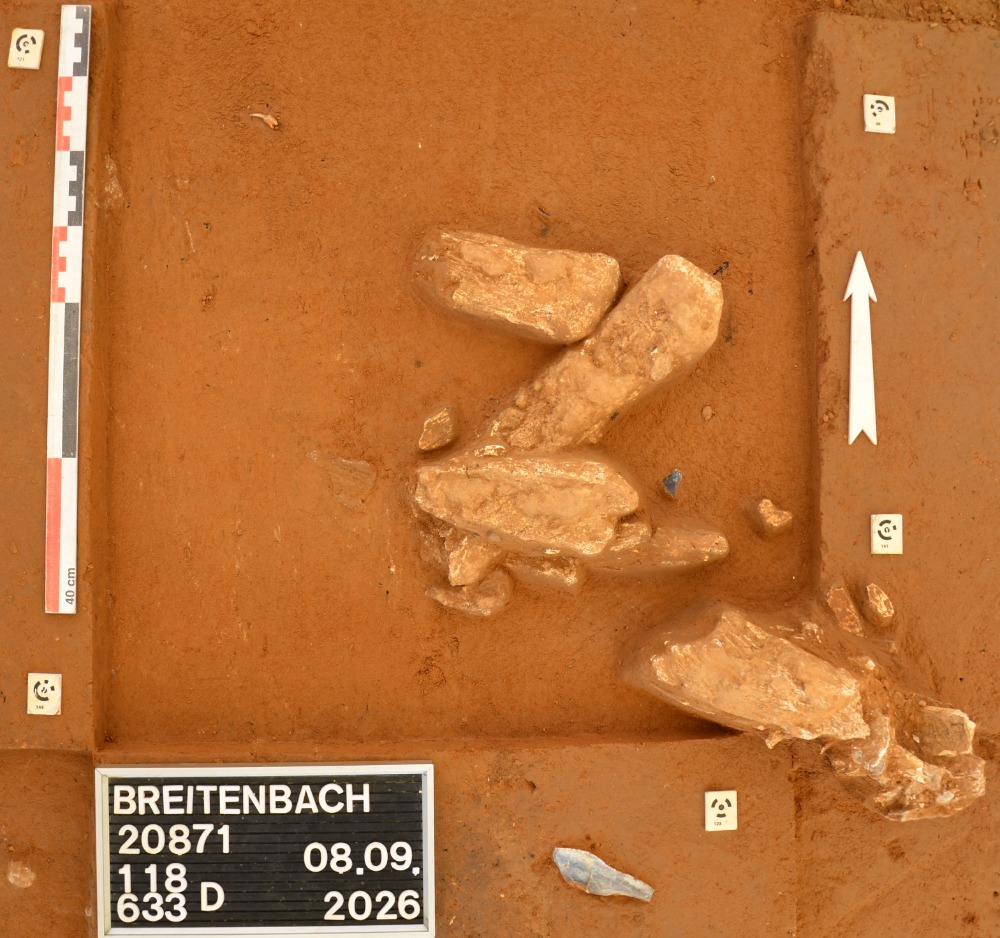
For years, archaeologists believed that the people of Breitenbach primarily collected fossil mammoth ivory rather than hunting the animals themselves. Earlier investigations suggested that some of the ivory used at the site was considerably older than the human occupation, indicating that prehistoric craftspeople had gathered tusks from animals that died long before.
The latest discoveries are beginning to challenge that interpretation. Researchers identified large concentrations of mammoth bones associated with worked ivory, while apparent cut marks suggest that humans processed at least some of the animals for food.
According to Dr. Olaf Jöris of MONREPOS, a research center within LEIZA, previous evidence indicated that the inhabitants mainly hunted reindeer, occasionally horses and red deer, as well as smaller animals such as foxes and hares. The new findings suggest that mammoths may also have been among their prey, potentially providing substantial quantities of meat alongside valuable raw materials.
Mammoth ivory could be fashioned into tools, ornaments, and artistic objects, while the animals’ hides may have served as materials for clothing or shelter coverings. However, the presence of cut marks does not establish how the animals died. Further investigation is needed to determine whether the bones represent hunted mammoths, scavenged carcasses, or a combination of different activities.
A 30,000-Year-Old Settlement with a Specialized Ivory Workshop
Breitenbach-Schneidemühle extends across approximately 10,000 square meters and is regarded as the largest known open-air Aurignacian site in western Eurasia. The Aurignacian, broadly dated to between 42,000 and 32,000 years ago, represents an early phase of modern human occupation in Europe, characterized by increasingly elaborate stone and bone technologies and some of the continent’s earliest figurative art.
The archaeological site was first discovered in 1924, when a schoolboy found a mammoth tooth during construction work near a sawmill. Extensive excavations followed in 1927 under Swedish archaeologist Nils Niklasson, who investigated nearly 400 square meters. Although research resumed in 2009, comparable concentrations of mammoth bones had not been encountered again until the latest campaign.
One of the settlement’s most important discoveries is an area interpreted as a specialized ivory workshop. Archaeologists identified manufacturing debris alongside pierced beads, projectile points, and fragments of three-dimensional figurines carved from mammoth ivory. These objects demonstrate that ivory working involved both practical production and the creation of ornaments and artistic objects.
The possibility that mammoths were hunted locally raises an important question about this workshop: were its craftspeople processing ivory obtained directly from freshly killed animals, or did they also rely on older tusks collected from the surrounding landscape? The latest discoveries may eventually help researchers distinguish between these different sources of raw material.
What Mammoth Bones Reveal About Early Human Life
Beyond the possibility of mammoth hunting, Breitenbach offers an unusually detailed picture of how early modern humans organized their daily activities. Unlike many Aurignacian archaeological sites, which are known primarily from caves and rock shelters, Breitenbach preserves evidence of a large open-air settlement.
Researchers have identified separate activity areas associated with ivory working and the processing of Arctic fox and mountain hare pelts. According to Dr. Marcel Weiß of the Saxony-Anhalt State Office for Heritage Management and Archaeology, the site’s extensive size and well-preserved remains provide an exceptional opportunity to investigate the spatial organization of prehistoric hunter-gatherer camps.
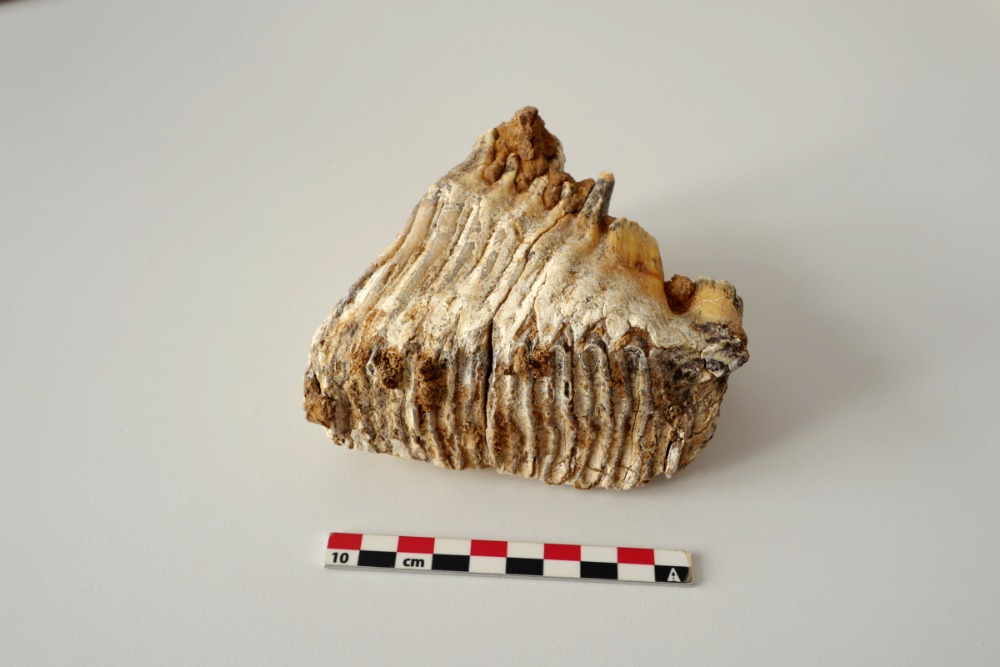
Among the latest discoveries is a molar belonging to a young mammoth, further expanding the collection of animal remains recovered from the settlement. The excavation campaign involved 40 students from Germany and abroad, while the continuing research project aims to reconstruct how the site’s inhabitants used animal resources and organized their activities.
Nearly a century after the first major excavations at Breitenbach, the newly discovered mammoth bones are prompting archaeologists to reconsider the relationship between early modern humans and one of the largest animals of the Ice Age. Further study of the remains could clarify whether mammoth hunting formed part of the settlement’s economy alongside its already well-documented ivory craftsmanship.
Cover Image: Mammoth bones and ivory fragments discovered during the 2026 excavations at Breitenbach, Germany. The concentration of remains measures approximately 50 × 60 centimeters. Credit: Landesamt für Denkmalpflege und Archäologie Sachsen-Anhalt / Marcel Weiß.