
An ancient temple in Bulgaria may have been one of the last strongholds of Thracian pagan worship. Archaeologists have uncovered a remarkable marble relief of Cybele and three nymphs, along with evidence that religious rituals continued into the fifth century AD, despite Christianity’s growing dominance.
For centuries, the people of Thrace worshipped a variety of gods and local divine figures, maintaining religious traditions that became intertwined with Greek and Roman beliefs. By the late fourth century AD, however, the spread of Christianity and imperial restrictions on pagan rituals were transforming religious life across the region.
At Balak Dere, near the Arda River in modern-day Bulgaria, archaeologists are finding evidence that this transformation may have unfolded more slowly than imperial legislation might suggest.
The latest excavations, conducted under the direction of Ivaylo Kanev, chief curator at Bulgaria’s National History Museum, have revealed further details of a temple complex believed to have begun operating in the third century AD. The 2026 excavation season has strengthened the interpretation of Balak Dere as an important religious center in ancient Western Thrace.
An Ancient Temple Built Around Rituals and Offerings
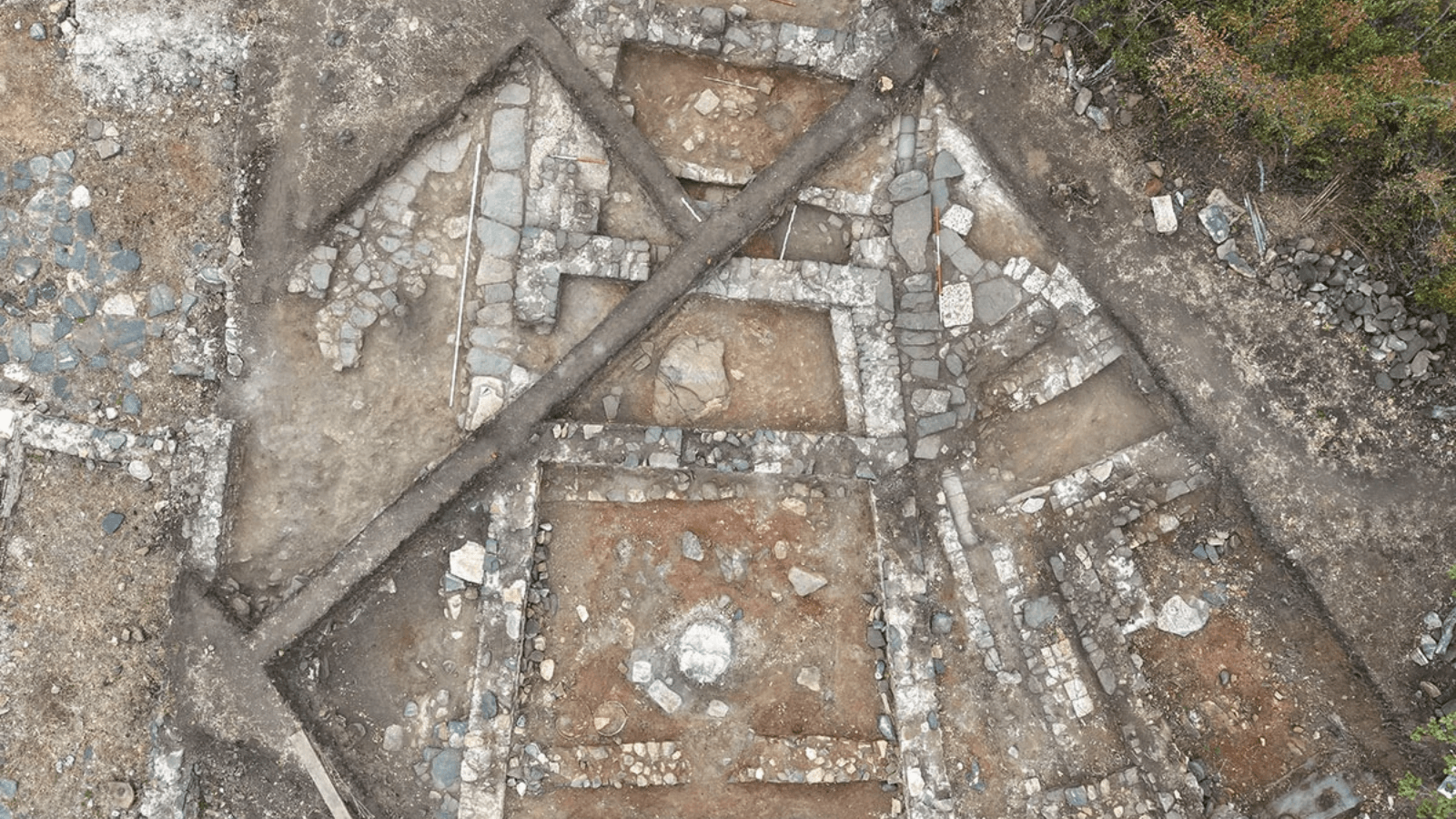
The sanctuary’s architecture offers clues to the ceremonies once performed within its walls. Archaeologists have identified a building approximately 15 meters long, with an unusual trapezoidal plan and three interconnected chambers arranged along a southeast–northwest axis.
Each room appears to have served a particular religious purpose. The largest contained an altar, the central chamber featured a structure interpreted as a place for sacrifices, and another room was apparently used to store offerings presented to the gods.
Together, these features suggest a carefully organized sacred space rather than an ordinary domestic building. The architectural arrangement also provides valuable evidence for how pagan communities in Late Antique Thrace conducted religious ceremonies.
The temple stood within a broader settlement near the Arda River. According to the excavation team, discoveries made during successive archaeological seasons indicate that the sanctuary was not simply one building among many but an important focus of activity for the surrounding community.
A Mysterious Relief of Cybele and Three Nymphs
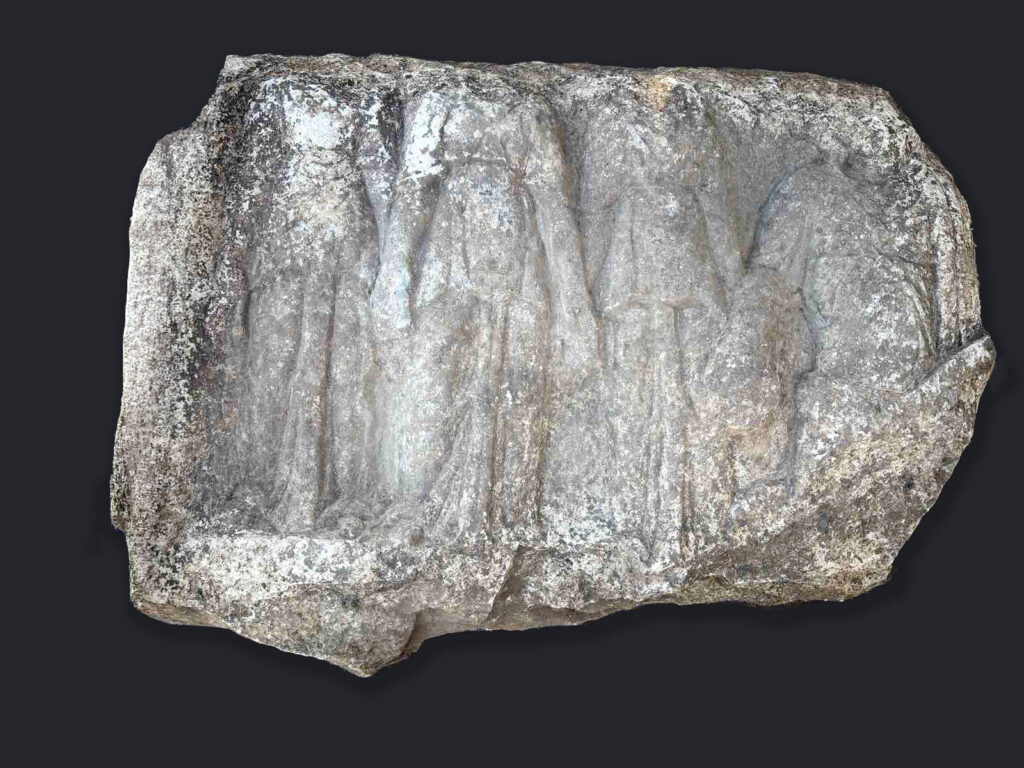
One of the most remarkable finds is a marble relief featuring four divine figures: three nymphs and Cybele, the powerful mother goddess associated with nature, fertility, and protection.
Cybele originated in Anatolian religious traditions and became widely worshipped across the Greek and Roman worlds. Her presence at Balak Dere illustrates the connections between Thracian religious practices and the wider Mediterranean cultural environment.
What makes the newly reported relief particularly intriguing is the combination of its figures. According to the researchers, the depiction of Cybele together with three nymphs in a single composition represents an arrangement they have not previously encountered.
The image may therefore offer an important clue to the sanctuary’s religious identity. Rather than pointing exclusively to one deity, it raises the possibility that the temple accommodated related cults or traditions within the same sacred setting.
The relationship between the goddesses and water is especially relevant. Archaeologists have identified a channel running around the temple, while the nearby Arda River provides an additional connection to the surrounding landscape.
These features have led the excavation team to consider whether the sanctuary may have functioned as a nymphaeum, a sacred place associated with the worship of nymphs. The interpretation remains provisional, but the combination of religious imagery and water-related architecture makes it a significant avenue for further research.
When Christianity Challenged the Old Gods
The temple’s final centuries coincided with one of the most profound religious transformations in Roman history. Christianity gained increasing imperial support during the fourth century, while traditional religious practices faced mounting legal restrictions.
In AD 391 and 392, Emperor Theodosius I introduced measures prohibiting pagan sacrifices and other forms of traditional worship. These laws marked a decisive shift in imperial religious policy, although their enforcement varied considerably across the empire.
At Balak Dere, the archaeological evidence suggests that older religious traditions may have persisted into the fifth century. The excavation team has identified traces of a major fire, which researchers date to around the middle of that century, decades after the Theodosian restrictions.
The destruction raises an intriguing question: was the sanctuary deliberately attacked because its worshippers continued to honor the old gods?
The archaeologists consider a connection between the fire and the religious changes of Late Antiquity possible. Yet the burning alone cannot establish that the temple was targeted by Christians or that religious persecution caused its destruction. Other explanations remain possible, and the circumstances of the fire have not been conclusively determined.
What makes Balak Dere important is the apparent longevity of its religious activity. If the proposed chronology and interpretation are confirmed, the sanctuary would offer valuable evidence of how traditional beliefs survived in some communities even as Christianity gained dominance across the Roman Empire.
Was This Among the Last Thracian Pagan Temples?
The possibility that Balak Dere was among the final pagan sanctuaries of Western Thrace has emerged from several lines of archaeological evidence rather than from a single discovery. The temple’s architecture, its proposed chronology, the marble relief, and its relationship with water all contribute to this interpretation.
Researchers believe these features may identify a religious center where traditional Thracian practices continued during a period when pagan worship was increasingly marginalized. However, establishing whether it was truly one of the region’s last functioning temples would require more precise dating and comparison with other Late Antique sanctuaries.
The distinction matters because religious change rarely occurred simultaneously across an entire empire. Communities responded differently to new laws, religious authorities, and cultural expectations, and some continued older traditions long after those practices lost official support.
At Balak Dere, the remains of altars, offering spaces, water installations, and divine imagery preserve traces of that complex transition. Further excavations may help establish how long the sanctuary operated, what ceremonies took place there, and whether its destruction marked the end of pagan worship at the site.
For the archaeologists investigating the complex, the discovery offers more than another example of ancient religious architecture. It provides an opportunity to examine how a local community maintained its sacred traditions as the religious world around it changed.
Cover Image: Aerial view of the ancient pagan temple at Balak Dere near Ivaylovgrad, Bulgaria, showing its unusual trapezoidal layout and interconnected chambers. Credit: National History Museum, Bulgaria.