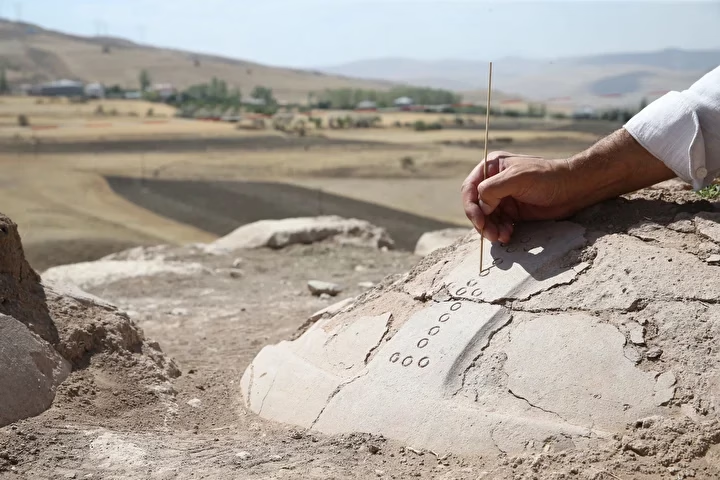
Archaeologists excavating Kevenli Fortress, located on the lower slopes of Mount Erek in eastern Turkey’s Van province, have uncovered 76 massive storage jars (pithoi) bearing cuneiform markings. The discovery represents the largest known ancient storage facility in the region and provides unprecedented insight into Urartian agricultural and administrative systems.
The Urartian Kingdom, which flourished from the 9th to the 6th centuries BCE around Lake Van, was renowned for its fortified strongholds, advanced irrigation networks, and centralized state organization. As one of the most powerful Iron Age civilizations of Anatolia, it controlled key trade routes between Mesopotamia, the Caucasus, and the Iranian plateau.
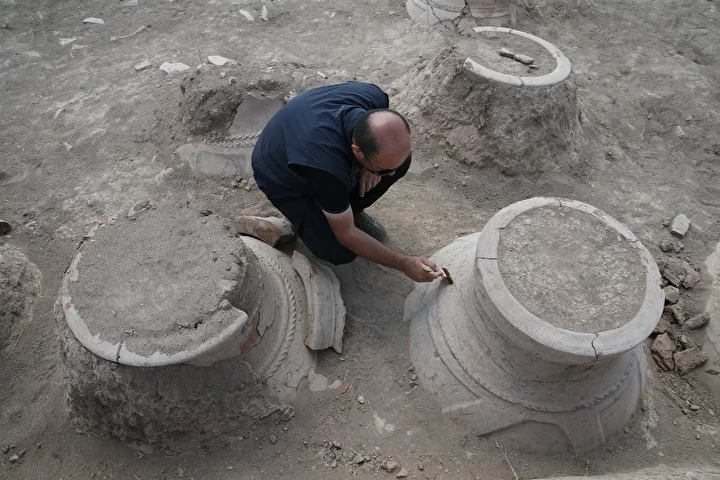
A Systematic Storage Network
The excavation, led by the Van Museum and scientifically directed by Assoc. Prof. Dr. Rıfat Kuvanç of Iğdır University, revealed that the jars were arranged in a symmetrical layout, each inscribed with cuneiform signs recording their contents and volume. Researchers say the inscriptions reflect a sophisticated state-controlled inventory system that underscores the Urartians’ expertise in managing agricultural production.
Ancient DNA Research Underway
Organic samples collected from the interior of the jars are undergoing ancient DNA analysis to reconstruct the crop diversity of the Van Plain during the Urartian period. Preliminary findings have already identified preserved grain seeds, and further research is expected to illuminate the region’s agricultural strategies more than 2,700 years ago.
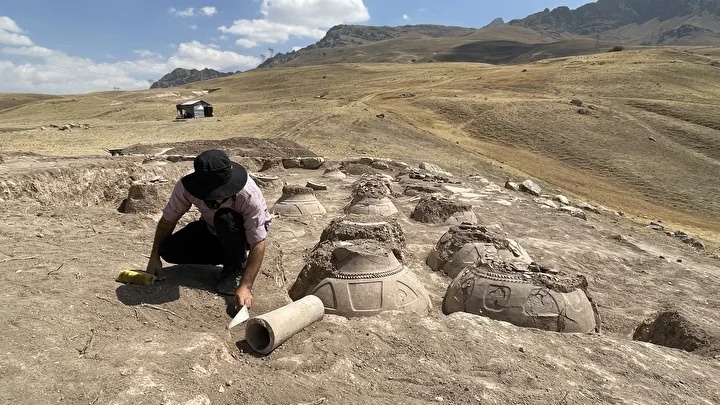
Strategic Significance of Kevenli Fortress
Although smaller than monumental fortresses such as Tušpa (Van Castle), Kevenli Fortress occupied a key position overlooking fertile lands and trade routes. The density of pithoi uncovered suggests that the fortress served not only as a defensive stronghold but also as a major agricultural depot within Urartu’s administrative network.
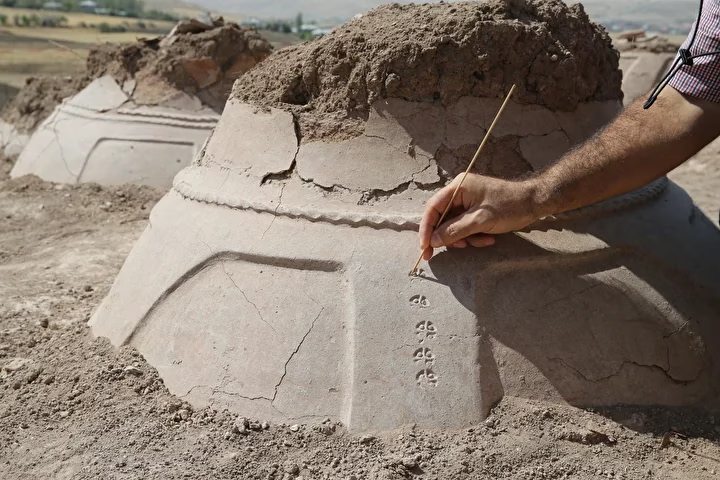
Artistic and Engineering Finds
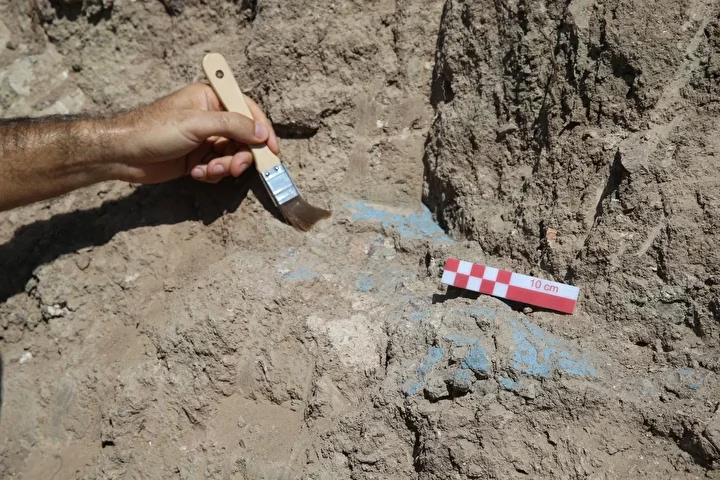
In addition to the jars, excavators unearthed fragments of a terracotta water pipe, traces of red and black wall paintings, and a ceramic vessel decorated with a carved lion motif. These finds illustrate the Urartians’ engineering capabilities and their attention to aesthetic detail, even in utilitarian spaces.
Archaeological Significance
According to Dr. Kuvanç, the discovery of 76 inscribed pithoi marks a turning point in Urartian studies, offering the most comprehensive dataset on state-run storage systems in eastern Anatolia. The findings contribute crucial evidence to understanding the administrative, economic, and cultural complexity of the Urartian Kingdom.