Smolensk’s historic center has yielded an extraordinary discovery: archaeologists from the Russian Academy of Sciences (RAS) have uncovered the remains of a rare pre-Mongol stone building—an architectural treasure dating back to the 12th century, when most structures in medieval Rus’ were built of wood.
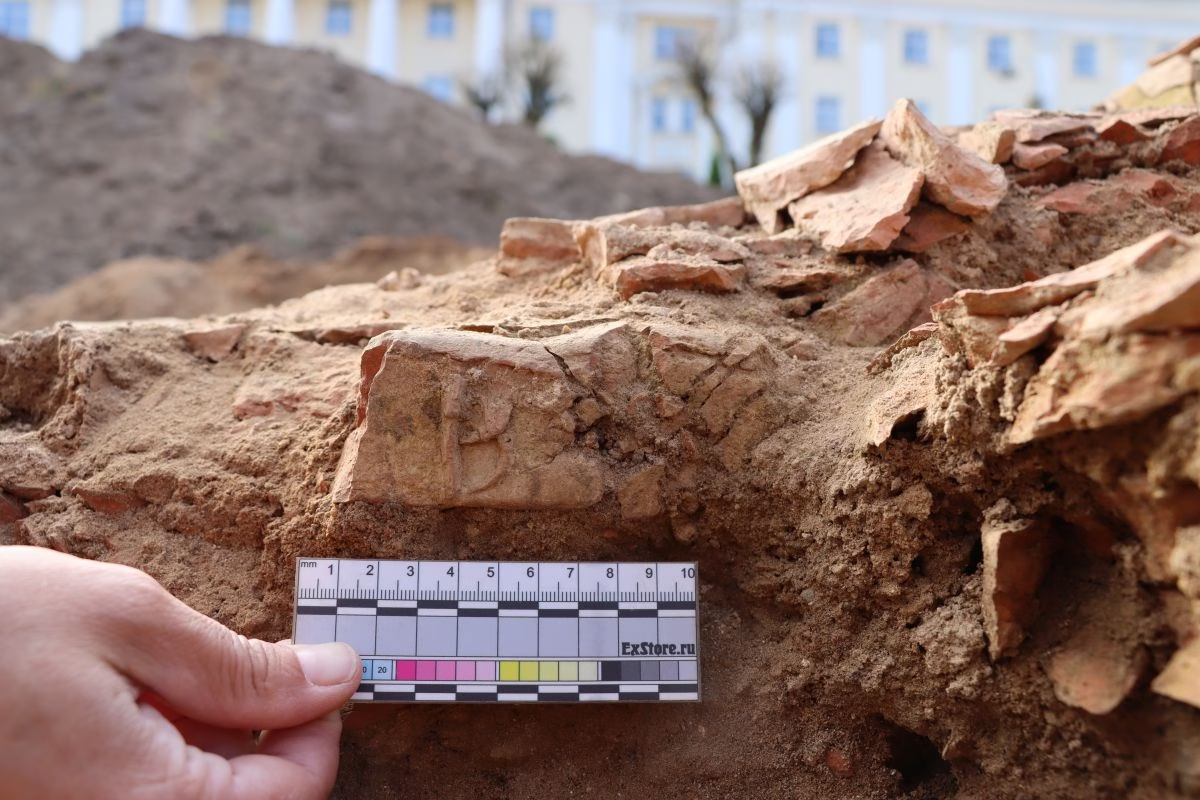
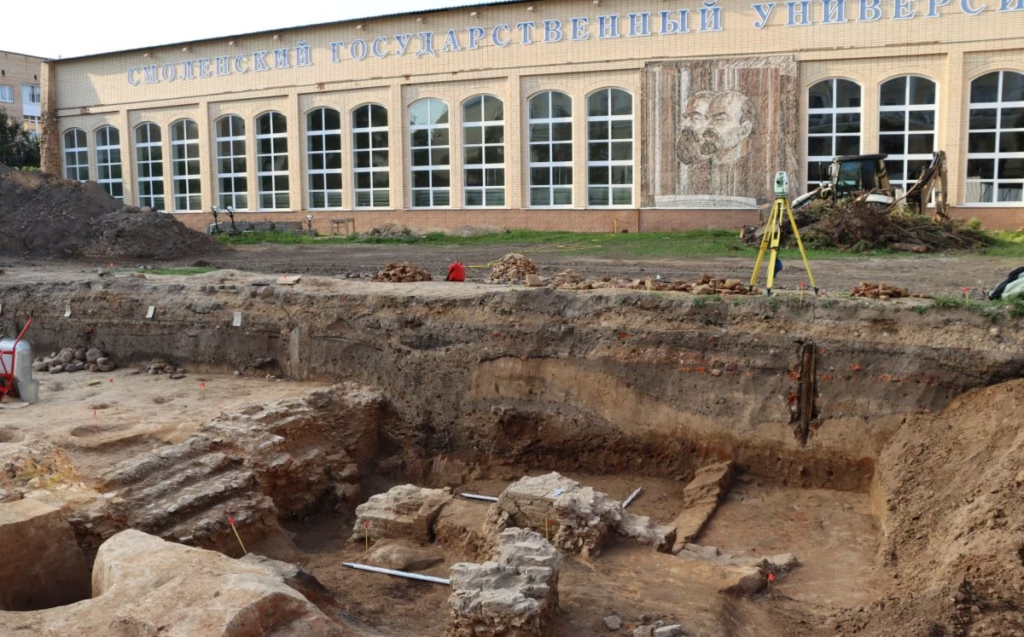
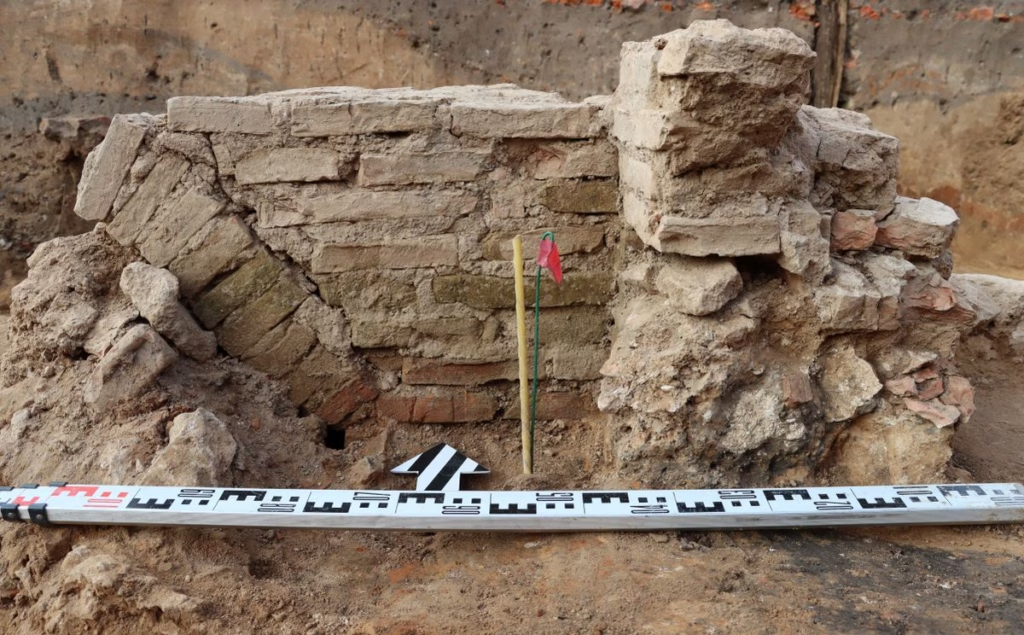
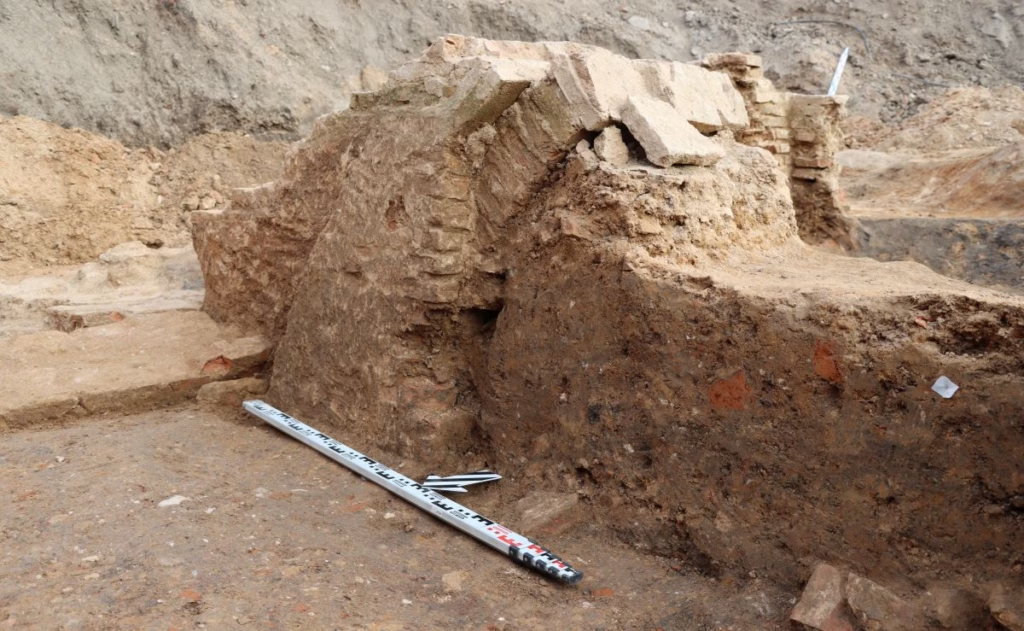
The find, unearthed in a 1,300-square-meter excavation area on the future campus of Smolensk State University, includes brick walls made of plinfa—a thin, wide Byzantine-style brick—along with a staircase leading into a stone basement and the remnants of an arched vault that once supported the building’s main floor.
“This is not a church but a civil structure, most likely a terem, where ceremonial events and official feasts may have been held,” said Dr. Vladimir Sedov, senior researcher at the RAS Institute of Archaeology. “Such stone buildings were extremely rare in the pre-Mongol period and could only be commissioned by a prince or a high-ranking boyar. For architectural archaeology, this is comparable to finding a precious treasure.”
One of Only Three Known Civil Stone Buildings from Medieval Smolensk
This newly uncovered building joins just two other known pre-Mongol civil stone structures in Smolensk: one near the Assumption Cathedral in the Kremlin and another across the Dnieper River by the Church of Saints Peter and Paul.
The excavation team, led by archaeologist Igor Strikalov, has revealed that the building’s surviving basement-level walls form a rectangular structure at least 8 × 6 meters in size, with a southern vestibule and stairway. The above-ground portion collapsed by the 14th century, but the underground section remains intact.
Archaeologists also discovered distinctive builder’s marks and oval stamps on the plinfa bricks, suggesting they were produced in separate batches by different craftsmen.
Layers of History: From 11th-Century Hearths to WWII Relics
Excavations at the site, which entered Smolensk’s city limits in the 12th century, have revealed an uninterrupted historical timeline:
- 11th–12th centuries: Hearth pits and ceramic vessels from Smolensk’s earliest development.
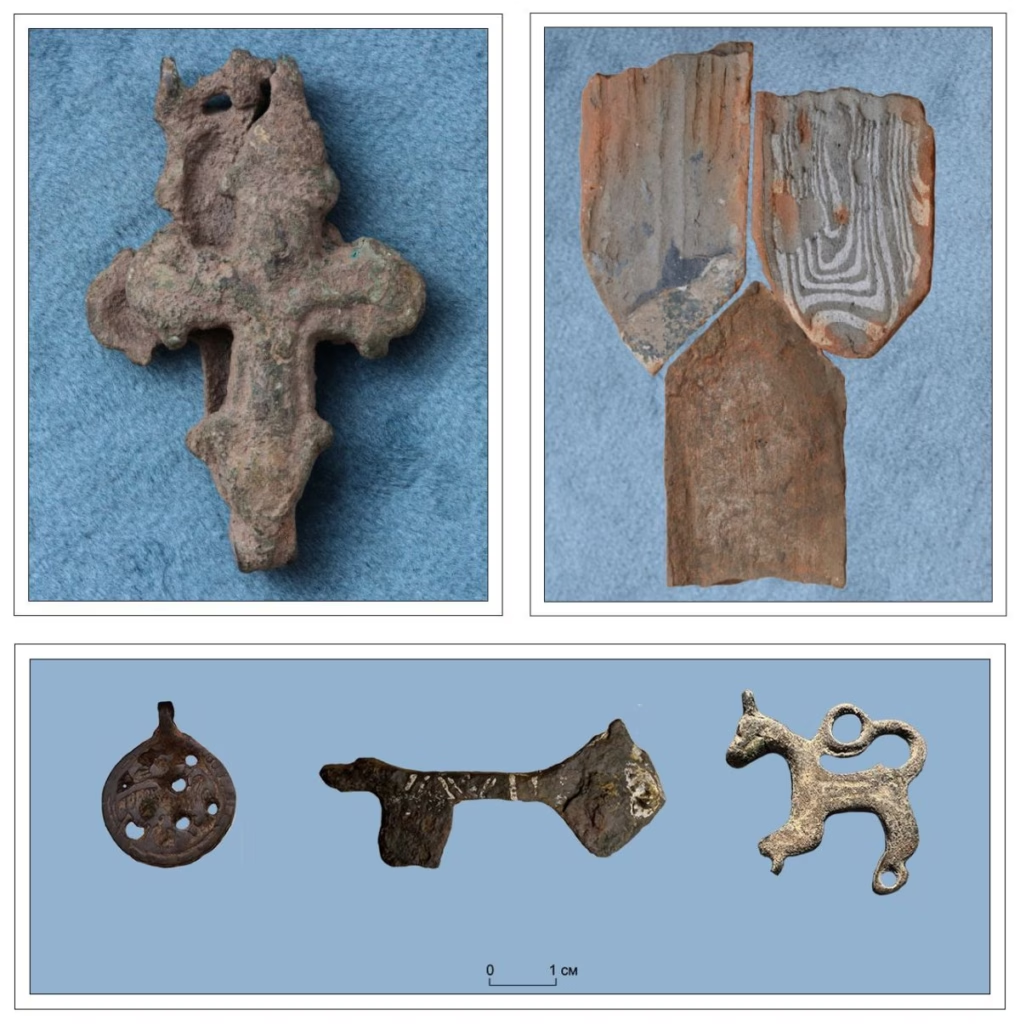
- 13th century: A burned wooden house, destroyed during a Lithuanian raid, containing glass bracelets, spindle whorls, and religious crosses.
- 16th–18th centuries: Coins, bronze fittings, clay whistles, and musket balls, indicating intense activity and agricultural use.
- 19th–20th centuries: House foundations, imperial Russian weapons components, and WWII-era German wire fragments.
The diversity of finds underscores Smolensk’s role as a strategic and cultural hub, bridging medieval Rus’, the Grand Duchy of Lithuania, and later the Russian Empire.
Significance for Medieval Russian Archaeology
The discovery provides rare insight into urban elite life in medieval Rus’, where stone residential buildings were symbols of prestige and political power. The building’s elaborate construction, combined with the lead seal of a Smolensk prince found nearby, strongly suggests aristocratic ownership.
“Smolensk’s medieval stone heritage is extremely limited; each such find deepens our understanding of the city’s political and cultural influence during the Kievan Rus’ era,” noted Sedov.
Research at the site will continue, with archaeologists aiming to reconstruct the building’s original layout and function.