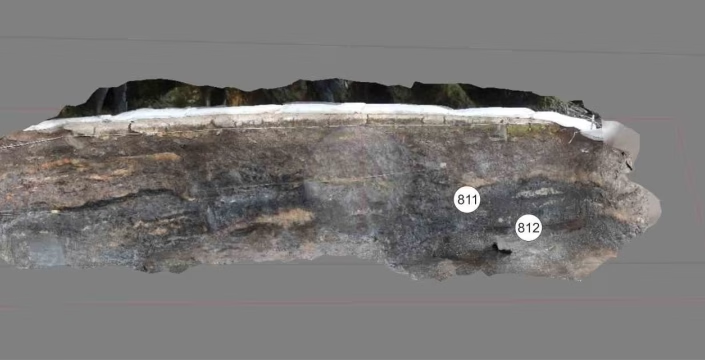
A joint team of archaeologists and microbiologists has uncovered striking evidence from İnönü Cave in northern Turkey, showing that prehistoric communities were already using charcoal as a medical treatment some 5,000 years ago. Researchers also traced antibiotic resistance genes back more than six millennia, demonstrating that this global health challenge predates modern medicine.
Bridging Archaeology and Microbiology
The interdisciplinary study, conducted under the leadership of Zonguldak Bülent Ecevit University (BEUN) with contributions from Ankara University, combined archaeological excavation with advanced metagenomic analysis. Soil samples collected from five archaeological layers of İnönü Cave revealed both an extensive microbial map and genetic markers of ancient illnesses.
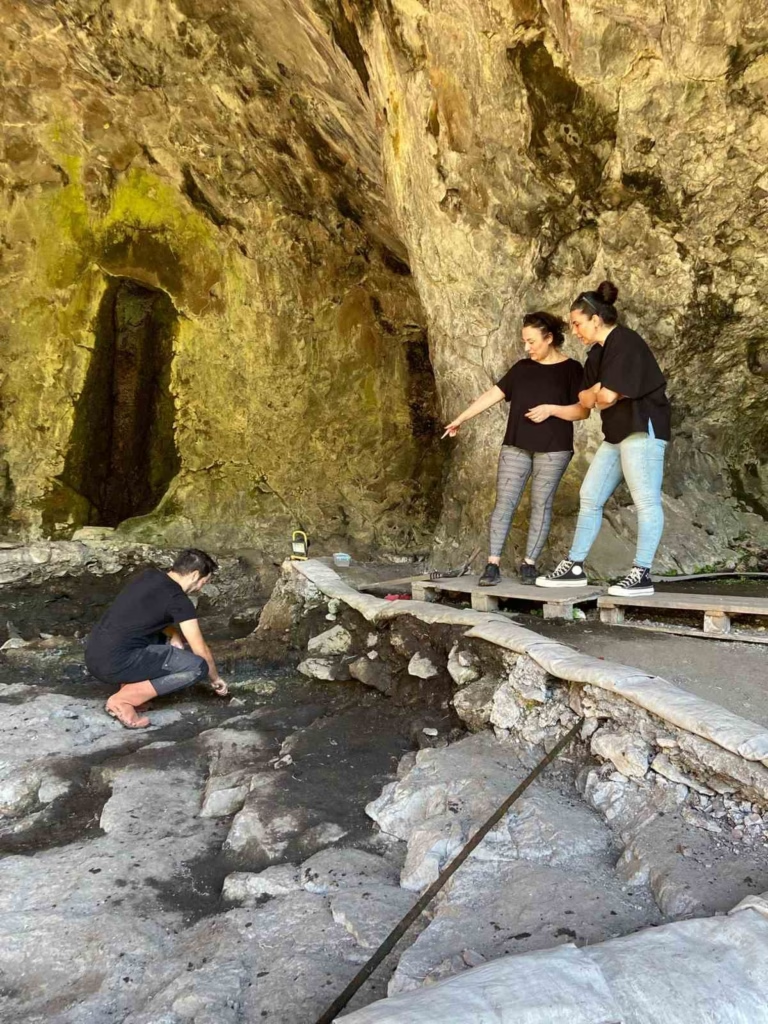
“Excavations at the cave began in 2017, and this project has allowed us to reconstruct not just the environment but also the health conditions of its prehistoric inhabitants,” explained Associate Professor Hamza Ekmen, the excavation director. “We now know that people in the Early Bronze Age were highly resourceful, using locally available substances like charcoal to manage stomach ailments.”
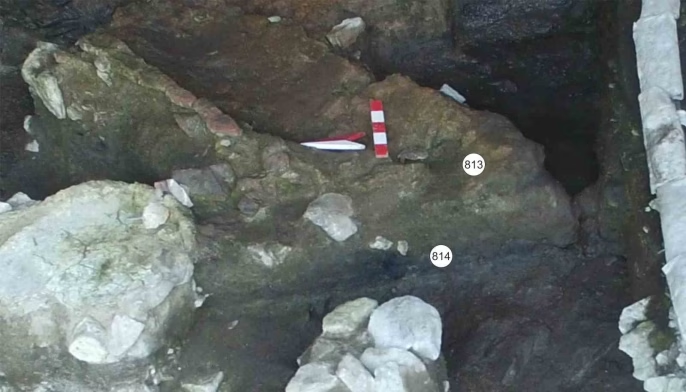
A Prehistoric Origin of Charcoal Therapy
Associate Professor Fadile Gülden Ekmen of BEUN emphasized that the discovery redefines the timeline of coal and charcoal use in the Zonguldak region:
“The story of coal in this area usually begins with Uzun Mehmet’s discovery in the 19th century. Yet this research proves charcoal-based remedies were already in use five millennia ago. What we think of as a modern treatment—activated charcoal therapy—has been passed down through thousands of years of cultural memory.”
Antibiotic Resistance: An Ancient Threat
Microbiological analysis led by Associate Professor Şükran Öztürk from BEUN’s Faculty of Pharmacy identified antibiotic resistance genes in multiple layers of the cave. These results suggest that resistance is not merely a byproduct of modern antibiotic overuse but a deeply rooted biological phenomenon influenced by ecosystems, climate, and human activity.
“Resistance genes were present in soil dating back over 6,000 years,” Öztürk said. “This shows antibiotic resistance is a natural process shaped by environmental and microbial evolution, which reinforces the importance of a holistic ‘One Health’ perspective.”
Rewriting the Medical History of Anatolia
Supported by Turkey’s Ministry of Culture and Tourism, the İnönü Cave research project represents one of the most comprehensive efforts to link archaeology with microbiology. The findings provide a rare window into prehistoric healthcare strategies, illustrating how ancient communities adapted their environment for survival.
The study not only repositions Zonguldak—today synonymous with industrial coal mining—as a center of early medicinal innovation but also demonstrates that many treatments considered modern have roots in deep prehistory.
Öztürk S, Ekmen F, Ekmen H, Ünal EM, Er A, Keskin E, et al. (2025). Decoding past microbial life and antibiotic resistance in İnönü Cave’s archaeological soil. PLOS ONE 20(7): e0326358. https://doi.org/10.1371/journal.pone.0326358
Cover Image Credit: Soil DNA analysis from Turkey’s İnönü Cave reveals 5,000-year-old charcoal therapy and ancient antibiotic resistance genes. Credit: Öztürk et al., 2025, PLOS ONE