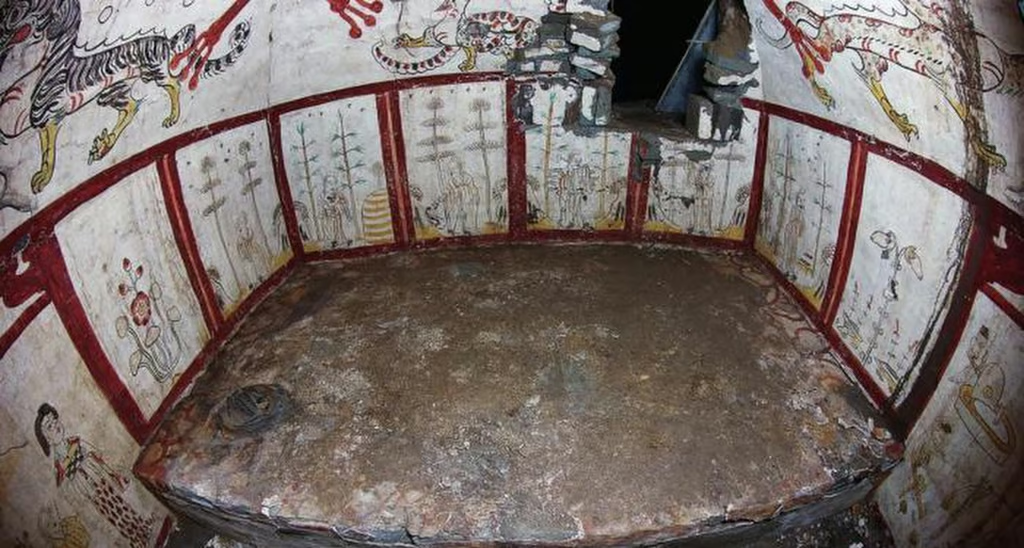
Archaeologists in northern China have uncovered an exceptionally well-preserved Tang dynasty tomb from around A.D. 736, revealing stunning murals — including the lifelike image of a blond-haired foreigner who may have been a merchant from Central Asia.
A Window into Daily Life During the Tang Golden Age
The tomb, unearthed near Taiyuan in Shanxi Province, belonged to a 63-year-old man and his wife. Although discovered in 2018 during road construction, the site’s full artistic and historical significance has only now been detailed by archaeologists from the Jinyang Ancient City Archaeological Institute.
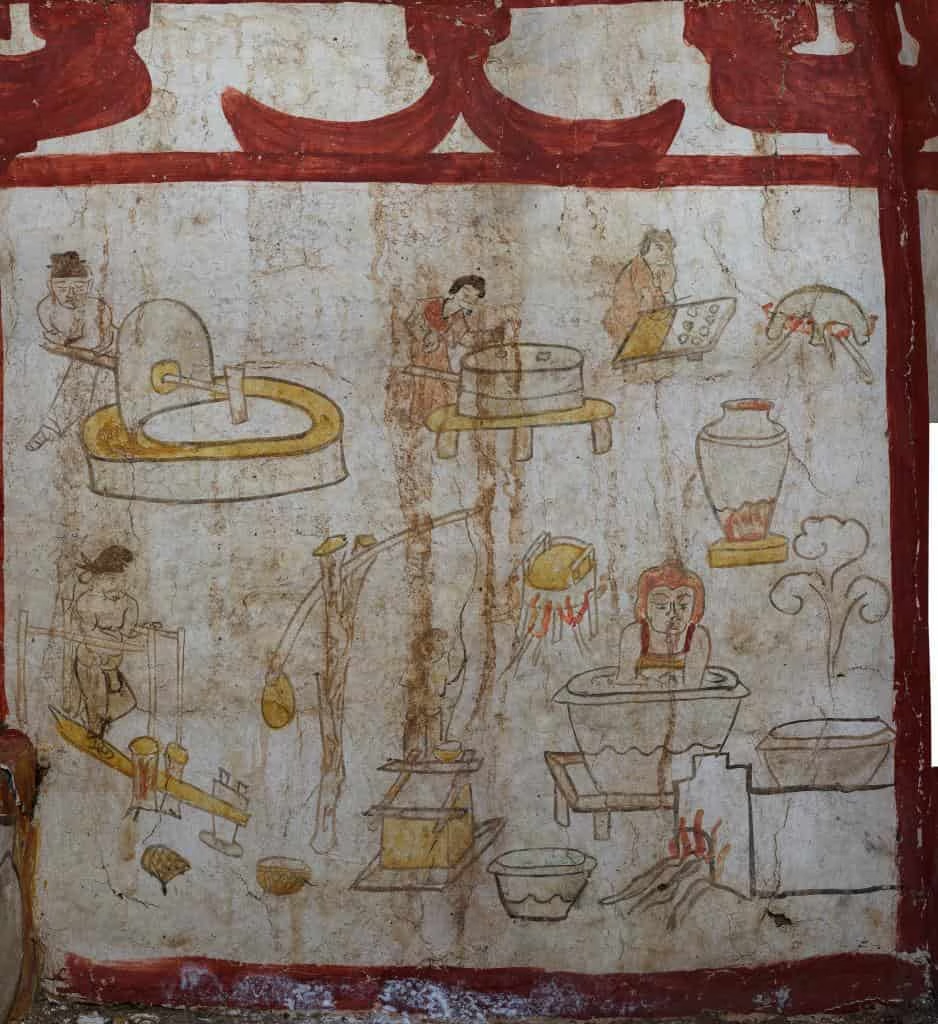
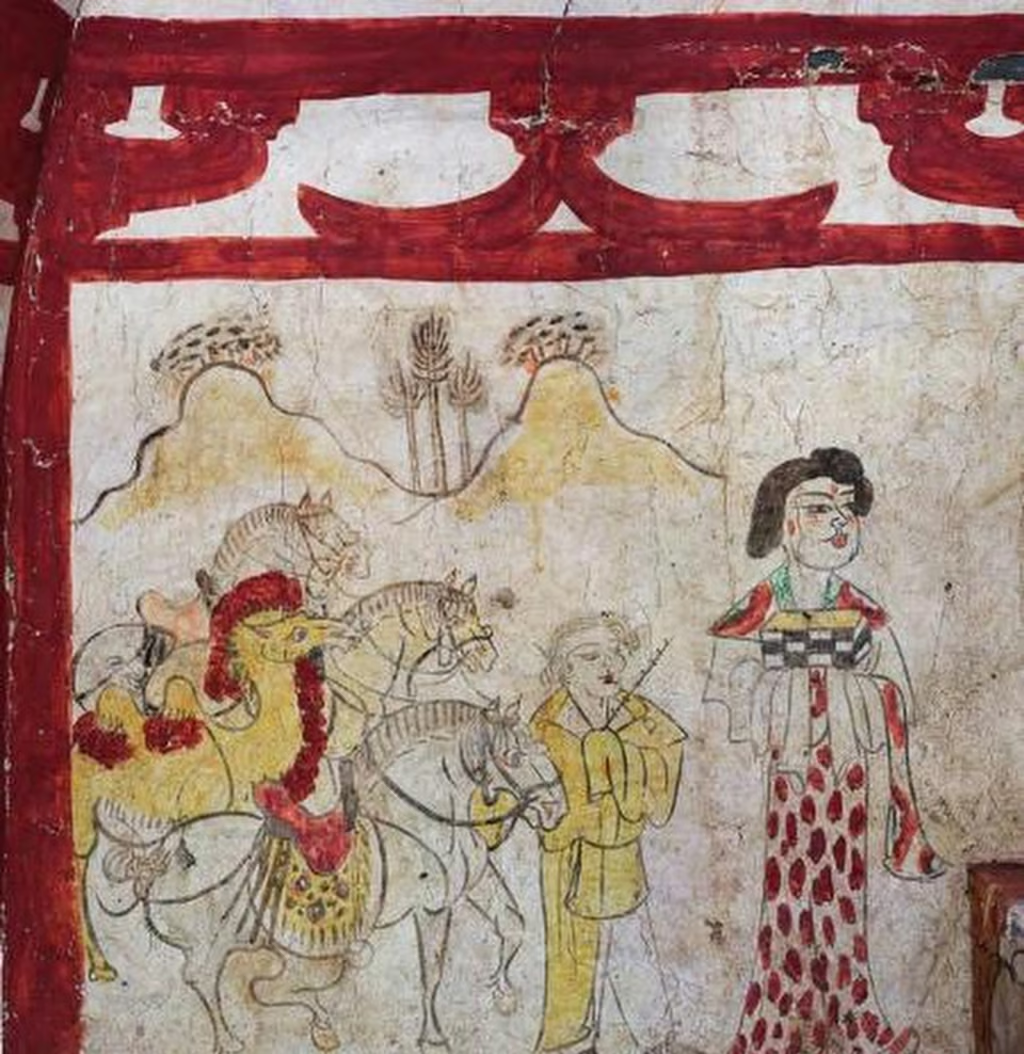
Every wall of the brick-built chamber is painted with vivid scenes of Tang daily life — women drawing water, cooks kneading noodles, grooms leading camels, and farmers threshing grain. The colors, preserved for nearly 1,300 years, offer one of the clearest depictions of ordinary life during China’s golden age of art, trade, and empire.
Among the many figures, one man stands out: a bearded foreigner with blond hair, painted with remarkable realism. Experts believe he was likely a Sogdian merchant — part of an ancient Iranian-speaking people who played a vital role along the Silk Road, connecting China, Persia, India, and Byzantium.
Sogdians: The Silk Road’s Great Intermediaries
The Tang dynasty (618–907) marked a time when Chang’an (modern Xi’an) was the most cosmopolitan city on Earth, attracting traders, envoys, and musicians from across Eurasia. The Sogdians, originating from Samarkand and Bukhara, were famed for their commerce and diplomatic skills.
Chinese records from the Tang era describe Sogdians as light-haired and sharp-featured, often working as traders or entertainers in border cities. Genetic studies support this, showing that centuries of interaction between Indo-Iranian and Turkic peoples gave rise to such physical traits.
Murals and Symbolism
Painted in the classic Tang “figure under the tree” style, the murals combine bold outlines with soft, natural shading. The domed ceiling features a dragon and a phoenix — eternal emblems of power and rebirth — while two guards in yellow robes stand at the entrance to protect the deceased in the afterlife.
Unlike many elite tombs that glorify battles or rulers, the Taiyuan murals focus on everyday people — cooks, attendants, and farmers — making the tomb a rare and humanizing example of Tang funerary art.
Director Long Zhen noted that the artistry resembles that found in the tomb of Wang Shenzi, a 9th-century ruler, but the Taiyuan site stands out for its focus on ordinary life. Some figures even appear to represent the tomb’s occupants themselves, suggesting a form of self-portraiture rarely seen in Tang art.
A Testament to China’s Global Ties
The find joins the legacy of Tang mural masterpieces like the Mogao Caves of Dunhuang, illustrating how China, at the height of the Silk Road, was a crossroads of civilizations where cultures, ideas, and faces mingled freely.
As research continues, scholars hope the Taiyuan tomb will deepen understanding of how global exchange and artistic diversity shaped the Tang dynasty — an empire whose openness made it one of history’s most sophisticated multicultural societies.
Zhang, J., Wang, Y., Zhang, N., Li, J., Qu, Y., Zhu, C., Zhang, F., Cai, D., & Ning, C. (2025). [Unraveling the origins of the Sogdians: Evidence of genetic admixture between ancient central and East Asians]. Journal of Archaeological Science: Reports, 61, 104957. https://doi.org/10.1016/j.jasrep.2024.104957
Cover Image Credit: Xinhua