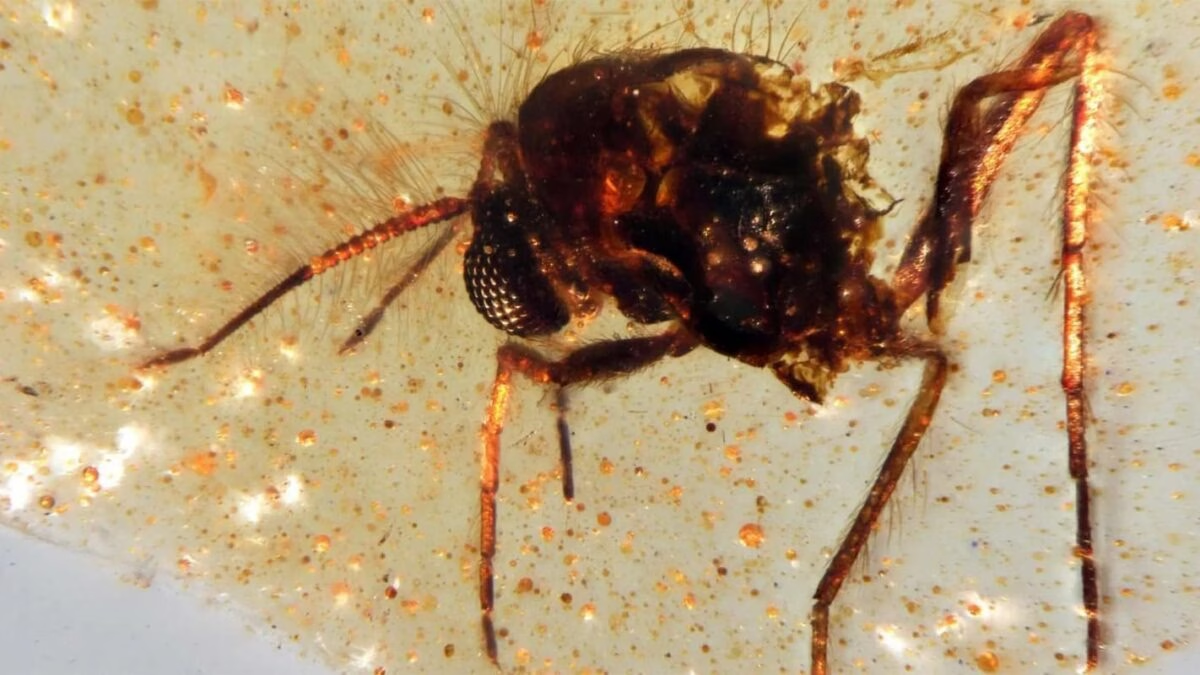
A team of international researchers has uncovered a remarkable amber deposit deep in the Ecuadorian Amazon, preserving a 112-million-year-old forest ecosystem in microscopic detail — a true “time capsule” from the age of the dinosaurs.
Published in Communications Earth & Environment, the study documents the first amber with biological inclusions ever discovered in South America, offering an unprecedented window into Cretaceous biodiversity on the southern supercontinent Gondwana.
The research, led by Dr. Xavier Delclòs, focused on samples from the Genoveva Quarry in Ecuador’s Oriente Basin, part of the Hollín Formation. The team identified two distinct types of amber — one that formed underground near tree roots and another that solidified on the forest floor. This distinction reveals contrasting fossilization processes within the same ancient ecosystem.
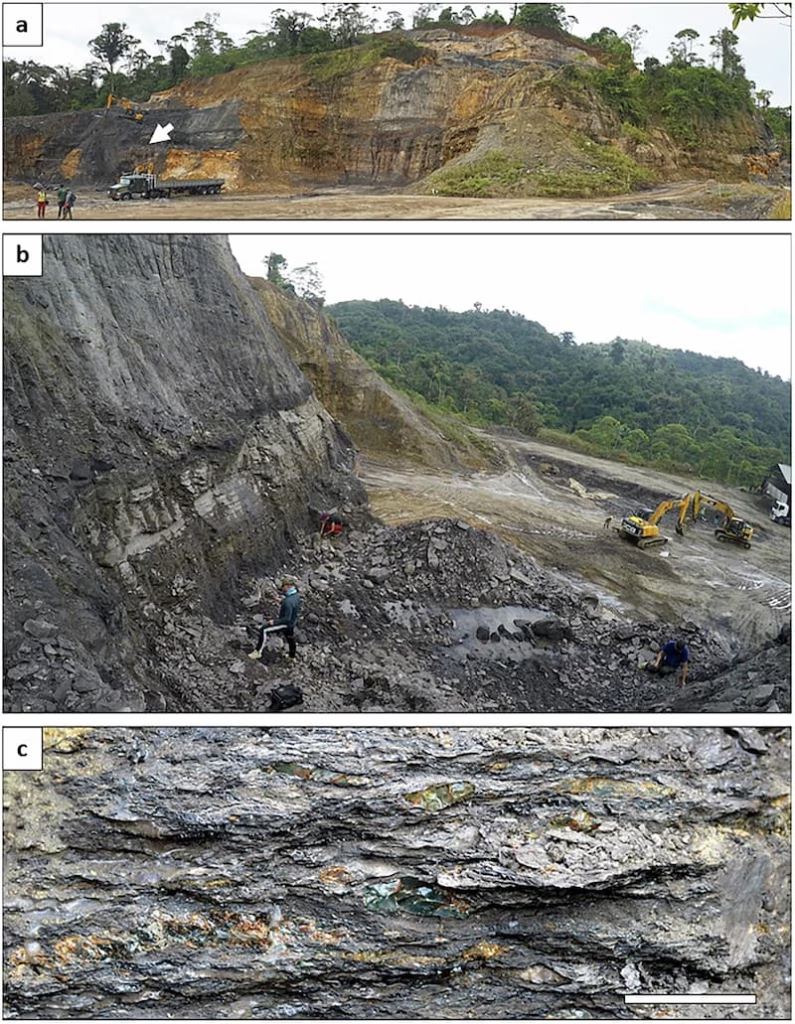
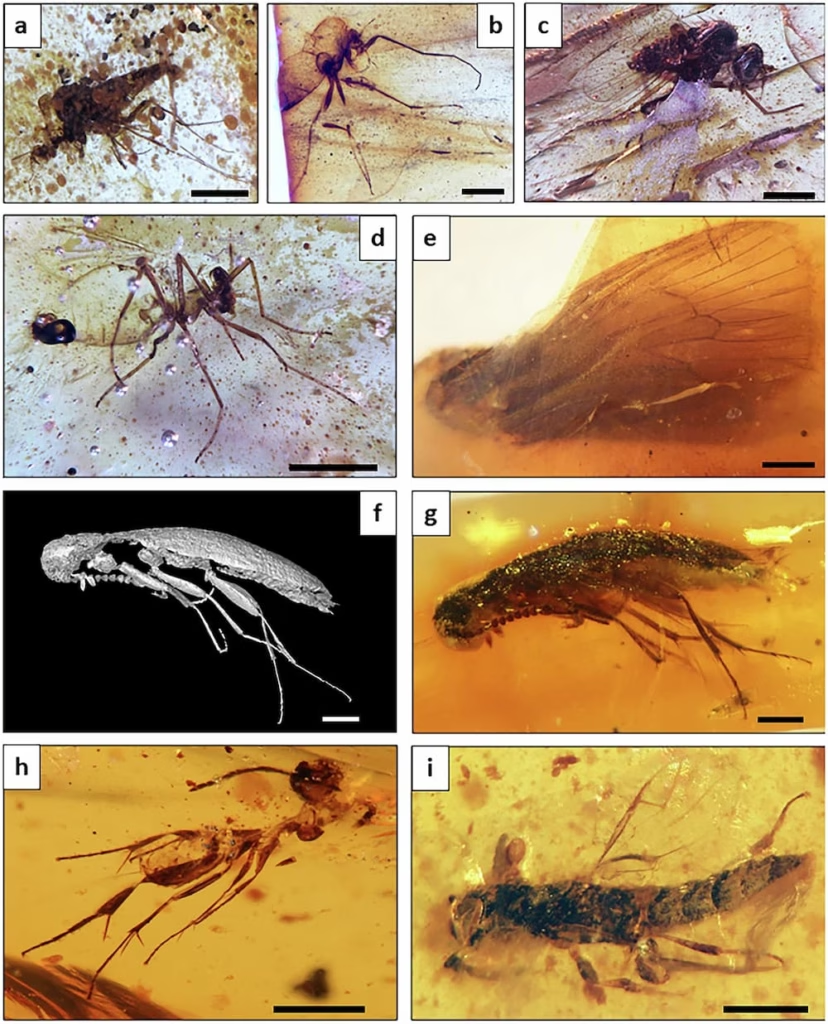
The open-air amber yielded the most spectacular discoveries: 21 out of 60 samples contained biological inclusions, including insects from five different orders — among them flies (Diptera), beetles (Coleoptera), and primitive wasps (Hymenoptera). Even more extraordinary, one sample preserved a fragment of fossilized spider web, a vanishingly rare trace of predatory behavior frozen in resin.
The surrounding rock matrix also preserved a wealth of microfossil plant remains — spores, pollen, and botanical fragments — enabling scientists to reconstruct a vivid picture of an ancient warm, humid Gondwanan forest, dominated by resin-producing conifers and dense vegetation.
This discovery bridges a major paleontological gap: until now, nearly all amber with preserved life came from the Northern Hemisphere — the Baltic, Myanmar, or Lebanon. The Ecuadorian site finally provides the Southern Hemisphere’s missing perspective on how ancient terrestrial ecosystems evolved during the Cretaceous, as Gondwana’s continents drifted toward their modern configuration.
“It’s a once-in-a-lifetime glimpse into an ancient rainforest that no longer exists,” the researchers note. “Every insect and filament of web inside this amber is a whisper from a lost world.”
Cover Image: This 112-million-year-old mosquito was one of the many insects discovered in the amber. Credit: Mónica Solórzano-Kraemer