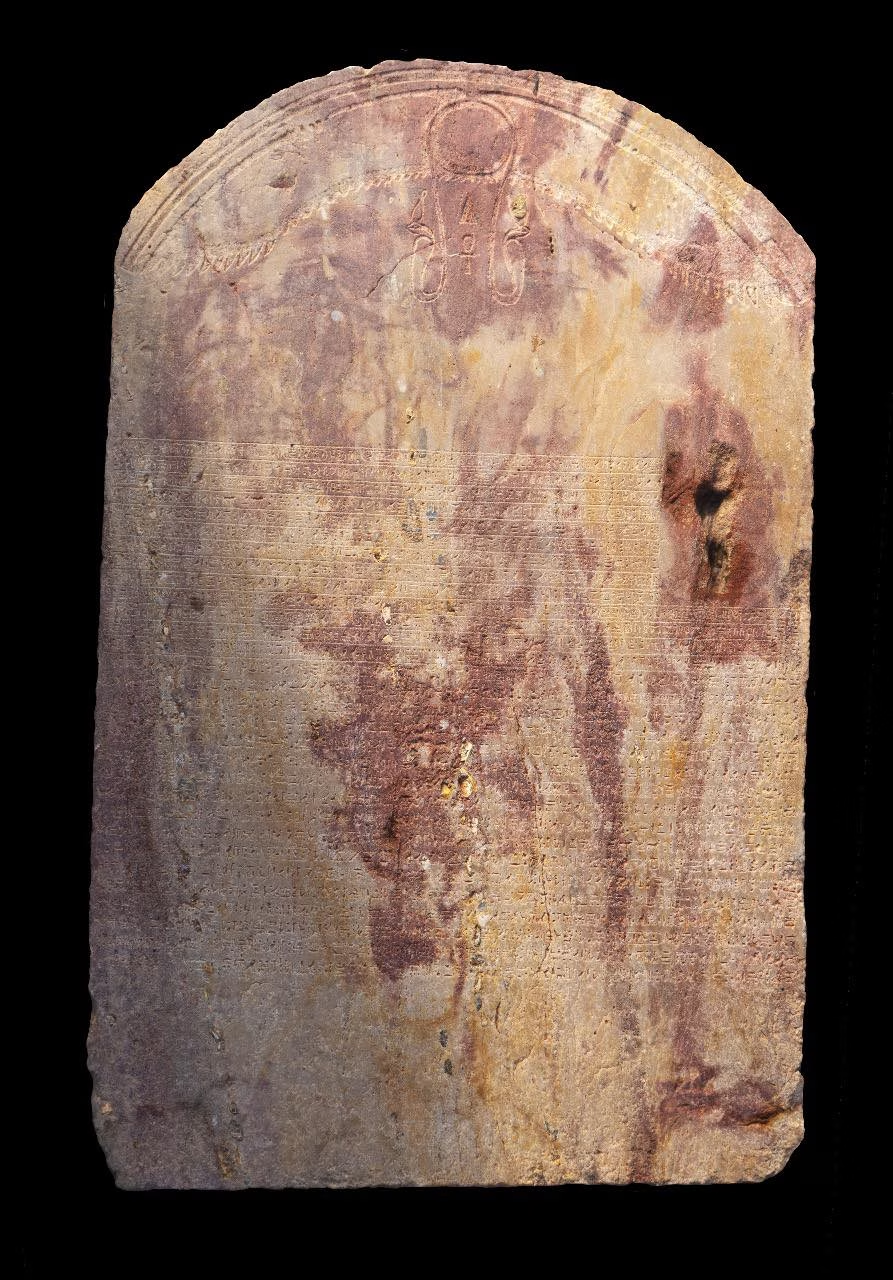
Archaeologists excavating at Tell el-Pharaeen in Egypt’s Sharqia governorate have discovered a sandstone stele bearing a complete copy of the Canopus Decree (238 B.C.)—the first such find in over a century. Unlike the famous Rosetta Stone, this example is inscribed solely in hieroglyphs, making it unique among the seven known copies of the decree.
In a landmark discovery for Egyptology, archaeologists have unearthed the first complete copy of the Ptolemaic-era Canopus Decree found in 150 years. The sandstone stele was uncovered at the Tell el-Pharaeen site in Sharqia governorate, around 80 miles east of Kom el-Hisn, where the last example was discovered in 1881.
Measuring 127.5 cm tall, 83 cm wide, and 48 cm thick (4’1”x 2’9”x 1’7”), the stele features a rounded top crowned by a winged sun disk flanked by cobras wearing the crowns of Upper and Lower Egypt. Between them, the hieroglyphic inscription “Di-Ankh” (“given life”) stands out. The main body carries 30 lines of hieroglyphic text in sunk relief, making this the only known Canopus Decree inscription in one language only—all other copies are bilingual or trilingual.
Historical Context
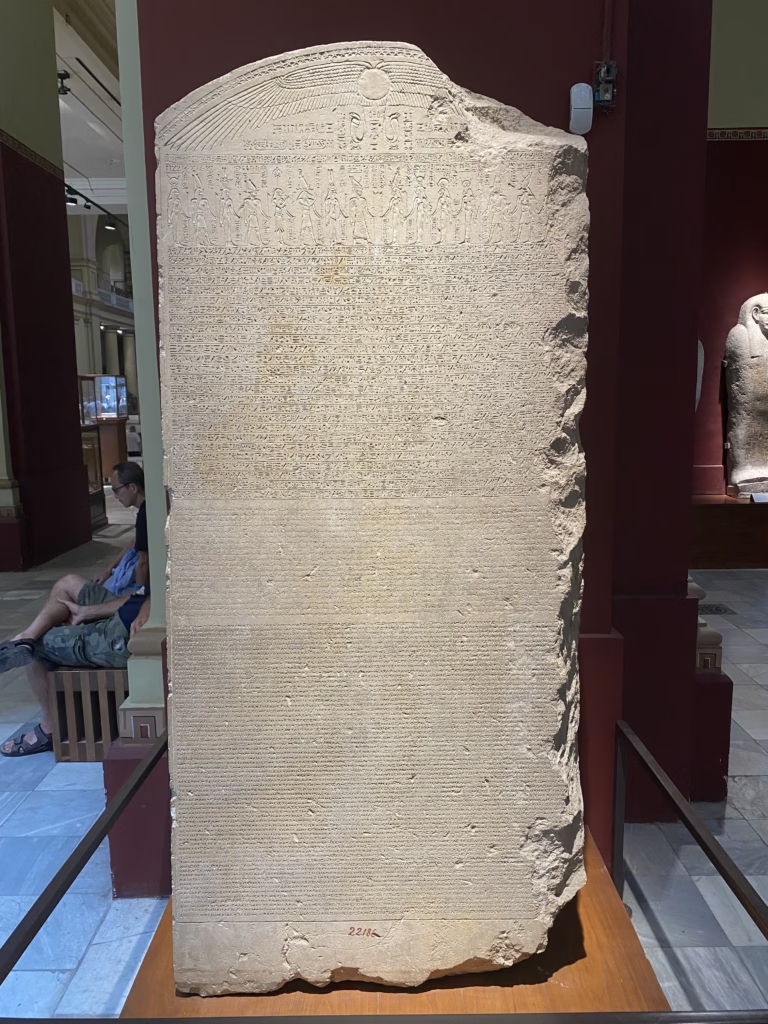
The Canopus Decree, issued in 238 B.C. during the reign of Ptolemy III Euergetes and Queen Berenice II, was a major political and religious proclamation. It is the second in a series of multilingual decrees—alongside the more famous Rosetta Stone—that became instrumental in deciphering ancient Egyptian hieroglyphs.
The decree celebrates Ptolemy III and Berenice’s benefactions to temples, their care of sacred animals, and the repatriation of divine images stolen centuries earlier by Persian king Cambyses. It also depicts Ptolemy as a benevolent ruler during a devastating famine, citing his tax remissions, grain imports, and support for the Egyptian populace. Scholars note that these details were carefully crafted propaganda, aiming to consolidate royal authority amidst growing unrest.
One of the decree’s most significant contributions was calendar reform. It established a solar year of 365¼ days, adding a leap day every four years—making it the most accurate ancient calendar. It also deified the royal couple’s daughter, Princess Berenice, and introduced new festivals and priestly titles.
Why This Discovery Matters
The Canopus Decree was meant to be displayed “in every temple in Egypt” in hieroglyphs and Greek. The discovery of a version solely in hieroglyphs challenges assumptions about Ptolemaic inscription practices, providing fresh material for scholars studying temple networks, priestly authority, and political messaging under the Ptolemies.
With only seven known copies, this stele is one of the most important epigraphic discoveries in Egypt in recent decades, offering direct insight into how the Ptolemaic dynasty wielded religion, propaganda, and monumental inscriptions to reinforce their rule.
Cover Photo: Newly discovered sandstone stele bearing the Canopus Decree (238 B.C.), excavated at Tell el-Pharaeen in Egypt’s Sharqia governorate. This version is unique for being inscribed solely in hieroglyphs.