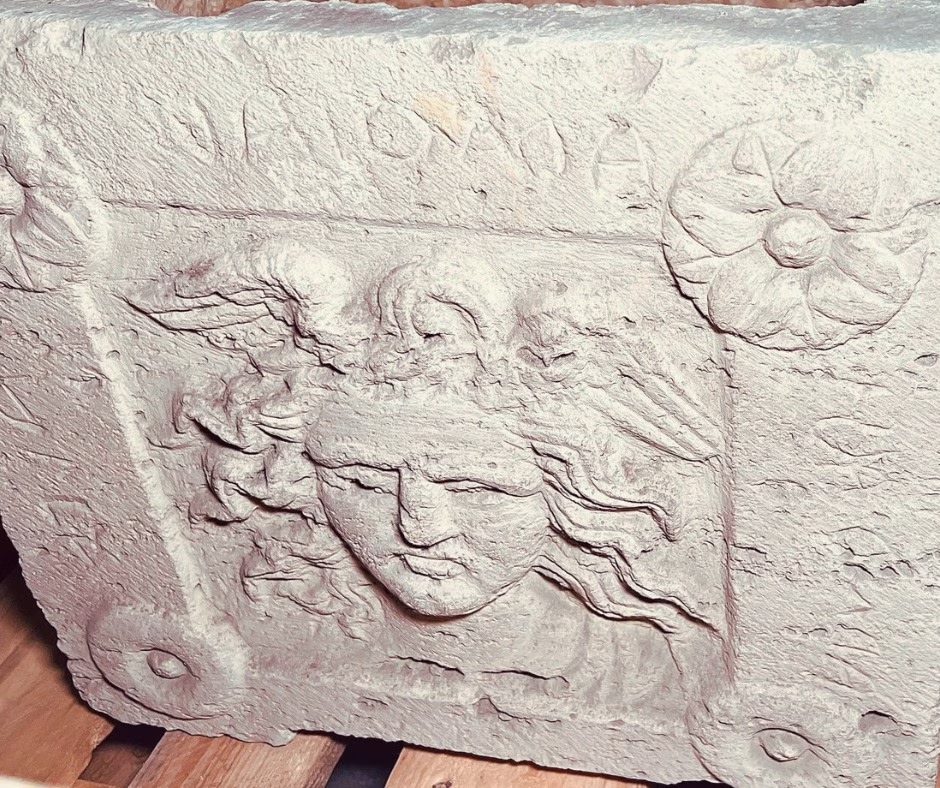
Routine conservation work at the Palazzone Necropolis in Perugia, Italy, has revealed an extraordinary discovery: a travertine urn adorned with the face of Medusa that contained no human remains, but instead a set of simple ceramic vessels. The finding challenges conventional views of Etruscan funerary traditions.
An Unexpected Discovery in an Etruscan Family Tomb
The urn was unearthed in the hypogeum of the Acsi family, dating to the 3rd century BC. It features cursive Etruscan inscriptions carved into a square frame, floral motifs, and ritual disks (paterae). At its center, however, lies the striking figure of Medusa in high relief. In the Etruscan and wider Italic world, the Gorgon was not merely a mythological monster but a powerful apotropaic symbol meant to ward off evil and protect sacred spaces.
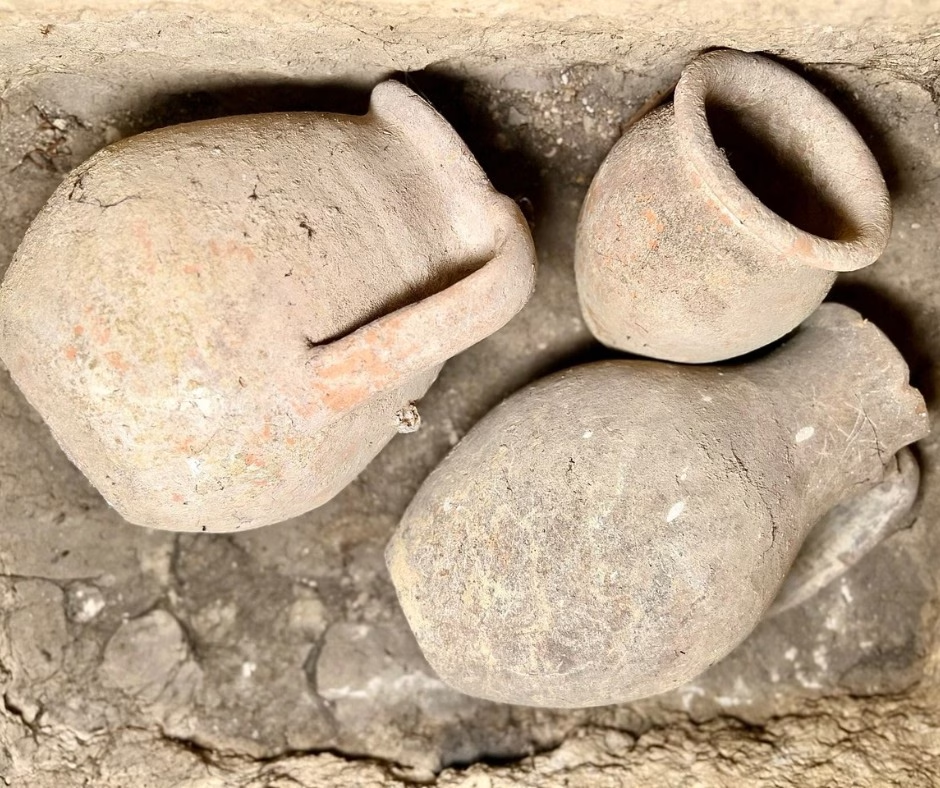
Yet when the lid was lifted, no bones or ashes were found. This contradicted an earlier lead sheet discovered in the same tomb, which mentioned the names “arnθ” and possibly “larθi caprti.” Instead, the urn contained three modest terracotta vessels: one cup (bicchiere) and two small jugs (brocchette). Plain in workmanship and undecorated, they had been placed carefully inside the container.
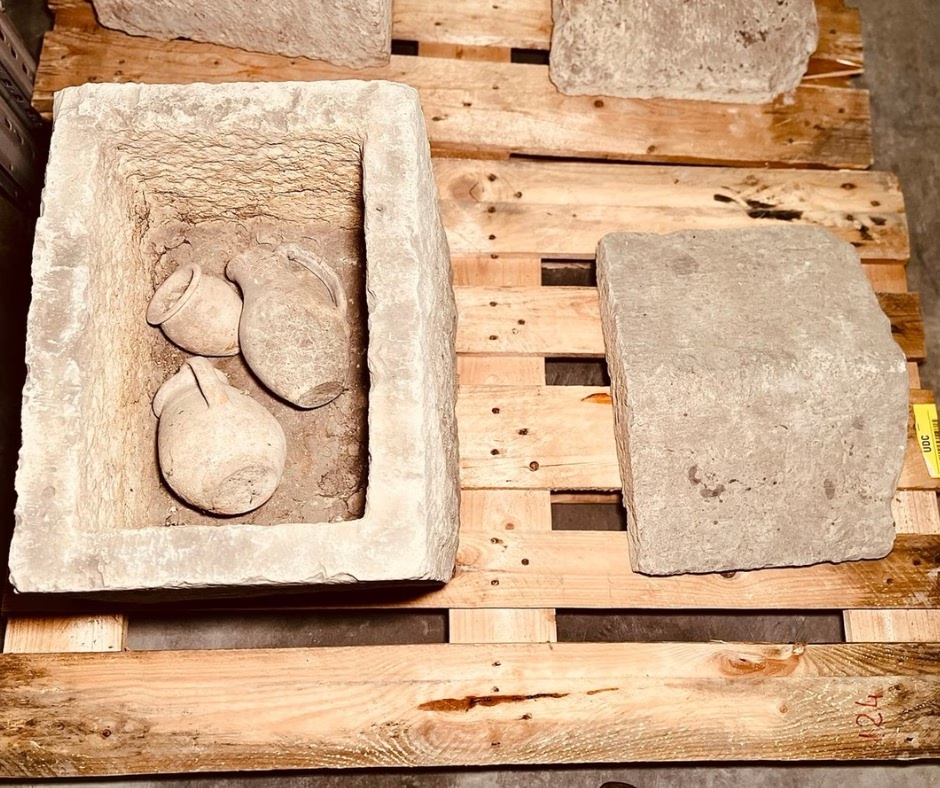
Symbolic Burial or Cenotaph?
The absence of a body suggests the urn may have served as a cenotaph—a symbolic burial when the corpse was lost or interred elsewhere. In this context, the Medusa’s role would have been more than decorative. Her carved gaze could have been intended to protect the offerings and act as guardian of the tomb’s ritual dimension.
The Palazzone Necropolis, discovered in 1840, consists of around 200 chamber tombs and remains open to the public under the supervision of the Umbrian Archaeological Authority. The urn and its contents have been temporarily moved to the site’s Antiquarium for materials and organic residue analysis.
“The Etruscans Still Surprise Us”
Dr. Silvia Rossi, Director of Conservation, commented on the find:
“This piece is extraordinary not only for its craftsmanship but for the ritual complexity it implies. Medusa here was not decoration; she was an active presence in the tomb.”
Once analysis is complete, the urn and its contents will be exhibited at the National Archaeological Museum of Umbria, where Medusa’s stony gaze will continue to confront visitors, guarding a mystery that has lasted more than two millennia.
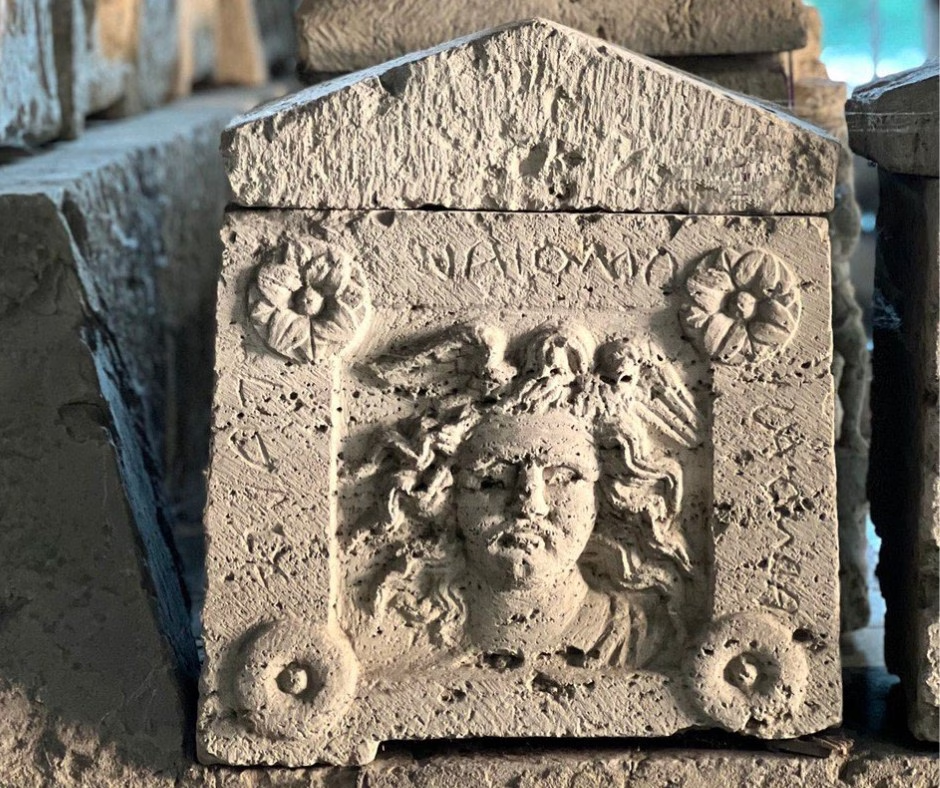
Ipogeo dei Volumni e Necropoli del Palazzone – Pagina Istituzionale