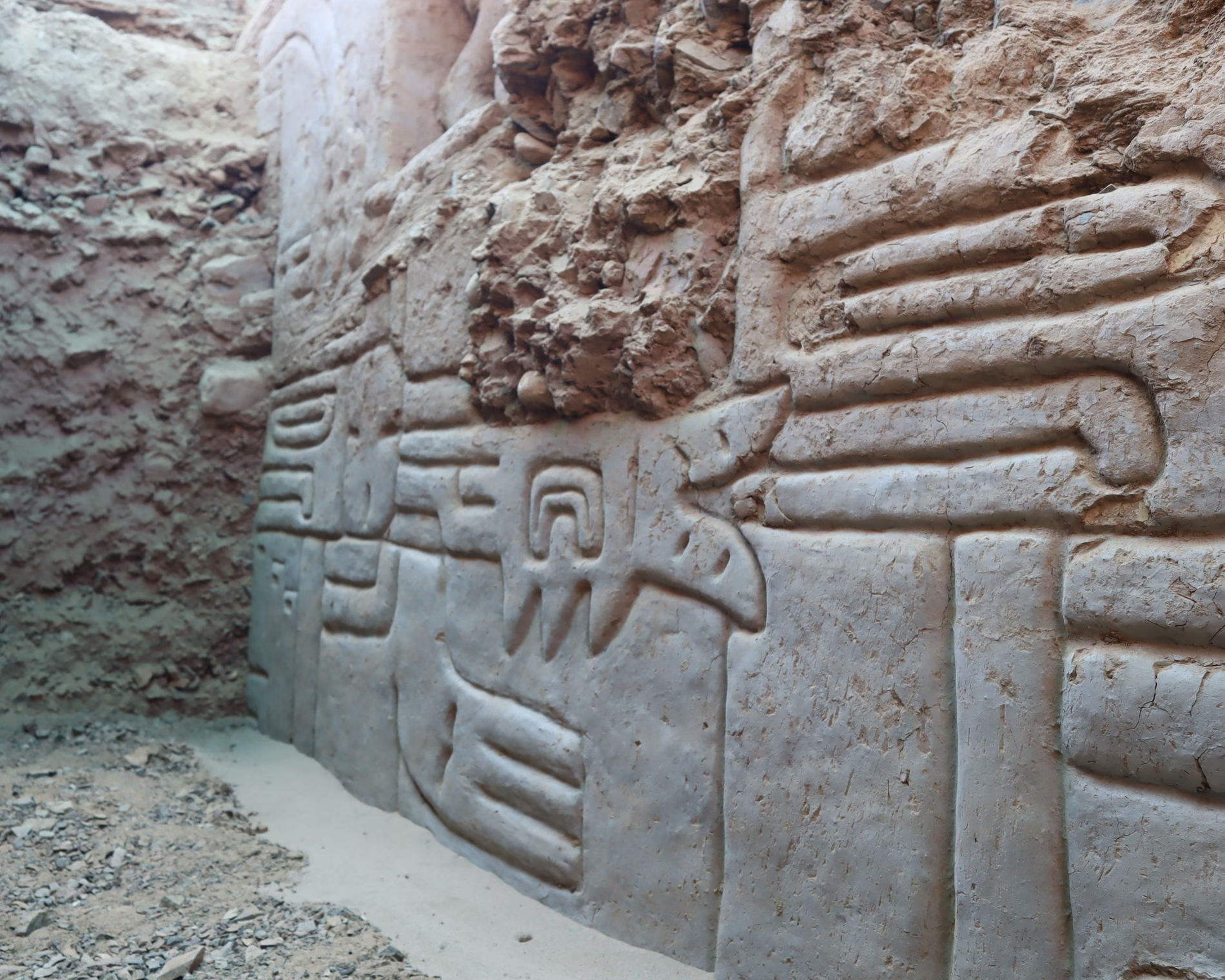
Archaeologists in northern Peru have uncovered a spectacular 4,000-year-old multicoloured mural that may redefine what we know about the origins of civilisation in the Americas. Discovered at Huaca Yolanda, a ceremonial temple complex in the Tanguche Valley, the intricately carved wall features bold high-relief imagery and traces of vivid pigments, offering a rare glimpse into the spiritual and social structure of Peru’s earliest cultures.
The six-metre-wide mural is dominated by a majestic bird of prey with outstretched wings, its head crowned with geometric, three-dimensional diamond motifs that seamlessly connect the north and south walls of the structure. Surrounding friezes depict mythological beings, celestial symbols, fish, and fishing nets, reflecting the close relationship these coastal societies had with both agriculture and the sea. The wall’s vibrant colours—blue, yellow, red, and black—have survived thousands of years, showcasing advanced artistry during the Formative Period (2000–1000 BCE).
“This mural reveals the first signs of social hierarchy in early Peru,” said Ana Cecilia Mauricio, the lead archaeologist and associate professor at the Pontifical Catholic University of Peru. “We see the emergence of shamans, priests, and priestesses—figures who were both spiritual and scientific leaders, with knowledge of astronomy, medicine, and agriculture.”
One striking carving portrays three humanoid figures in the process of transforming into birds, which Mauricio interprets as a representation of a shaman’s psychoactive journey, possibly induced by the San Pedro cactus, a hallucinogenic plant historically used in Andean rituals.
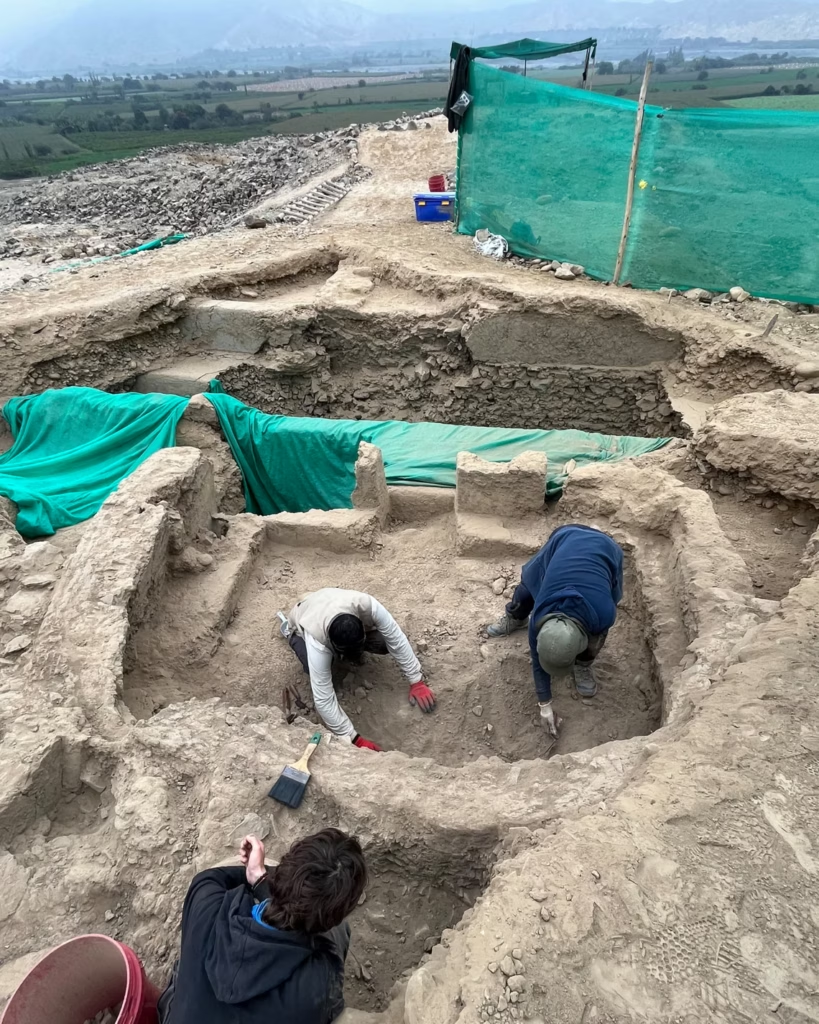
The Huaca Yolanda complex is believed to predate Chavín de Huántar, one of the most studied ceremonial centres in the Andes. Both sites belong to the formative era, a pivotal time when Andean societies transitioned into structured civilisations. Archaeologist John Rick has documented hallucinogenic rituals in Chavín’s 2,500-year-old tunnels, suggesting cultural and spiritual continuity between these ancient centres.
However, this archaeological treasure faces urgent threats. Encroaching agriculture, urban expansion, and looting have already damaged surrounding ruins. Mauricio, who has been excavating the site since 2012, warns that the mural and its temple remain without full protection from Peru’s Ministry of Culture and local authorities.
“Ancient peoples managed to live in harmony with their environment, even with extreme weather events like El Niño, which devastates modern Peru,” she said. “Their knowledge of climate adaptation could offer valuable lessons today.”
With its unprecedented combination of artistic mastery, spiritual symbolism, and historical significance, the Huaca Yolanda mural not only enriches our understanding of the Americas’ first civilisations but also highlights the urgent need to protect Peru’s vast archaeological heritage—home to over 100,000 ancient sites, including icons such as Machu Picchu and the Nazca Lines.