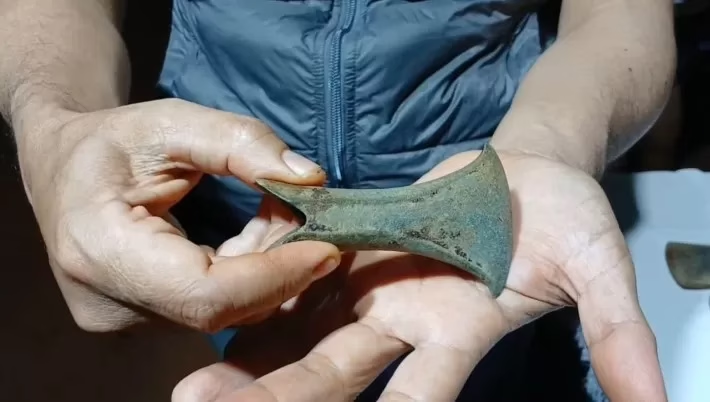
A rare Bronze Age conical axe, dating back over 3,000 years, has been unearthed in Borneo, Indonesia, astonishing archaeologists and historians with its unique design and potential meteorite origin.
Believed to be the first artifact of its kind in the region, the find sheds new light on the advanced metalworking skills and social structures of ancient Borneo communities, emphasizing the rich heritage of even the most remote areas of the island.
The axe came to attention from a local villager’s collection, alongside other historical items found while gold panning, including ancient Dayak beads and traditional stone axes. Experts immediately noted the conical axe for its unusual shape, intricate craftsmanship, and possible extraterrestrial metal source.
Young archaeologist Ida Bagus Putu Prajna Yogi, among the first to examine the piece, remarked, “In all my years studying Kalimantan archaeology, I have never encountered a conical axe like this.” Her statement underscores the rarity and historical significance of the discovery.
Hartatik, a member of the Banjar Regency Cultural Heritage Expert Team (TACB), explained that the axe—locally known as “Gigi Petir” or “Untu Gledek”—holds both cultural and historical value. While local legends suggest such objects appear where lightning strikes, scientists argue that it may have been created using sophisticated metalworking techniques, potentially from melted meteorite material.
Unlike conventional stone axes, the conical axe was likely not designed for cutting or chopping. Its small size and artistic detailing suggest it served as a symbol of social status or as a trade item. “It embodies both artistry and social hierarchy, reflecting the culture of Bronze Age Kalimantan communities,” Hartatik noted.
Experts stress the importance of verifying the axe’s authenticity. Understanding the context of the discovery—including when and how it was found and whether it was inherited or directly uncovered—is critical to ensure historical accuracy and prevent forgery.
The appearance of this rare axe provides strong evidence that ancient Kalimantan communities had moved beyond the Stone Age, employing advanced metalworking techniques for symbolic, social, and possibly ceremonial purposes. The discovery also highlights the need to preserve local heritage, demonstrating how even isolated regions can reveal invaluable insights into Indonesia’s past.
TACB and the National Research and Innovation Agency (BRIN) are coordinating further analysis and authentication with local authorities. If confirmed, this find could become a landmark in Bronze Age Indonesian studies, potentially reshaping understanding of early Borneo societies and their technological capabilities.
This extraordinary discovery captivates archaeologists while also highlighting the enduring mysteries of Indonesia’s cultural landscape. As studies continue, the Bronze Age conical axe may provide even deeper insight into the artistry, ingenuity, and social complexity of ancient Borneo communities.