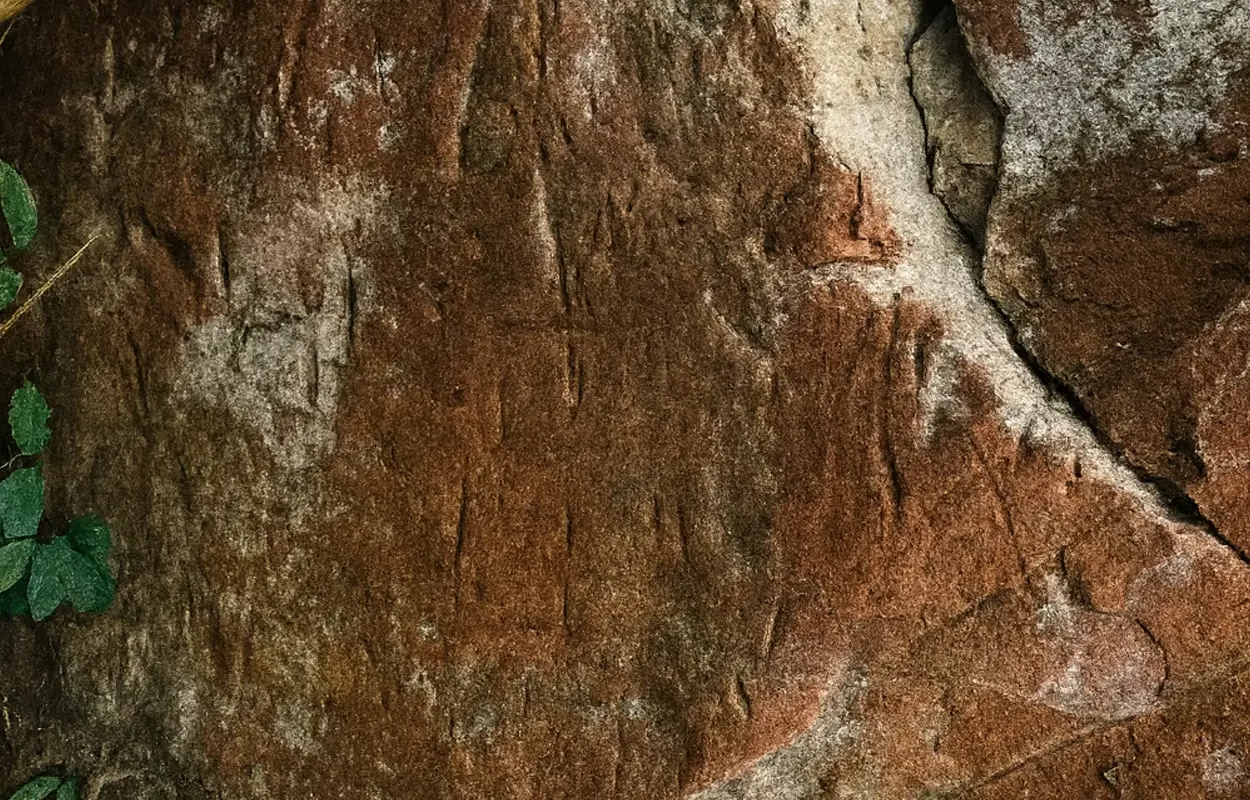
Archaeologists in Thailand’s Loei Province are investigating two newly identified rock art sites near the summit of Phu Khat Mountain, the highest point in the Phu Khat Wildlife Sanctuary at 1,307 meters above sea level. Rangers on a routine patrol recently spotted the markings, which were found only 300 meters apart on the rugged mountain terrain.
The sites, collectively named Pha Pang Puey, feature deliberate carvings or weathered engravings etched into reddish-brown stone surfaces, interspersed with pale lichen-covered patches. Unlike natural fractures, the markings form geometric and abstract motifs, suggesting they were created by ancient communities inhabiting the region.
Links to 2,000-Year-Old Ta Kueng Cave Petroglyphs
Experts note strong similarities between the new carvings and the 2,000-year-old petroglyphs discovered in August 2025 at Ta Kueng Cave, located in the same sanctuary. This connection strengthens the case that Phu Khat has long been a cultural and spiritual landmark for prehistoric peoples.
“This is likely just the beginning of what we can learn about the area’s ancient history,” said Mongkol Khamsuk, head of both the Phu Khat and Bang Yang Wildlife Sanctuaries.
Expanding Archaeological Research in Northern Thailand
Khamsuk emphasized the site’s dual cultural and ecological significance, highlighting its panoramic views of northern Thailand’s forests, dramatic sunrises, and its role as a biodiversity hotspot. He confirmed that the Fine Arts Department’s Sukhothai Office (Fine Arts Division 6) will collaborate with sanctuary authorities to conduct comprehensive surveys and detailed documentation of the petroglyphs.
Given the remote terrain and limited prior exploration, researchers believe more undiscovered archaeological sites may be hidden within the sanctuary’s dense wilderness, making Phu Khat a promising region for future study.
Department of National Parks, Wildlife and Plant Conservation