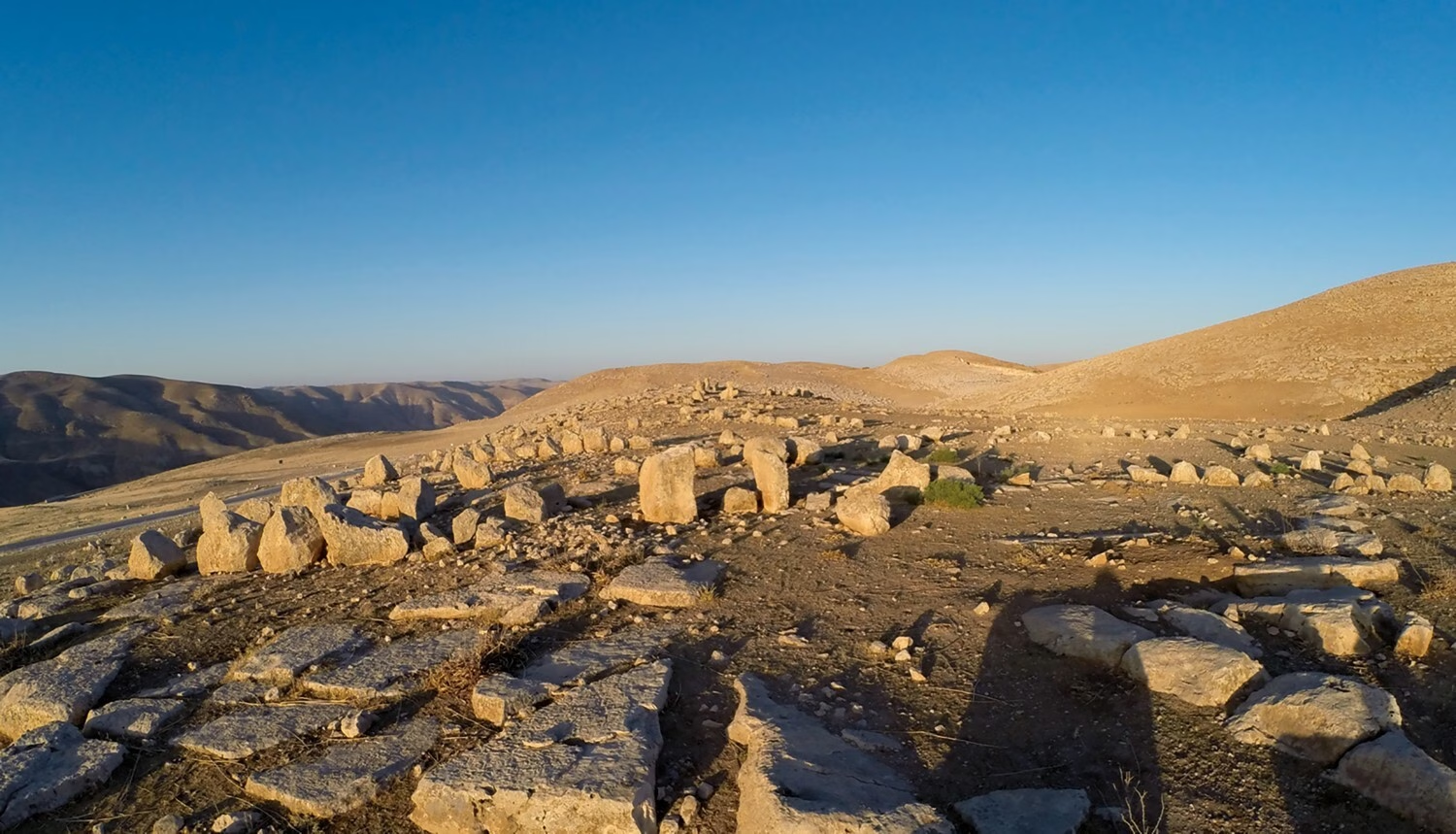
Archaeological excavations in Murayghat, Jordan, have revealed a stunning ceremonial complex dating back to the Early Bronze Age. Featuring monumental dolmens, towering standing stones, and large-scale non-domestic architecture, the site offers rare insights into how ancient communities responded to crisis by reinventing belief and belonging.
The project is led by Associate Professor Dr. Susanne Kerner from the University of Copenhagen. According to her team, the site was not merely a burial ground but a sacred gathering space for rituals, memory, and communal identity formation in the aftermath of social collapse.
From Civilizational Collapse to Ceremonial Rebirth
Murayghat dates to around 3600–3300 BCE—a period following the decline of Chalcolithic culture, marked by the disappearance of copper prestige items, shifting climate patterns, and the breakdown of centralized authority. In this turbulent era, communities turned to ritual and monumental landscapes to make sense of a changing world.
“When temples fell, people still needed ways to connect and remember,” Kerner notes. “Murayghat may be the material expression of that need—carved into stone.”
Dolmens, Monoliths, and Gigantic Bowls: A Ritual Landscape
One of Murayghat’s most striking features is its deliberately organized dolmen field. These megalithic burial chambers—some over 4 meters long—were arranged with sightlines toward a central sacred knoll and to one another. The planning suggests collective intent and ceremonial design.
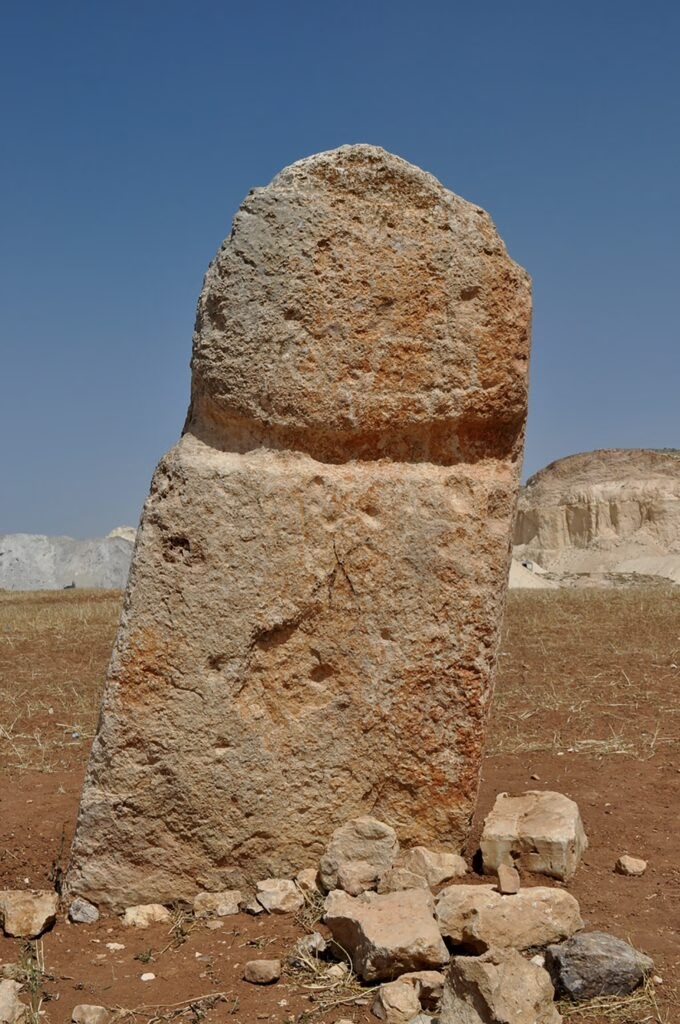
The site also features the 2.4-meter-tall standing stone known as Hadjar al-Mansub, facing away from the main complex toward the valley—possibly marking a ritual axis or processional route.
Among the artifacts unearthed are enormous ceramic vessels—some capable of holding 27 liters—likely used for communal feasting rituals, perhaps tied to ancestor worship or social negotiations. The presence of flint tools, copper items, and horn cores supports the theory of sustained ritual activity rather than domestic use.
Not a Village, But a Sacred Meeting Ground
Murayghat lacks the typical traces of daily life: no hearths, no house remains, no storage pits. This strongly suggests that the site was not residential but designed for periodic gatherings, ceremonies, or territorial marking.
“This isn’t a village,” says Kerner. “It’s more likely a regional sanctuary—a place where people came together to renew bonds and redefine identity.”
Rewriting the Early Bronze Age
The discovery challenges outdated assumptions that dolmen fields were solely nomadic or tribal cemeteries. Murayghat appears instead to be part of a broader socio-political adaptation—a sacred space created during a time of instability and transition.
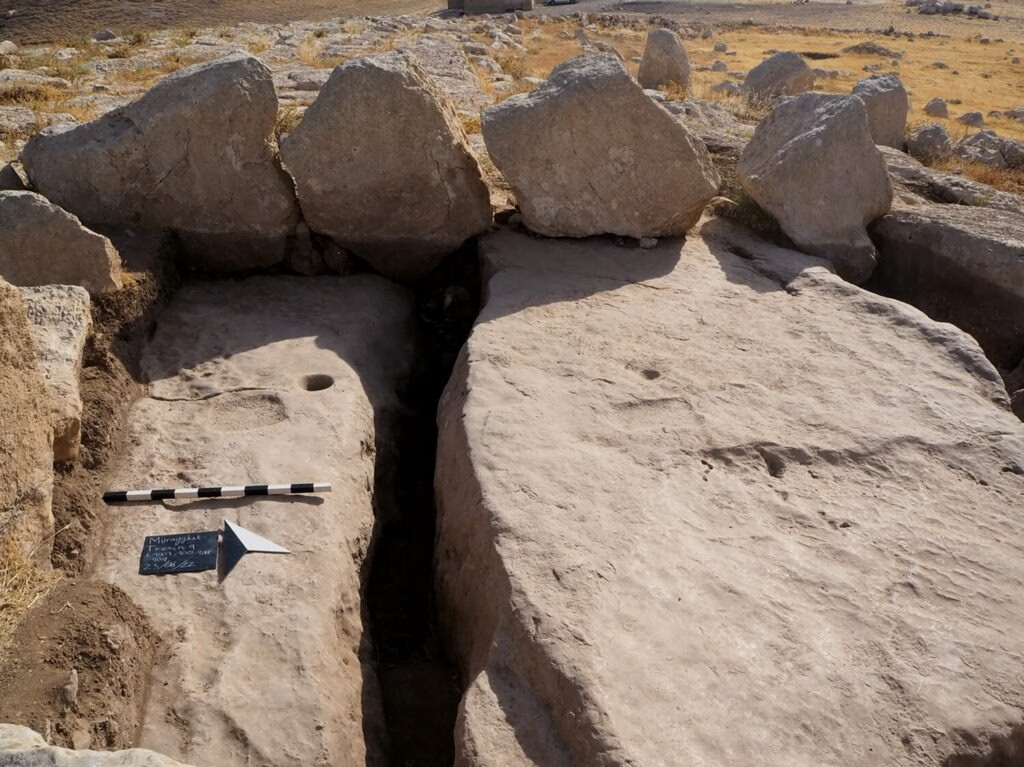
Its monuments, made of hand-shaped local limestone, reflect an effort to reclaim continuity and meaning in a fractured world.
A Landscape Etched with Collective Memory
As climate shifts and social disruptions define our own era, Murayghat stands as a testament to humanity’s enduring need to adapt, commemorate, and rebuild. Its story—etched in stone rather than written in words—continues to be unearthed by archaeologists, but its message echoes across millennia.
The excavation is ongoing, but Murayghat’s legacy is already reshaping our understanding of how early societies faced the unknown—together.
Kerner, S. (2025). Dolmens, standing stones and ritual in Murayghat. Levant, 1–16. https://doi.org/10.1080/00758914.2025.2513829
Cover Image Credit: View of the central knoll (Area 1) from the north, highlighting multiple alignments of standing stones. Image: The Ritual Landscapes of Murayghat Project / Susanne Kerner