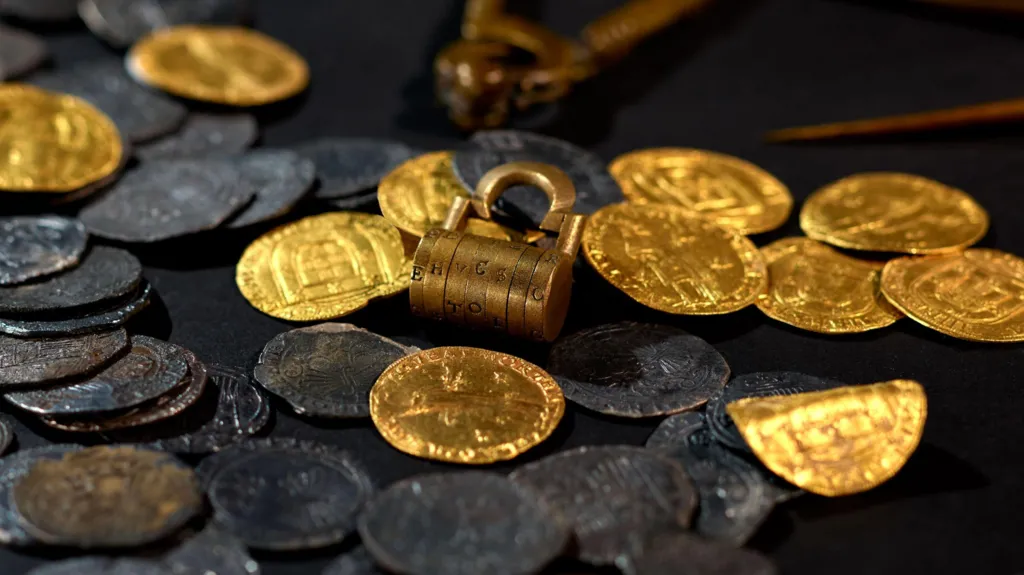
Hundreds of gold and silver coins lost in a violent winter storm more than 440 years ago have gone on public display in Wales for the first time, revealing the story of the Ann Francis, an Elizabethan merchant ship wrecked on Margam Beach in 1583.
The ship was lost on 28 December 1583 while returning from Spain. It had carried grain to the Iberian Peninsula and was sailing back with payment when the storm drove it into disaster near what is now Neath Port Talbot, on the coast of South Wales.
The collection is now being shown at the National Waterfront Museum in Swansea in the exhibition Tides of Treasure. It brings together coins, navigational tools, ship fittings, tableware, and small personal objects from life aboard a Tudor merchant vessel.
A Tudor Shipwreck with a Rare Paper Trail
The Ann Francis was owned by Francis Shaxton of King’s Lynn, a merchant involved in long-distance trade at a time when ships moved grain, silver, gold, and other valuable goods between Britain and continental Europe.
Its loss did not end at sea. Contemporary records describe what happened after the wreck reached the shore: chests were broken open, goods were seized, and several people became entangled in disputes over ownership, salvage, and looting.
That surviving paperwork makes the Ann Francis unusual. The coins and artefacts are not just scattered objects from a lost ship; they are tied to a documented episode involving sailors, local officials, landowners, wreckers, and people accused of taking goods from the beach.
Gold and Silver from a Wider World
Much of the material now on display was found by metal detectorist Peter Hughes, who searched Margam Beach between 1996 and 2017. Storms periodically stripped sand from the shore, exposing objects that had remained hidden since the late 16th century.
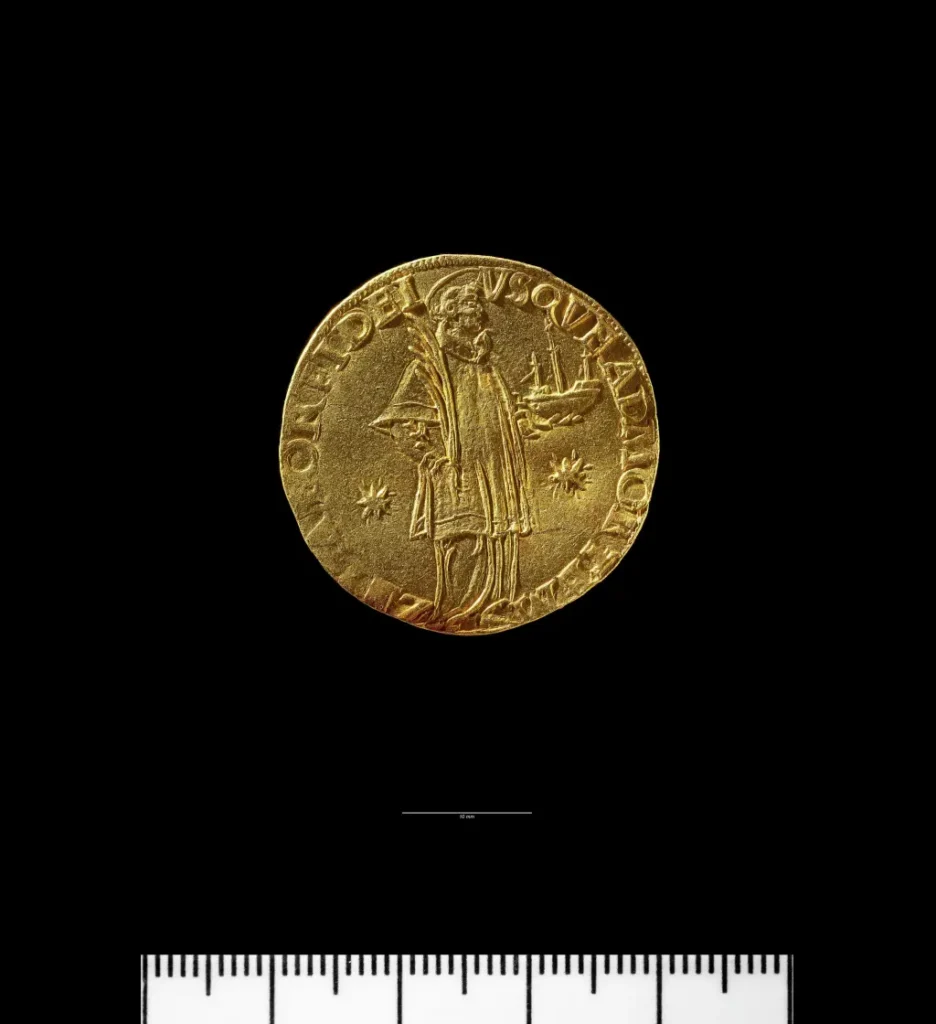
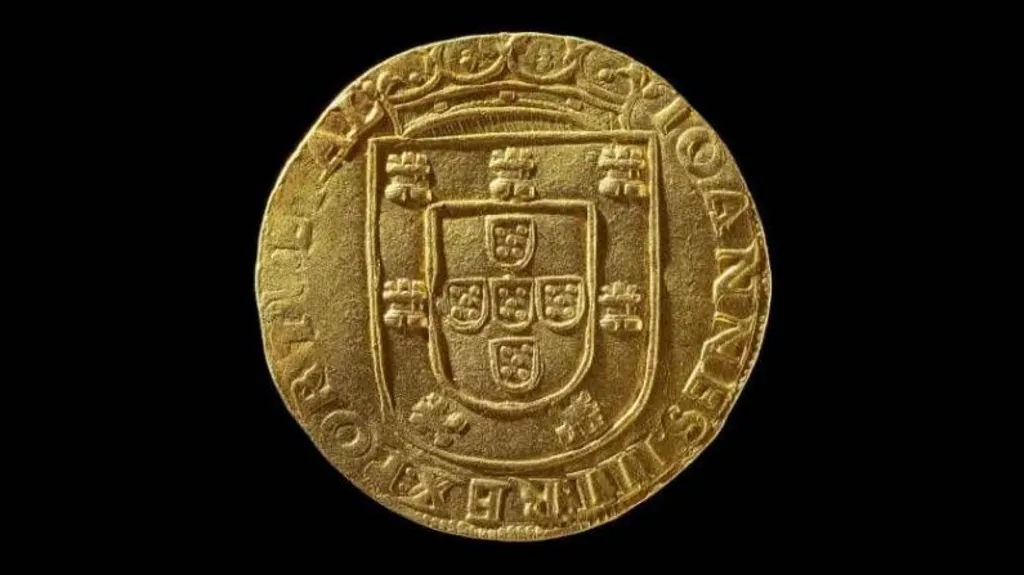
The museum collection includes about 870 gold and silver coins. Among them are Portuguese gold coins, Spanish silver pieces, German talers, and more than 120 early Mexican silver coins. Some were struck in the 1530s, only a few decades before the Ann Francis went down.
The range of coinage reflects the commercial world behind the wreck. A single English merchant ship could carry money connected to Spain, Portugal, the German states, and the Americas. By the late 1500s, Atlantic trade and European markets were already closely linked, and the Ann Francis preserves that story in metal.
More Than a Treasure Chest
The display also includes objects from the practical world of the ship. A boatswain’s whistle, nautical dividers, sounding leads, buckles, pewter spoons, cask taps, a candlestick, ammunition, and other fittings help reconstruct the working life of the vessel.
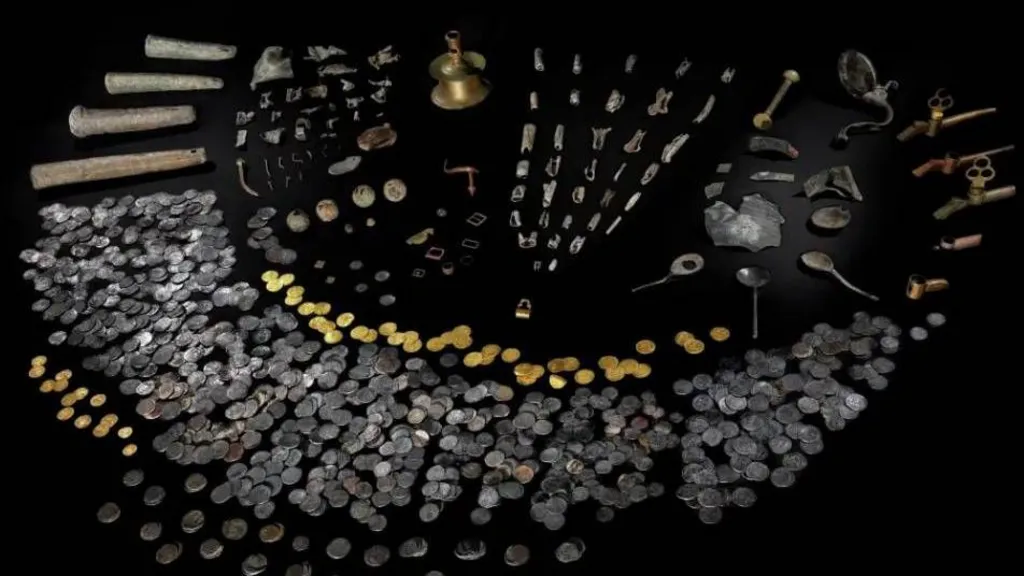
One of the most intriguing objects is a brass combination lock, probably once attached to a chest used to secure money, documents, or valuable cargo. Its code has not yet been solved.
These smaller finds keep the story from becoming only about treasure. The coins show the value of the cargo, but the tools and everyday objects show the ship as a working space, crewed by people who navigated, traded, repaired, cooked, ate, and tried to survive at sea.
A Protected Site on Margam Beach
The wreck site at Margam Beach is now legally protected. Searching there without permission is no longer allowed, and any future investigation must take place through controlled archaeological and heritage procedures.
That protection leaves open the possibility that more material may still survive beneath the sand. The museum estimates that only part of the money carried on the Ann Francis has been recovered.
At Swansea, the Ann Francis is presented not only as a treasure wreck, but as a rare Tudor maritime story preserved through coins, shipboard objects, and the documents left behind after a storm on the Welsh coast.
Cover Image Credit: Amgueddfa Cymru – Museum Wales