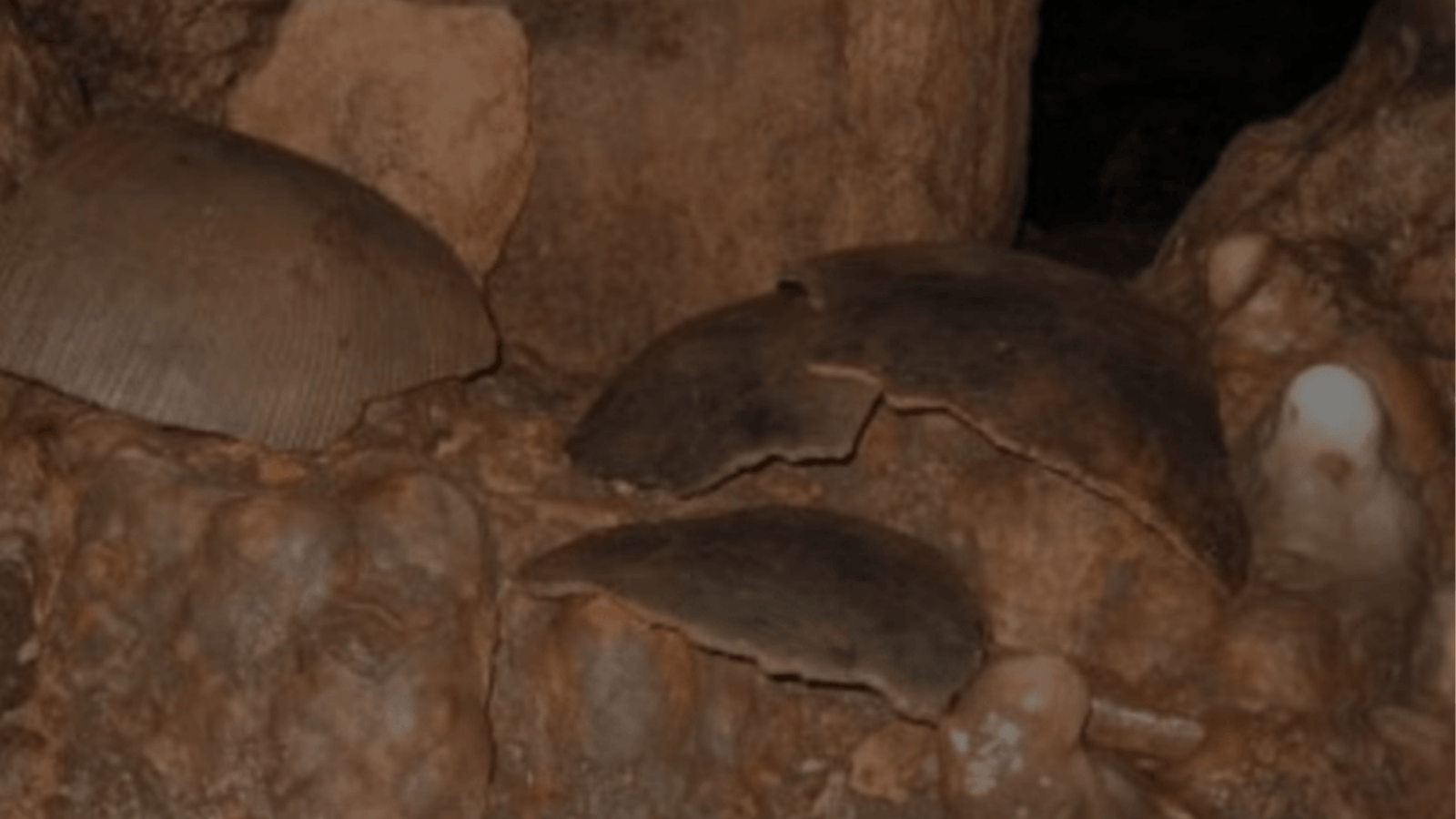
More than 100 fragmented human bones, including deliberately arranged skull remains and bones bearing signs of violence, are providing new evidence of ritual human sacrifice inside Guatemala’s Cueva de Sangre, or “Cave of Blood.”
The remains were not newly discovered. They were found during archaeological investigations at the cave beneath the Maya site of Dos Pilas in Petén in the early 1990s. What has changed is the evidence emerging from a new bioarchaeological analysis of the assemblage.
Michele Bleuze, an assistant professor of anthropology at California State University, Los Angeles, presented the findings at the Society for American Archaeology’s annual meeting in Denver on April 24, 2025.
Cal State LA describes the material under study as a Classic Period ritual deposit dating to AD 250–900 and says the analysis provides strong support for its interpretation as evidence of Maya sacrificial practices.
Human remains unlike an ordinary burial
The skeletal material is striking not simply because of its quantity, but because of how the bones were treated.
Researchers identified injuries that occurred around the time of death as well as later modifications to the remains. Some bones carry cut marks consistent with the removal of flesh, while others appear to have been separated and deliberately placed rather than buried as complete bodies.
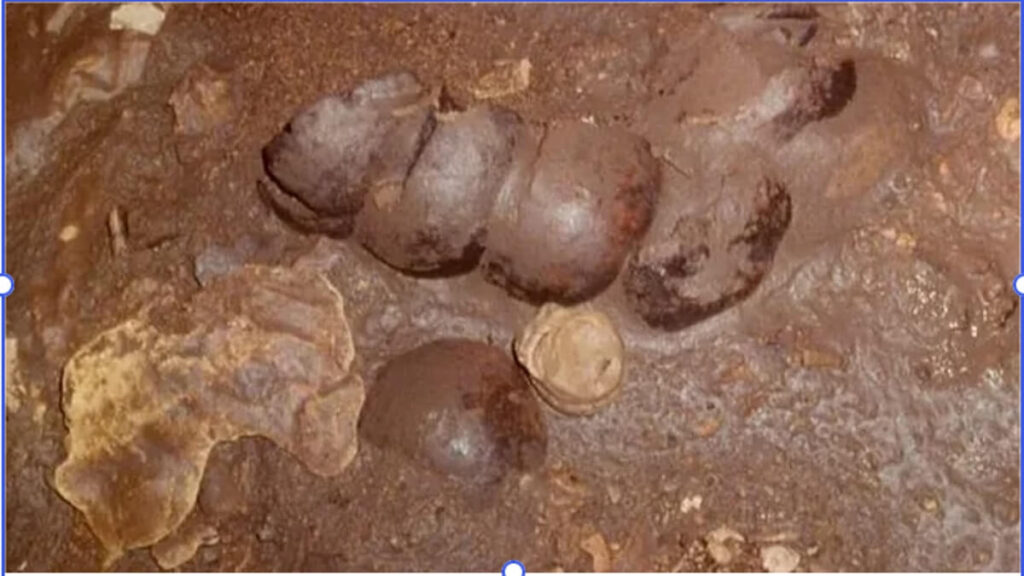
Cranial remains dominate the assemblage, suggesting that particular parts of the human body were intentionally selected.
“The emerging pattern that we’re seeing is that there are body parts and not bodies,” Bleuze told Live Science.
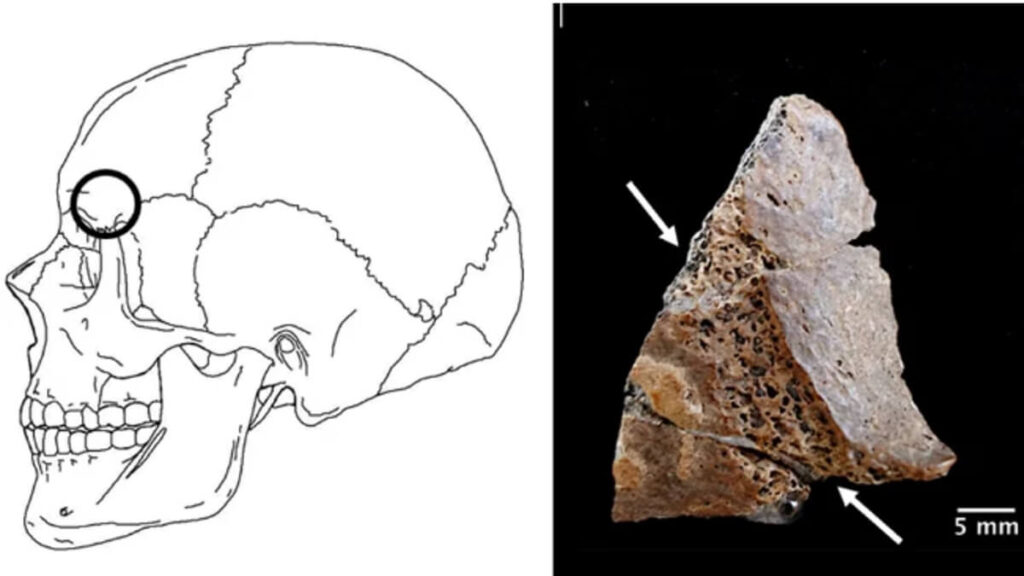
One fragment from the left side of a skull shows damage consistent with a blow from a beveled-edged implement, according to forensic anthropologist Ellen Fricano of Western University of Health Sciences, who examined the trauma. A child’s hip bone bears a similar mark that also appears to have been made around the time of death.
The arrangement of the remains provides another clue.
In one section of the cave, archaeologists found four skull caps stacked together. Such non-anatomical placement, combined with the trauma and modifications found on the bones, makes an ordinary burial interpretation increasingly unlikely.
Obsidian blades and red ocher found in association with the human remains add further archaeological context for ritual activity.
Why sacrifice inside a cave?
Caves occupied a significant place in Maya ritual landscapes and were closely associated with water, fertility and supernatural forces.
Cueva de Sangre is reached through a small entrance leading down toward a passage and pool of water. The cave floods for much of the year and is most accessible during the dry season, roughly between March and May.
Researchers have suggested that this seasonal pattern could be relevant to understanding why human remains were deposited there.
The dry season immediately precedes the arrival of the rains, a critical moment for agricultural communities. Maya communities have long associated caves and water sources with rituals connected to rain and fertility.
This has led researchers to consider whether sacrifices at Cueva de Sangre may have formed part of ceremonies intended to secure rainfall and successful harvests.
The connection remains an interpretation rather than a definitive conclusion, however. The physical evidence establishes unusual treatment and ritual deposition of human remains more securely than it can reveal the exact beliefs or ceremonies behind those actions.
Ancient DNA may reveal who the victims were
The research is still developing.
Bleuze directs Cal State LA’s Subterranean Maya Bioarchaeology Project, which examines human remains recovered from caves and other underground contexts across Mesoamerica.
Her team is now trying to determine who the people deposited at Cueva de Sangre were and whether they were local residents or individuals brought to Dos Pilas from elsewhere.
Ancient DNA and stable isotope analyses are planned to investigate biological relationships, geographic origins and potentially patterns of diet and mobility.
Those studies may eventually reveal whether the people represented a particular social group, came from the same community or were selected according to criteria that are not yet visible in the skeletal record.
The findings presented in Denver were conference research rather than a final peer-reviewed publication, and further analysis is continuing.
Even at this stage, however, the combination of trauma, dismemberment, selective use of body parts, unusual arrangement of skull remains and associated ritual objects provides some of the clearest evidence yet that Cueva de Sangre was not simply a place where the dead were buried.
Instead, the cave appears to have been a carefully used ritual space in which human remains themselves became part of Maya ceremonial practice.
Cover Photo: Skull fragments found in the blood cave. Medina-Elizalde via Eurekalert