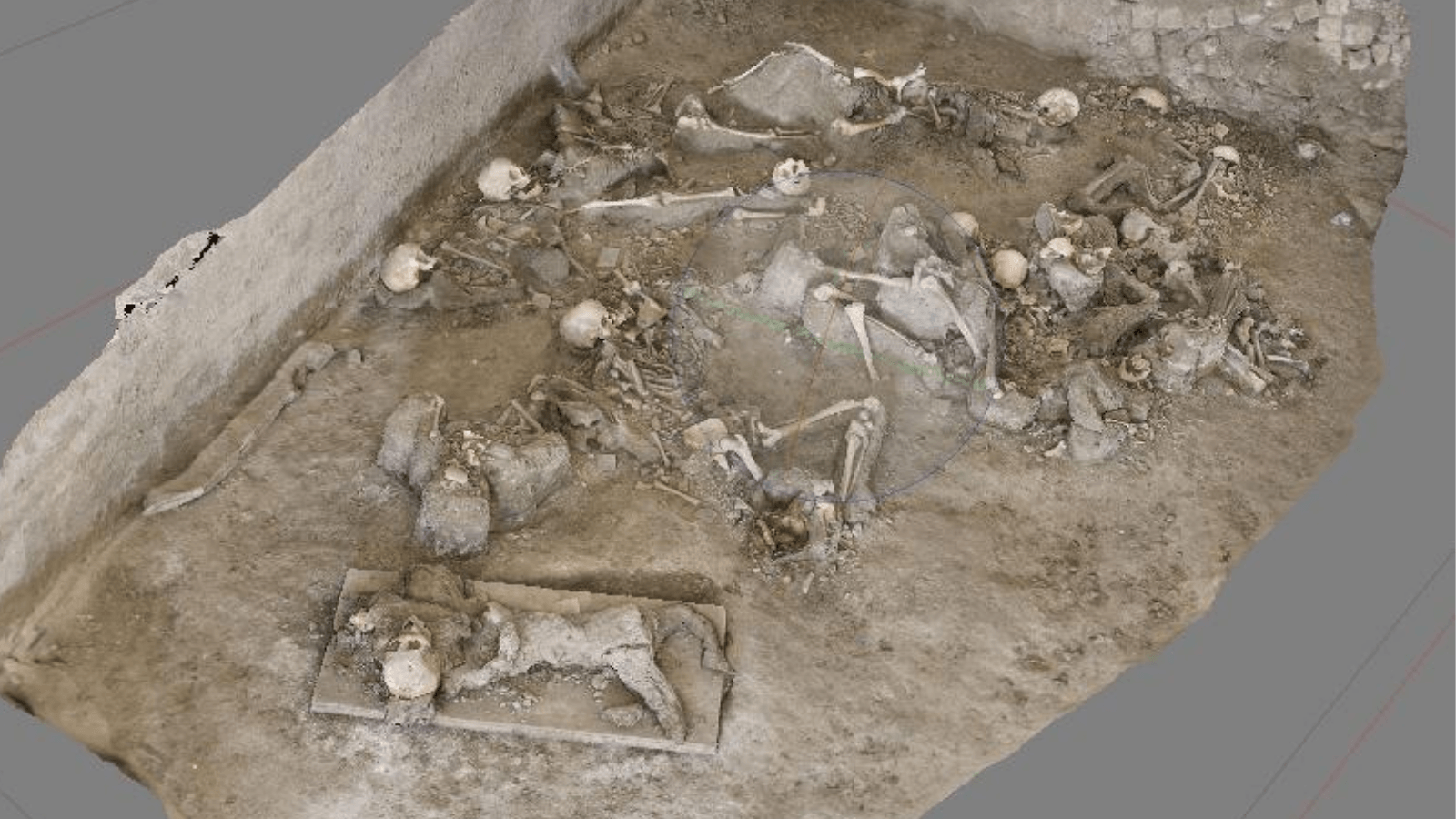
Nearly 2,000-year-old human remains from Oplontis, near Pompeii, are revealing what people living in the shadow of Mount Vesuvius regularly ate before the catastrophic eruption of AD 79.
Despite living beside the Bay of Naples, their diet depended overwhelmingly on food from the land. Cereals, legumes and other plant foods formed its foundation, while animal protein played a smaller role and fish contributed surprisingly little.
The findings come from a new study published in the Journal of Archaeological Science: Reports, produced through collaboration between the Applied Research Laboratory of the Archaeological Park of Pompeii and the DiSTABiF department of the University of Campania Luigi Vanvitelli.
Rather than attempting to reconstruct a final meal before the eruption, researchers examined chemical signatures preserved in the victims’ bones. These reflect dietary habits accumulated over years, offering a picture of what people regularly consumed during their lives.
A group caught during the eruption
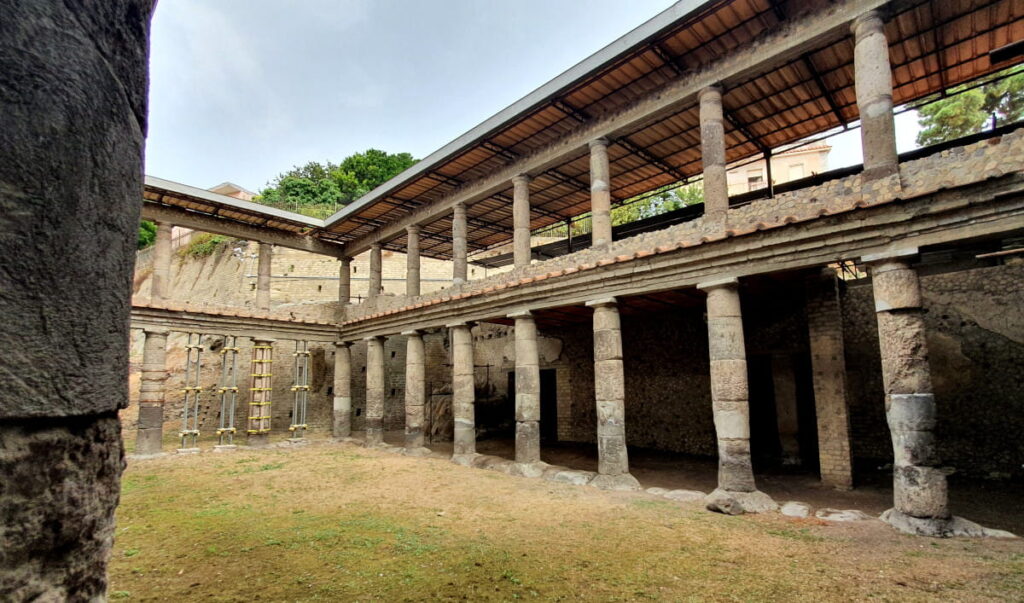
The remains were recovered from Room 10 of the complex traditionally known as Villa B at Oplontis, in modern Torre Annunziata, only a few kilometers from ancient Pompeii.
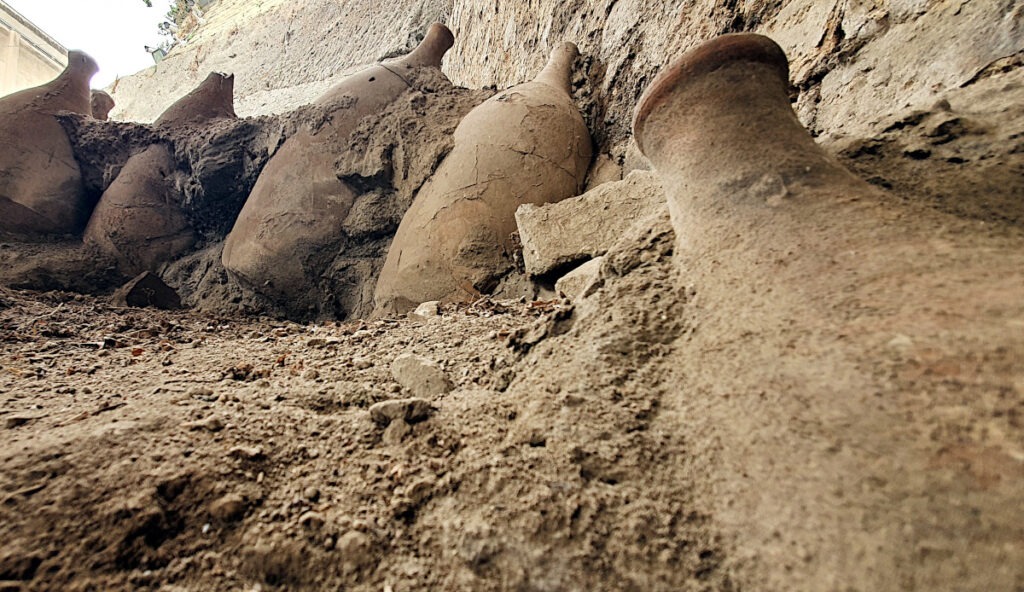
Villa B was a commercial and residential complex on the ancient coastline. Archaeological investigations have uncovered more than 1,400 amphorae there, many associated with the storage and movement of wine and other agricultural products.
When Vesuvius erupted in AD 79, a group of people gathered in Room 10, close to the ancient shoreline and port area. They were overtaken as the eruption devastated settlements around the Bay of Naples.
The latest investigation attributes the remains in the room to 64 individuals.Of these, 59 preserved skeletal elements suitable for collagen extraction and were selected for sampling. Stable isotope analysis ultimately included 46 human samples, alongside three faunal samples.
The reassessment also indicates that more people died in the room than some earlier archaeological evaluations had recognized.
Living beside the sea did not mean living on fish
The dietary results provide one of the study’s most striking findings.
Oplontis stood directly on the Bay of Naples, in a region where fishing, maritime trade and the movement of food were deeply embedded in everyday economic life. It might therefore be expected that seafood formed an important part of the local diet.
The bones suggest otherwise.
Researchers analyzed stable carbon and nitrogen isotope signatures preserved in bone collagen. Different types of food leave distinct chemical patterns in the body, allowing scientists to distinguish broadly between diets based on terrestrial and marine resources.
At Oplontis, the results point predominantly toward food produced on land.
Cereals such as wheat and barley, together with legumes and other agricultural products, appear to have formed much of the dietary base. Animal-derived foods, probably including meat and dairy products, contributed a moderate amount of protein.
Fish may have been part of the diet, but its overall contribution appears to have been limited.
The result is particularly significant because archaeological sites around the Bay of Naples preserve abundant evidence for fishing, seafood and fish-based products. The new study shows that what was produced, traded or stored in a Roman coastal settlement did not necessarily dominate what its inhabitants ate every day.
Bones add a different chapter to Roman food history
Pompeii and the wider Vesuvian region have preserved an extraordinary record of ancient food.
Carbonized grains and fruits, bakeries, cooking vessels, amphorae, shops, paintings and written sources all provide evidence for the foods available to Roman communities.
Human remains add another layer.
Instead of showing what could be bought, stored or prepared, the chemistry preserved in bones records what people actually consumed over long periods of their lives.
At Oplontis, that evidence points toward an everyday diet built largely around staple agricultural foods rather than the richer and more varied meals often associated with popular images of Roman dining.
The study also found individual variation within the group but no particularly strong dietary divide between males and females.
Gabriel Zuchtriegel, director of the Archaeological Park of Pompeii and a co-author of the research, said the results reinforce the central importance of bread and cereals for much of the Roman population.
Studying how Vesuvius victims lived
The victims of the AD 79 eruption are usually studied because of the extraordinary circumstances of their deaths.
Bioarchaeology allows researchers to ask a different question: how did they live before the disaster?
Their bones preserve evidence accumulated over years, including information about diet, health and differences between individuals.
At Oplontis, that evidence reveals a community whose daily food relied above all on the agricultural landscape around it. Even with the Bay of Naples at their doorstep, cereals, legumes and other foods from the land remained at the center of everyday nutrition.
The study, “A multidisciplinary bioarchaeological approach to diet at Oplontis (Pompeii): evidence for predominantly terrestrial resources,” was authored by Valentina Giacometti, Simona Altieri, Noemi Mantile, Maria Rosa di Cicco, Chiara Comegna, Valeria Amoretti, Gabriel Zuchtriegel and Carmine Lubritto.
It was published in Volume 74 of the Journal of Archaeological Science: Reports in 2026.
Cover Image: Photogrammetric model of skeletal remains in Room 10 at Villa B in Oplontis, where victims of the AD 79 Vesuvius eruption were found. Credit: N. Terrenato and M. Naglak, University of Michigan.