
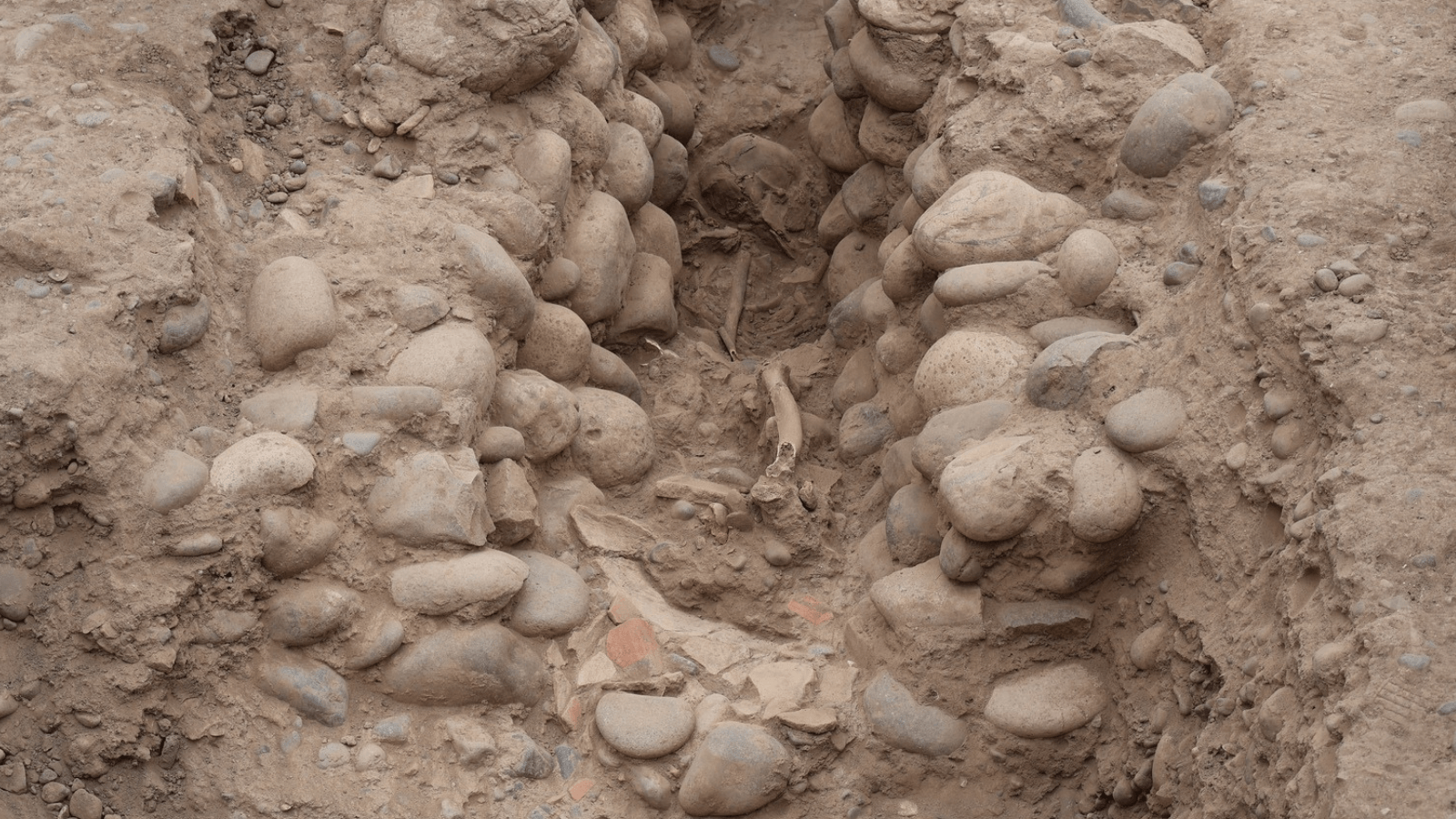
Archaeologists excavating Huaca Pucllana in Lima have found human remains inside an underground canal that appears to have been deliberately sealed during a ritual about 1,400 years ago.
The discovery, made during the site’s 2026 excavation season, comes from a context preliminarily dated to around AD 650 and associated with the Lima culture. Peru’s Ministry of Culture says the individual, probably an adult male, may have been placed inside the canal as an offering when the structure was ceremonially closed.
That interpretation remains preliminary. Researchers have not established that the person was killed as a sacrifice, and skeletal analysis will be needed to determine sex, age at death, health and any signs of trauma.
A body placed inside an underground canal
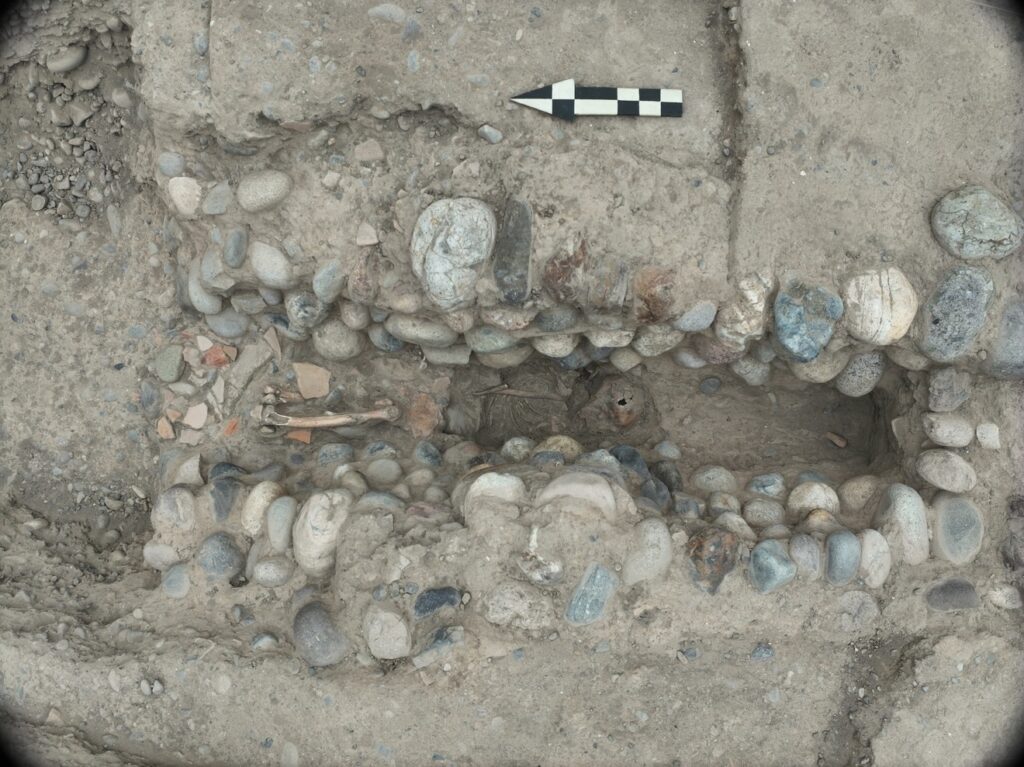
The position of the skeleton suggests the placement was deliberate rather than an ordinary burial.
The individual was laid lengthwise along the underground channel, oriented north to south and resting on the left side. The skull pointed west, while the face was turned toward Huaca Pucllana’s monumental pyramid and the Pacific Ocean.
Excavation leader Gladys Paz identified the location as Sector B of Huaca Chica, close to what is thought to have been the main entrance to the ceremonial center around AD 650.
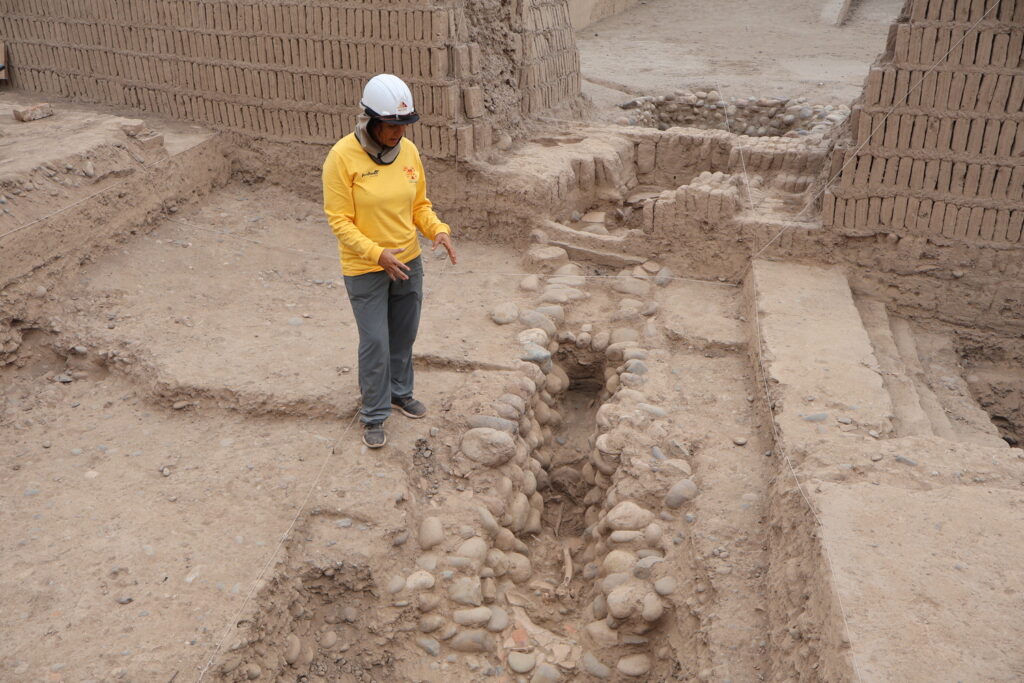
The canal was connected to a ceremonial well whose construction differs from much of Huaca Pucllana’s architecture. While the site is famous for structures made from small handmade adobe bricks, this well was built with rounded stones, a technique described as unusual for the complex.
The combination of the stone-built well, underground channel and carefully positioned body strengthens the interpretation of the area as a ceremonial space.
Closing sacred spaces at Huaca Pucllana
Ritual closure was already known at Huaca Pucllana before the latest discovery.
A 2015 study by archaeologist Nilton Ríos Palomino, published in the Boletín de Arqueología PUCP, documented ceremonies connected with the closing and renewal of architectural spaces at the site. Excavations revealed large-scale food consumption and other ritual activity associated with the end of a plaza’s period of use.
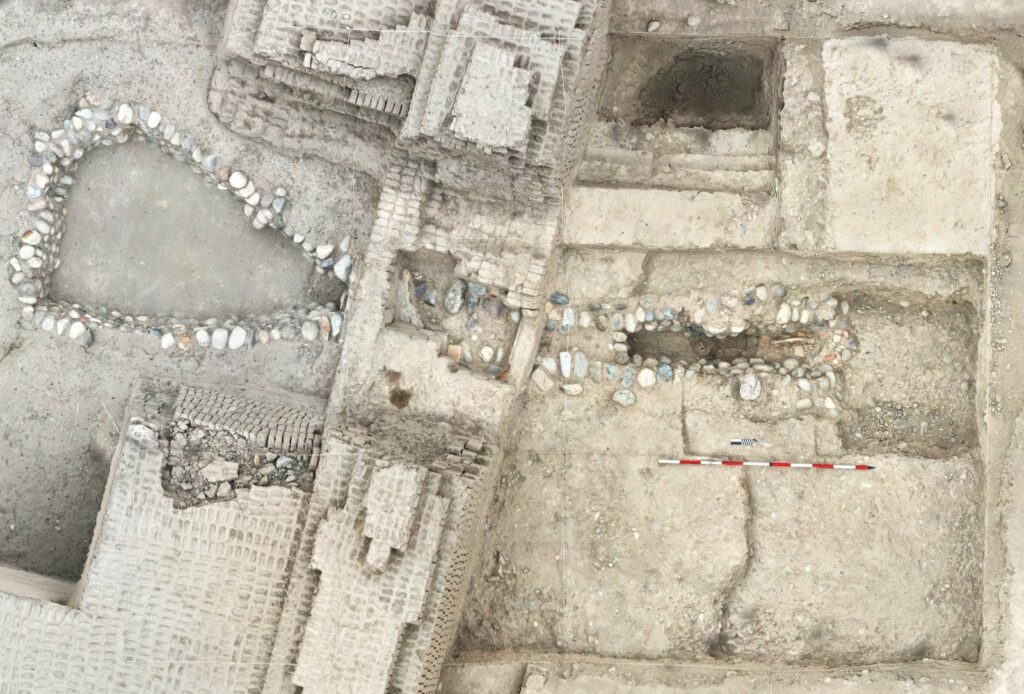
The newly discovered canal may represent another form of the same broader practice, but with one striking difference: a human body was incorporated into the closing of the structure. Similar ritual deposits have also been documented elsewhere in Peru, including a 3,800-year-old offering sealed beneath a public building at Peñico.
Researchers still need to determine whether the individual died during the ceremony, shortly before it, or was placed in the canal after death under different circumstances. For that reason, the evidence currently supports describing the person as a possible offering, not a confirmed sacrifice.
The body’s westward orientation is also notable. Earlier research has emphasized the importance of the Pacific Ocean and marine symbolism in Lima culture religion at Huaca Pucllana. The fact that the individual faced toward both the monumental complex and the sea may therefore be significant, although archaeologists have not yet established a religious meaning for the orientation.
Huaca Pucllana was an important ceremonial and administrative center of the Lima culture on Peru’s central coast. Its principal Lima-period occupation is generally placed between about AD 530 and 650, during which the complex underwent repeated construction and architectural change.
Further study of the skeleton, ceramics, animal remains and architecture should clarify how the underground complex was used and why it was ultimately sealed. What is already clear is unusual enough: around AD 650, a human body was deliberately placed inside an underground ceremonial structure at Huaca Pucllana as that space reached the end of its use.