
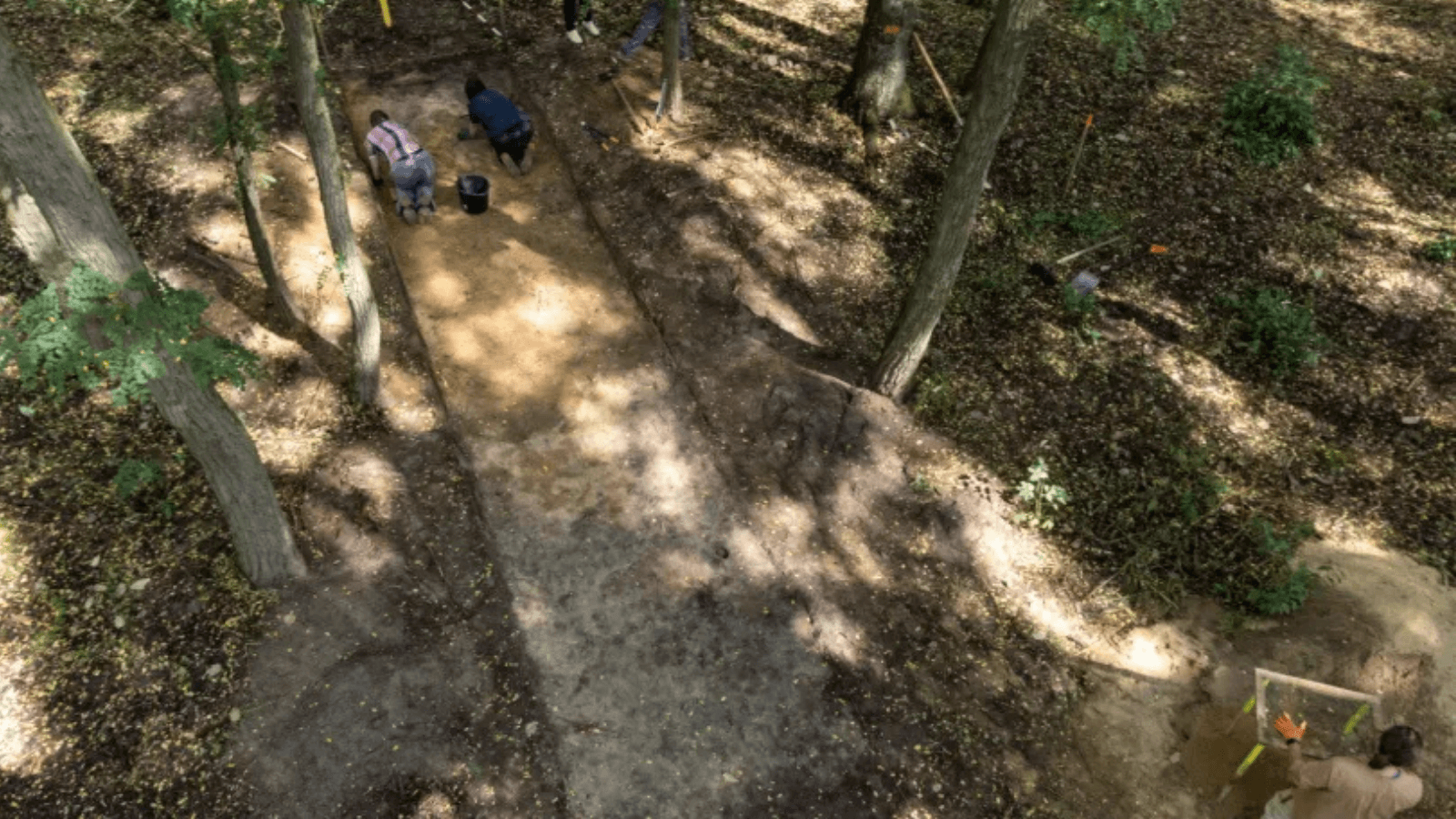
Archaeologists have identified a monument hidden beneath a Polish forest as a 5,500-year-old earthen tomb built by a Neolithic farming community.
Archaeologists working at the edge of a long-established forest in the Greater Poland region have uncovered sections of a stone-lined earthen structure associated with the Funnel Beaker culture. The evidence confirms that the mound is not a natural formation but the remains of one of the earliest large monuments erected in what is now Poland.
The discovery is particularly important because Greater Poland was long considered almost empty of such tombs, despite clear evidence that Funnel Beaker communities lived in the region. Recent finds suggest that many monuments may have survived only as faint traces beneath forests and cultivated fields.
LiDAR revealed a monument beneath the trees
The tomb lies within the General Dezydery Chłapowski Landscape Park, near the village of Wyrzeka in the Śrem municipality. Thousands of years of erosion have reduced it to a shallow, elongated rise that is difficult to distinguish at ground level.
Its outline emerged in 2024, when an employee of the Greater Poland Voivodeship Landscape Parks Complex examined LiDAR data from the area. The laser survey recorded a heavily flattened mound with an unusually long and regular shape.
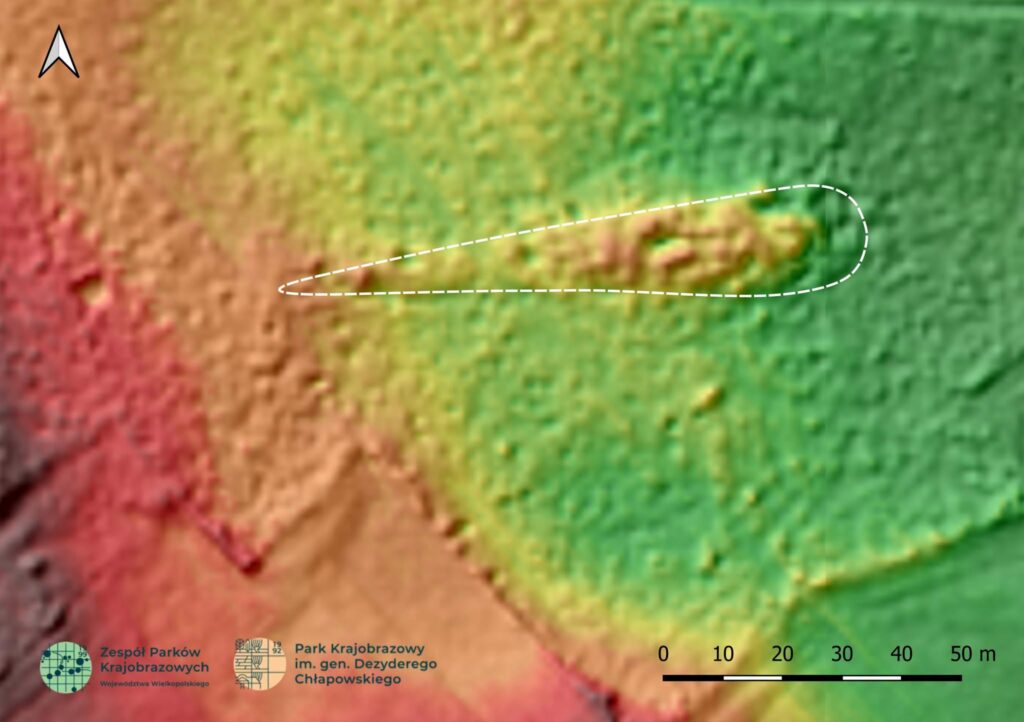
LiDAR measures small variations in ground elevation and can expose archaeological features concealed by vegetation. The form detected near Wyrzeka resembled a long, chamberless earthen tomb, a monument type associated with Funnel Beaker communities across Central and Northern Europe.
Researchers returned in 2025 to conduct geomagnetic surveys, test drilling and other non-invasive investigations. The results supported the initial interpretation and led to a targeted excavation this season.
A small trench confirms a Neolithic tomb
Rather than exposing the entire monument, archaeologists opened a trench measuring only 2 by 12 meters across a selected section of the mound. Even within this narrow area, they found evidence of deliberate prehistoric construction.
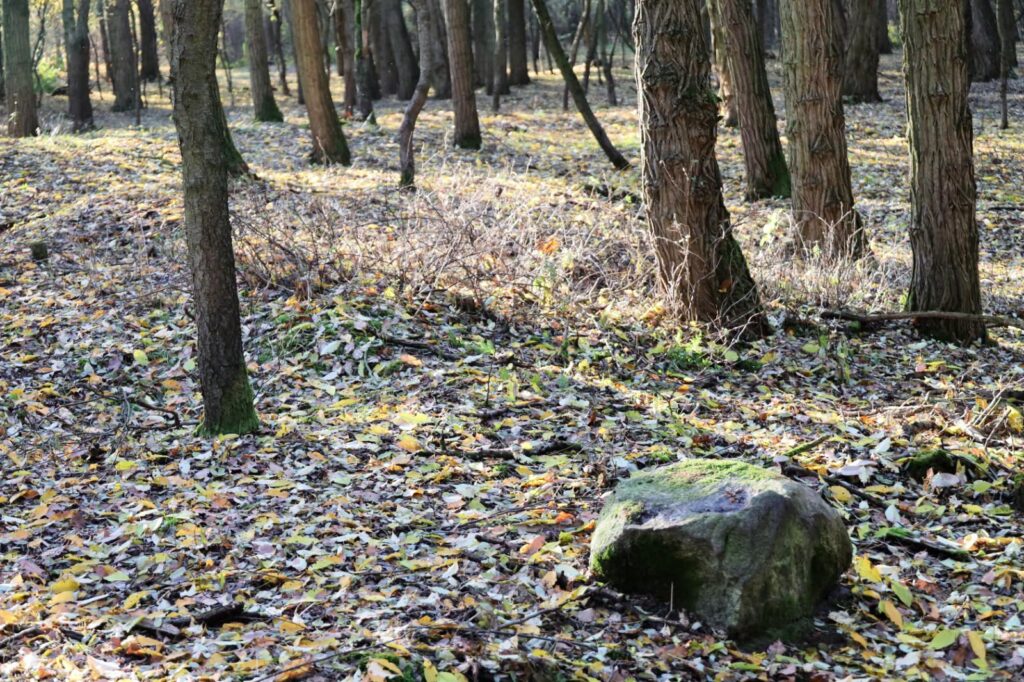
Large boulders and smaller stones appear to have formed a retaining wall along the earthen mound. Only scattered elements survive, but their position matches building methods documented at other Funnel Beaker tombs.
Archaeologists also recovered small fragments of prehistoric pottery. Although heavily worn, the pieces have been linked to the communities believed to have built the monument and provide an important indication of its cultural affiliation. Elsewhere in Poland, the analysis of 5,500-year-old Funnel Beaker vessels has revealed evidence of processed dairy products and communal feasting among Neolithic communities.
No human remains or intact burial have been announced. Researchers suspect that the mound covered the grave of an important member of the local community, but that interpretation cannot yet be confirmed.
The excavation is proceeding carefully. Soil is removed by hand in layers of approximately 10 centimeters, while each stage is photographed and digitally recorded. Drone imagery, photogrammetry and geodetic measurements allow the team to create a precise three-dimensional record of the trench.
Excavated soil is also sieved so that pottery and other objects measuring as little as around one centimeter are not overlooked. The approach allows archaeologists to collect as much information as possible while disturbing only a small part of the monument.
Built by one of the region’s early farming communities
The Wyrzeka tomb probably dates to the fourth millennium BC. During this period, Funnel Beaker communities cultivated crops, raised livestock and constructed some of the largest monuments in prehistoric Poland. The discovery follows the recent identification of a 6,000-year-old wooden megalithic tomb in Lublin, showing that Neolithic communities in different parts of Poland developed distinct forms of monumental burial architecture.
Comparable long tombs can reach 130 to 140 meters in length, although the original dimensions of the Wyrzeka structure remain unknown. They generally had a broad, elevated front and narrowed gradually toward a long tail. A burial was often placed near the wider end.
The monuments are sometimes called “Polish pyramids,” but they were not pyramids in the architectural sense. They consisted primarily of earth, with boulders and smaller stones used to define or reinforce their edges.
Constructing a tomb on this scale required people to gather stone, move large quantities of soil and organize a sustained communal effort. The completed mound would have stood prominently in the Neolithic landscape, marking both a burial place and a location that remained significant to the surrounding community.
A missing chapter in Greater Poland’s prehistory
Funnel Beaker long tombs are well documented in Kuyavia and central Poland, as well as farther west in Germany. Greater Poland, however, was until recently viewed as a gap in their distribution.
The Wyrzeka discovery strengthens the possibility that this absence resulted from preservation and visibility rather than a genuine lack of monuments. Repeated plowing can flatten an earthen mound, while its larger stones may be removed and reused in later buildings or roads. Once these features disappear, little may remain beyond a slight change in the ground surface.
The forest near Wyrzeka probably helped preserve what survived. Historical maps indicate that woodland has covered the location for at least 200 years, protecting the mound from intensive agriculture. At the same time, the trees made the monument difficult to recognize until LiDAR exposed its outline.
Laboratory analysis of samples collected during the excavation may provide a more precise date and clarify how the tomb was constructed. Further research will also determine whether traces of the original burial survive beneath the mound.
For now, the investigation has established that an apparently ordinary rise in the forest landscape was created by human hands more than five millennia ago—and that Greater Poland’s missing megaliths may not be missing after all.
Cover Image: Archaeologists examine a monumental earthen tomb near Wyrzeka in western Poland, believed to have been built around 5,500 years ago. Credit: Jakub Kaczmarczyk/PAP