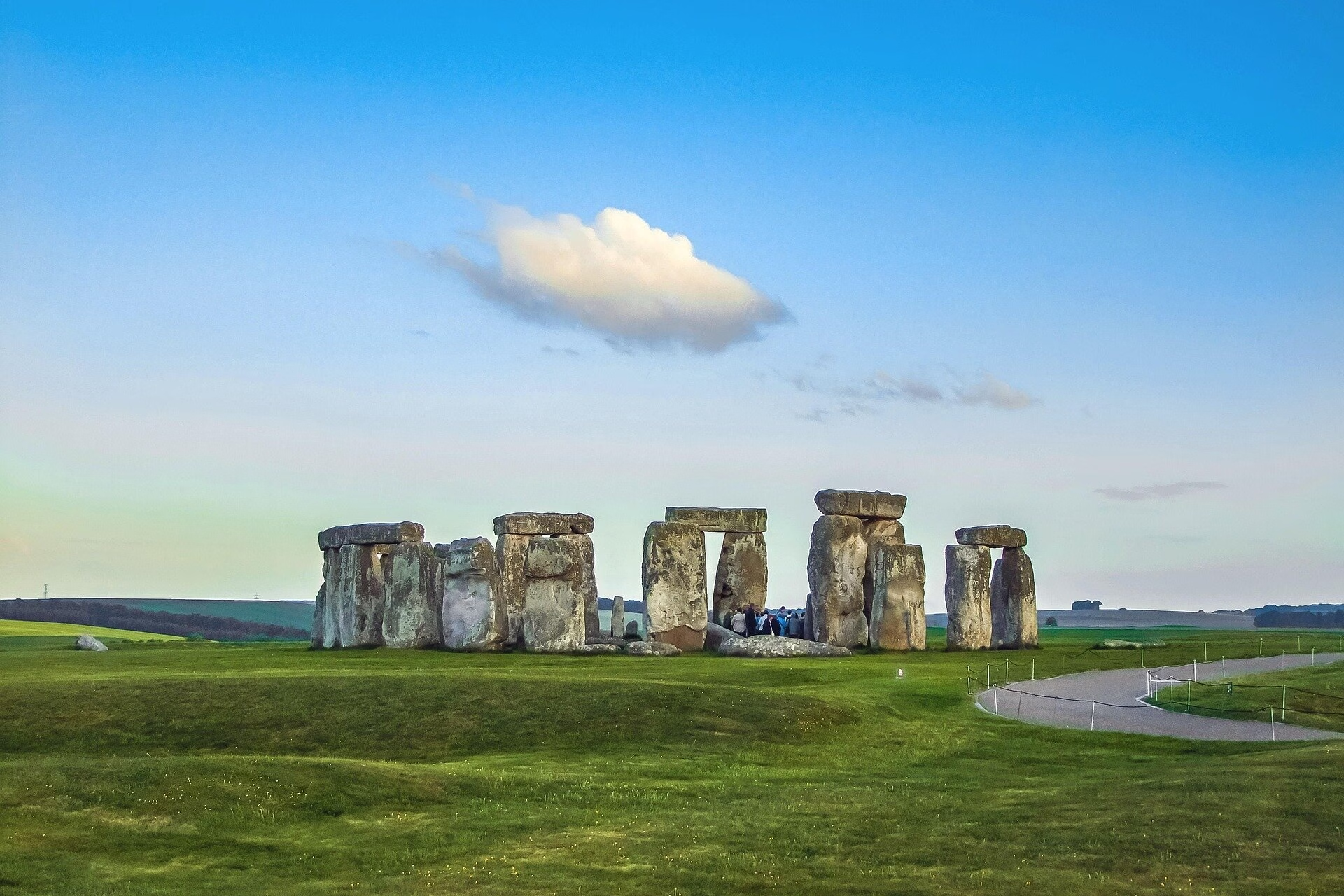
A 5,000-year-old cow jawbone found at Stonehenge has revealed extraordinary details about the animal’s life—and may reshape theories on how the monument’s iconic stones were transported.
A study published in the Journal of Archaeological Science analyzed a cow’s jaw discovered in 1924 at Stonehenge’s southern entrance. Using isotope analysis on its third molar, researchers determined the animal lived between 2995 and 2900 BCE, during the earliest phases of the monument’s construction. The chemical signatures point to an origin in southwest Wales, the same region as Stonehenge’s famed bluestones.
“This is yet more fascinating evidence for Stonehenge’s link with southwest Wales, where its bluestones come from,” said Professor Michael Parker Pearson of UCL Archaeology. “It raises the tantalizing possibility that cattle helped to haul the stones.”
Reading History in a Single Tooth
The team sliced the cow’s third molar into nine layers to measure oxygen, carbon, strontium, and lead isotopes, unlocking six months of the animal’s life:
- Oxygen isotopes showed the tooth recorded growth from winter to summer.
- Carbon data revealed a seasonal diet: woodland fodder in winter, open pasture in summer.
- Strontium isotopes indicated the food sources came from geologically different areas, suggesting seasonal movement or imported fodder.
- Lead isotopes provided the crucial clue—spikes matched older Palaeozoic rock formations, consistent with the Preseli Hills in Pembrokeshire, where the bluestones originated.
Pregnancy Stress and Sex Determination
The unusual lead pattern could not be explained by movement alone. Researchers hypothesize it was caused by lead stored in bones being remobilized during pregnancy stress. To confirm the animal’s sex, scientists at the University of Manchester applied peptide-based protein analysis, showing the cow was almost certainly female and pregnant or nursing.
A New Perspective on Stonehenge’s Story
Professor Richard Madgwick of Cardiff University emphasized the broader significance:
“So often, grand narratives dominate research on major archaeological sites, but this detailed biographical approach on a single animal provides a brand-new facet to the story of Stonehenge.”
The discovery marks the first direct evidence that cattle—and perhaps their strength—may have played a role in the epic journey of the bluestones, covering more than 140 miles from Wales to Salisbury Plain. A single tooth has given us a vivid glimpse into this arduous trek and the lives entwined with the making of Stonehenge.
J. Evans et al, Sequential multi-isotope sampling through a Bos taurus tooth from Stonehenge, to assess comparative sources and incorporation times of strontium and lead, Journal of Archaeological Science (2025). DOI: 10.1016/j.jas.2025.106269