
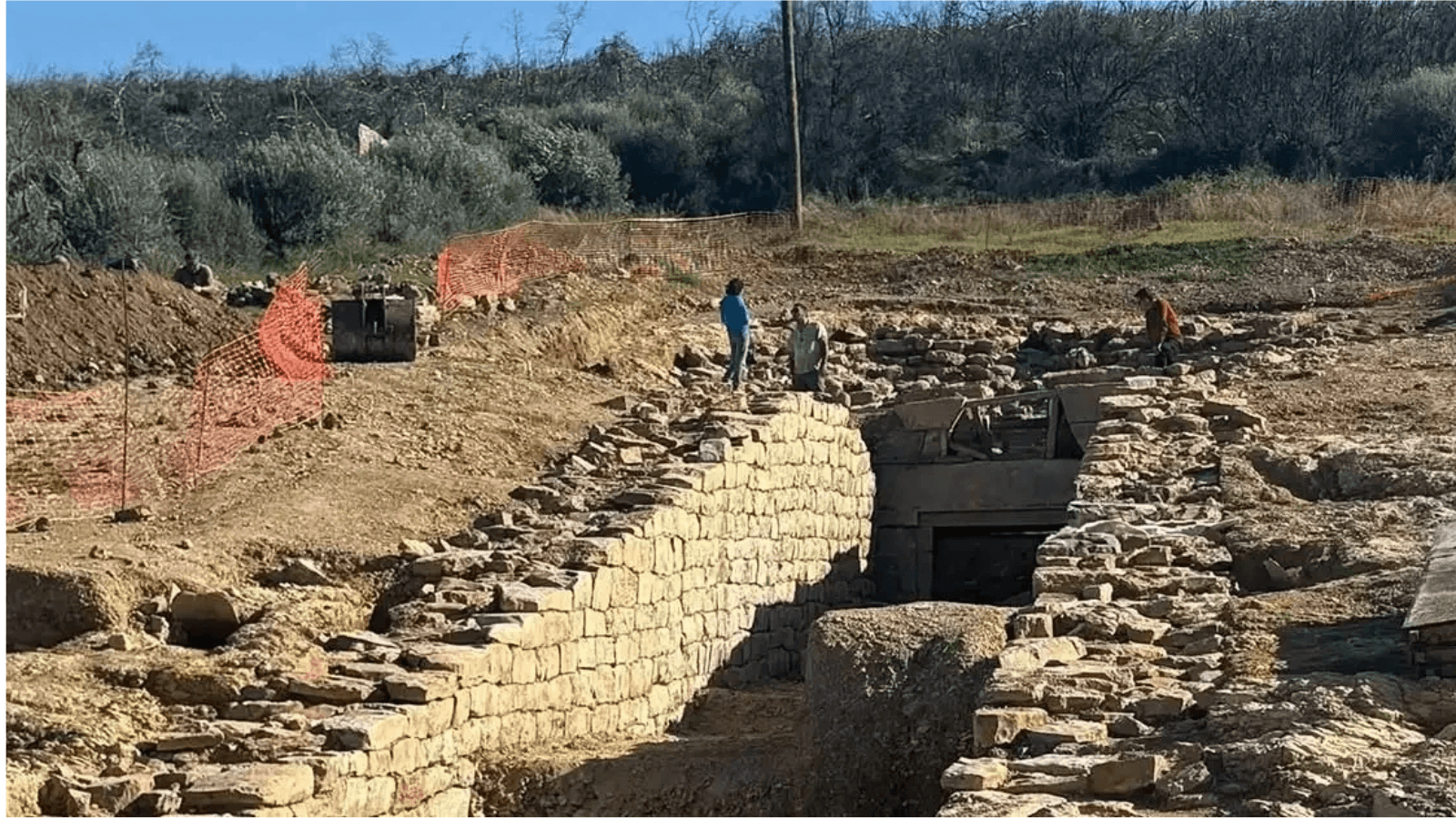
Archaeologists have discovered a monumental Mycenaean tomb more than 3,200 years old during road construction on the Greek island of Euboea. Located near the town of Psachna, the burial monument appears to rank among the 20 largest Mycenaean tholos tombs ever identified in Greece. Its imposing stone architecture suggests that it may have belonged to a powerful figure who held considerable authority during the Late Bronze Age.
The discovery has also presented an unexpected challenge for the Chalkida–Psachna bypass project. A proposal to construct a bridge over the archaeological site could preserve the ancient monument in its original location and eventually allow visitors to explore it.
A Monumental Tomb for the Mycenaean Elite
Euboea parliamentarian Thanasis Zempilis visited the excavation site on November 23, where archaeologists from the Ephorate of Antiquities of Euboea briefed him on the discovery.
According to his statement, the monument is the 126th Mycenaean tholos tomb identified in Greece. Its exceptional size suggests that its builders intended it for a high-ranking individual, potentially a local ruler.
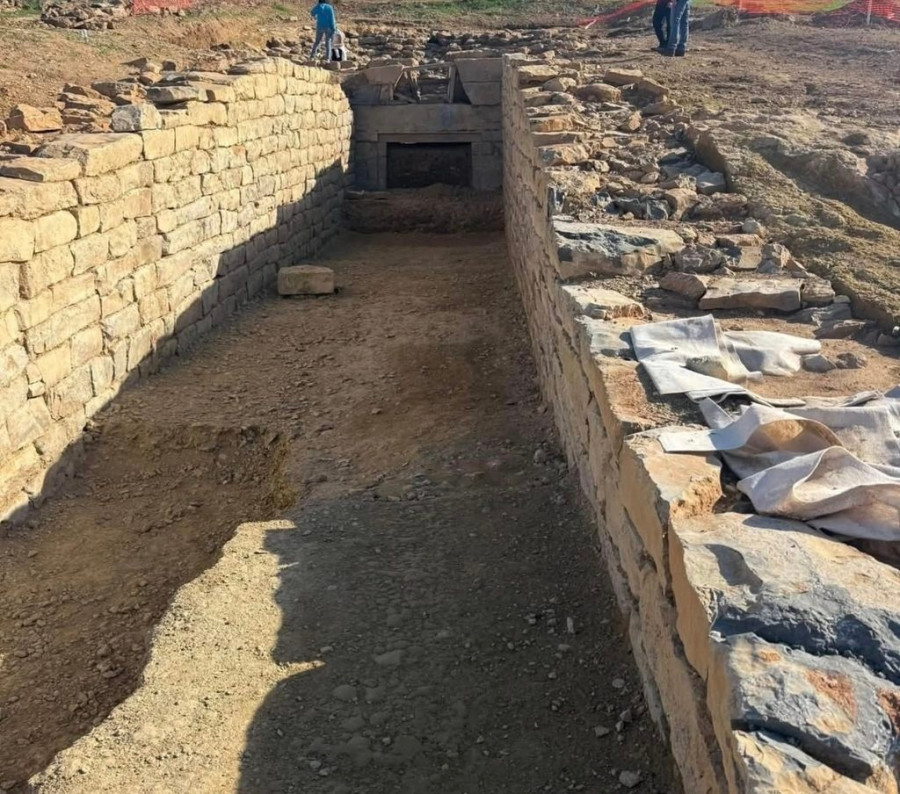
Photographs from the excavation show a substantial entrance passage lined with carefully arranged stone blocks and a monumental doorway leading towards the burial chamber. Although the architecture points to an elite burial, the identity of its occupants remains unknown. Archaeologists have yet to publicly disclose the tomb’s precise dimensions or details of any human remains and grave goods.
Symbols of Wealth and Power in the Bronze Age
Between approximately 1600 and 1100 BCE, the Mycenaean civilisation shaped much of the Late Bronze Age Aegean through its palatial centres, fortified settlements, maritime networks and distinctive funerary architecture.
Tholos tombs, commonly known as beehive tombs, typically featured a long entrance passage called a dromos, an imposing stone doorway and a circular burial chamber. Builders gradually projected successive courses of stone inward to form a corbelled vault, creating monumental structures without the use of a true arch.
Their construction demanded considerable economic resources, skilled labour and engineering expertise. For archaeologists, these monuments provide valuable evidence of social hierarchy and the concentration of wealth among Mycenaean elites.
Other recent discoveries have expanded our understanding of regional authority during this period. A 3,300-year-old Linear B tablet fragment discovered at Iklaina provides evidence of administrative activity beyond the major Mycenaean palaces.
The tomb at Psachna offers a different perspective on this political landscape, raising questions about the wealth and influence of communities on Euboea during the closing centuries of the Bronze Age.
A Modern Bridge to Protect an Ancient Monument
To protect the archaeological remains without abandoning the bypass project, Zempilis has proposed modifying the road’s design to incorporate a bridge over the affected section.
His proposal also calls for dedicated funding for excavation, restoration and the future presentation of the monument through Greece’s 2021–2027 development funding programme. The revised design will depend on guidance from the Central Archaeological Council.
Further excavations could help determine who commissioned this monumental tomb, how long it remained in use and what its construction reveals about Euboea’s place within the Mycenaean world.
Cover Image: The monumental burial complex uncovered during highway construction on Euboea ranks among Greece’s largest known Mycenaean tholos tombs, according to preliminary assessments. Photo: E-Sterea.