
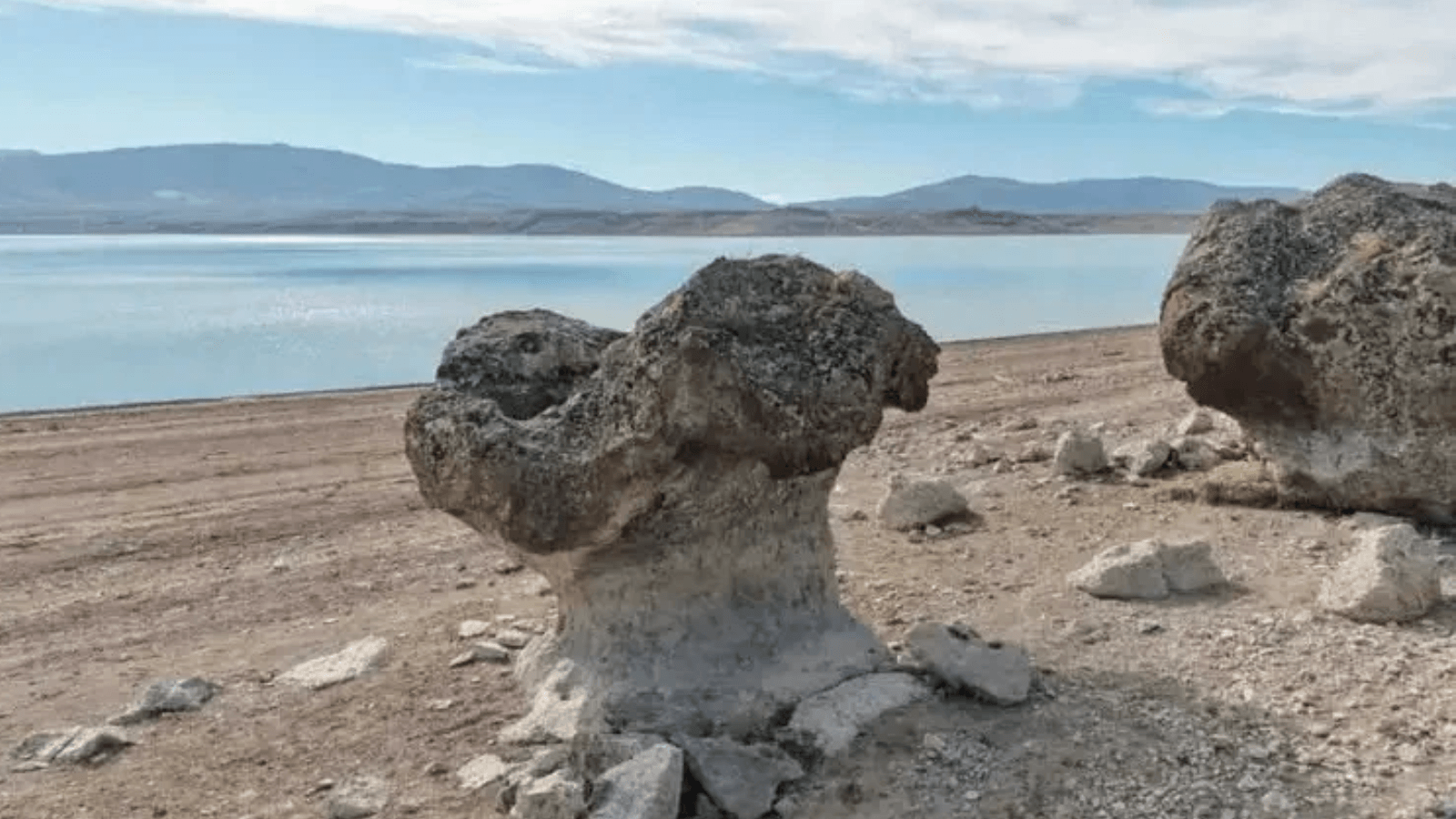
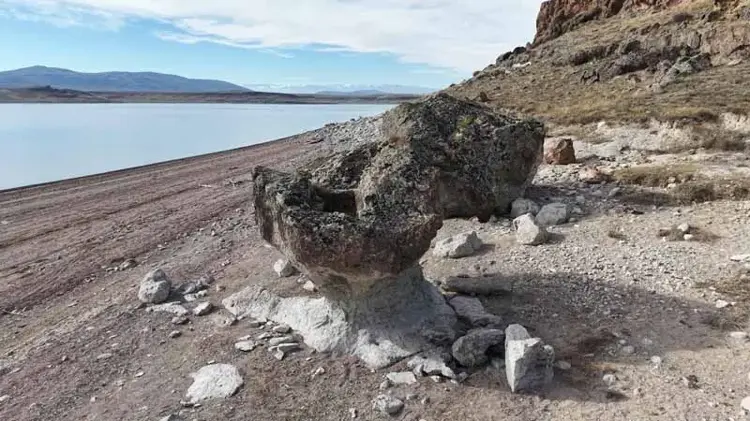
An unusual ancient tomb has been discovered atop a mushroom-shaped rock on the shores of the Gümüşören reservoir in central Türkiye. The burial structure, believed to date to the Roman period, occupies the summit of a natural rock formation approximately five meters (16.4 feet) high in the Develi district of Kayseri.
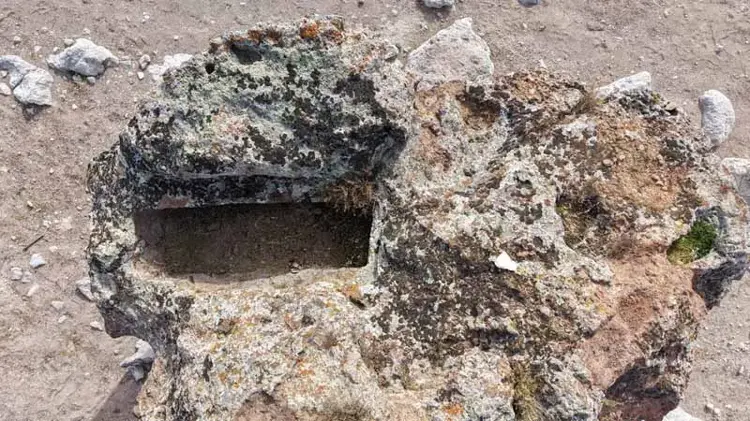
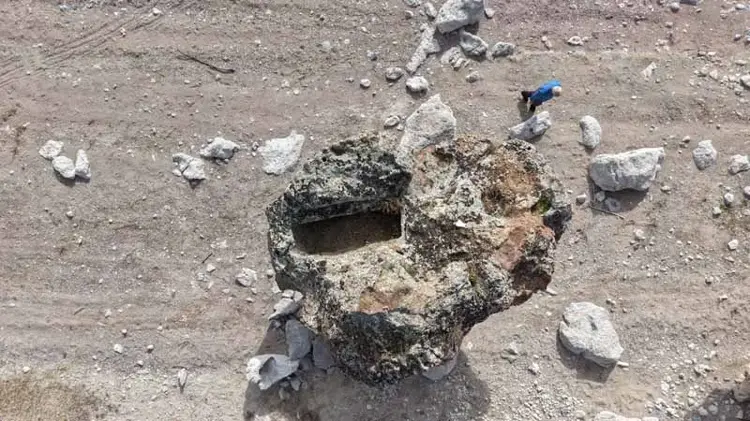
Local history researcher Nezir Ötegen identified the formation while investigating the historical heritage of the Zamantı River valley near Hüseyinli and Yenice. After noticing a rectangular burial cavity with its cover open, Ötegen contacted the authorities to request an archaeological investigation and official protection of the site.
An Ancient Tomb Above the Valley
Mushroom rocks form through differential erosion, a natural process that gradually creates a narrow base beneath a broader upper section. What distinguishes the Develi formation is the presence of a tomb carved directly into its summit.
Standing approximately 1,297 meters above sea level, the formation occupies a prominent position within a landscape dotted with ancient settlements. Ötegen suggests that its visibility from the surrounding area may have influenced the choice of burial location.
The Çukuryurt Rock Tombs on the opposite side of the valley provide another example of the area’s funerary heritage. Elsewhere in Cappadocia, archaeological investigations have revealed unusual burial grounds that illustrate the diversity of ancient burial practices across the region.
From Hittite Monuments to Roman Burial Grounds
The Develi region, south of Mount Erciyes, preserves archaeological remains from several periods. Nearby landmarks include the Çinçin Caves, Direkli Cave and the Fraktin Rock Relief, a monumental Hittite carving dating to the 13th century BCE.
The relief depicts Hittite King Hattusili III and Queen Puduhepa making offerings to deities. Archaeologist Tahsin Özgüç investigated Fraktin in the 1940s, and subsequent research has continued to document the region’s archaeological heritage.
During the Roman period, Cappadocia developed important urban centers, including ancient Caesarea, modern-day Kayseri, where researchers have identified the remains of a monumental Roman hippodrome.
Closer to the mushroom rock, the archaeological remains at Çakmaktepe near Gümüşören received official protection in March 2021. A decision by the regional cultural heritage conservation board designated the ancient settlement, necropolis and road remains as a first-degree archaeological site.
Although Ötegen attributes the tomb atop the mushroom rock to the Roman period, specialists have yet to establish its precise age. Further investigation could clarify its origins and whether it belongs to the funerary traditions already documented in the surrounding valley.
Cover Image: The distinctive mushroom-shaped rock stands beside the Gümüşören reservoir in the Develi district of Kayseri. Photo: DHA