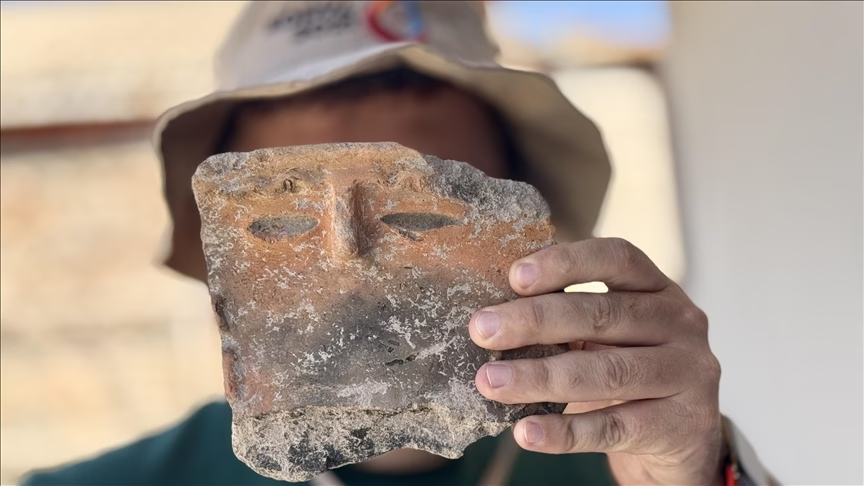
Archaeologists excavating the prehistoric mound of Gökhöyük, in Turkey’s Konya province, have uncovered a pottery fragment carved with human facial features dating back around 5,000 years. Researchers believe the object was not a household item but part of a ritual vessel, offering rare insight into the symbolic practices of early Anatolian communities.
A Settlement with 7,000 Years of Continuity
Gökhöyük lies near Seydişehir and has long been recognized as a site of major archaeological importance. First identified in the 1950s by British archaeologist James Mellaart, the mound gained renewed attention in 2002 when construction work accidentally revealed ancient remains. Since 2023, systematic excavations have been carried out under the direction of Associate Professor Ramazan Gündüz of Selçuk University, with support from Turkey’s Ministry of Culture and Tourism.
Excavations show that the settlement was continuously inhabited from the Neolithic period (around 7000 BCE) to the Iron Age—a rare case of cultural continuity spanning seven millennia in Central Anatolia.
Carved Eyebrows, Almond Eyes, and Ritual Use
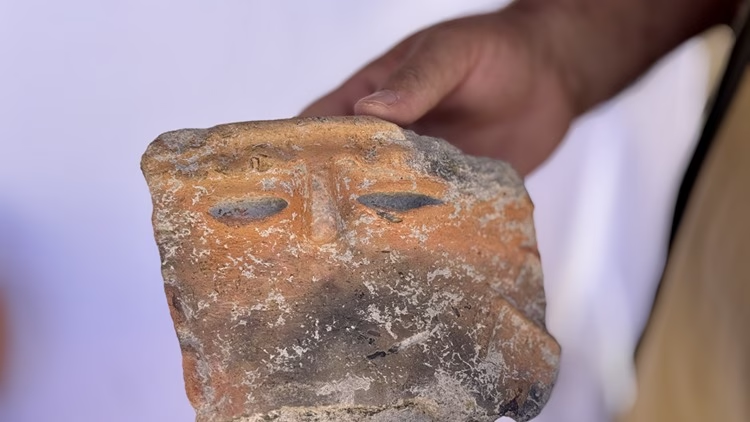
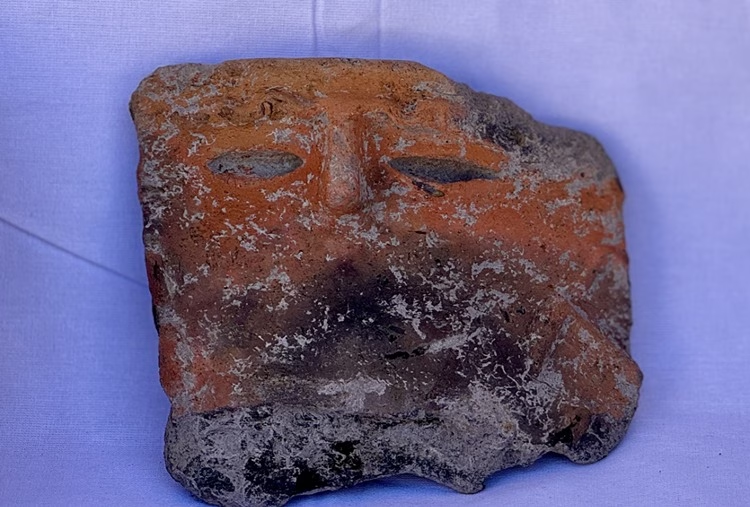
The pottery fragment displays strikingly detailed features: arched eyebrows, a narrow nose, and almond-shaped eyes. According to Gündüz, such anthropomorphic vessels are well attested in Western Anatolia during the Early Bronze Age but seldom appear in Central Anatolia.
“This is not an ordinary cooking pot,” he explained. “The careful modeling of facial features indicates it was created for ceremonial purposes. Its ritual use is certain, even if the exact context of the ceremonies remains unknown.”
Radiocarbon analysis will refine its dating, but initial estimates place it at roughly 5,000 years old.
Daily Life Objects Beside Ritual Finds
Alongside the human-faced fragment, archaeologists unearthed animal figurines, seals, obsidian arrowheads, and small stone axes. These items illustrate both the spiritual life and the practical tools of Gökhöyük’s inhabitants, from hunting equipment to domestic implements.
Toward a Major Research Hub in Anatolia
Gökhöyük is now emerging as one of the most important prehistoric sites in Turkey. Its unique cultural layers—stretching from the Neolithic through the Iron Age—provide a rare opportunity to study long-term social and symbolic traditions in Anatolia.
Cover Image Credit: Abdullah Doğan/AA