
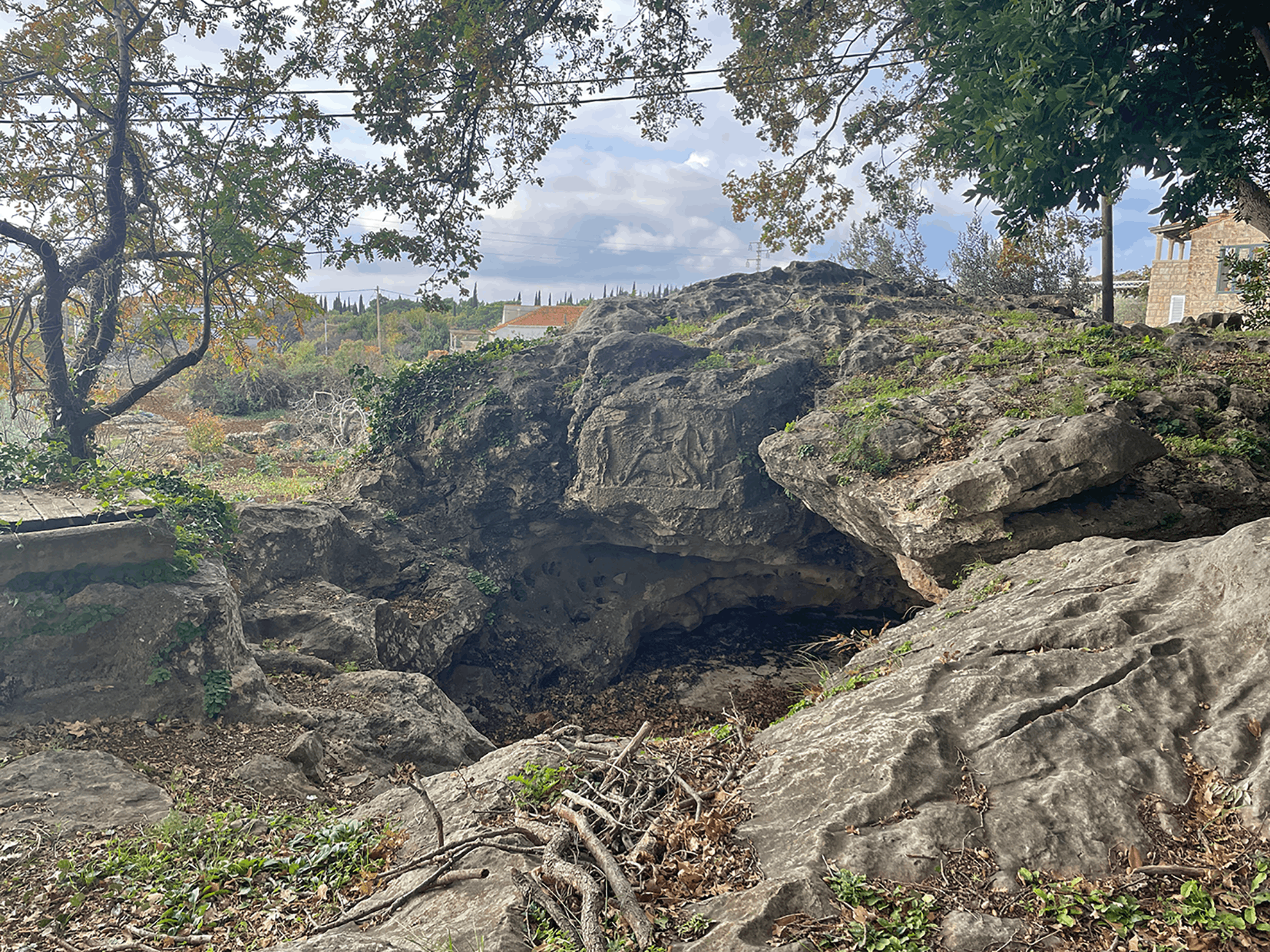
A rare Mithras sanctuary in Croatia is challenging one of the most familiar ideas about this Roman mystery cult. At Močići, in the hills above the ancient city of Epidaurum, the evidence does not point to a typical enclosed mithraeum. It points to a rocky outdoor gathering place shaped by a natural cave, a spring, and the rural landscape of Dalmatia.
The study, published in the Journal of Roman Archaeology by Ian S. Wilson of Harvard University and Matthew McCarty of the University of British Columbia, reexamines a site known since the 19th century but never fully documented in detail. Using photographic survey and photogrammetric modeling, the researchers argue that Močići does not fit the standard architectural model usually associated with worshippers of Mithras.
That makes the sanctuary important far beyond its small size. It suggests that Roman Mithraism, often seen as a cult with highly recognizable ritual spaces, could be more flexible and more locally rooted than previously assumed.
A Mithras sanctuary without the usual temple layout
Mithras worship spread widely across the Roman world from the 2nd century CE, appearing in cities, military communities, rural estates, and frontier settlements. Its sanctuaries are usually easy to recognize. Most mithraea were long, enclosed rooms with benches or raised platforms along the sides, a central passage, and a cult image of Mithras slaying the bull at the far end.
Močići has the image, but not the expected building.
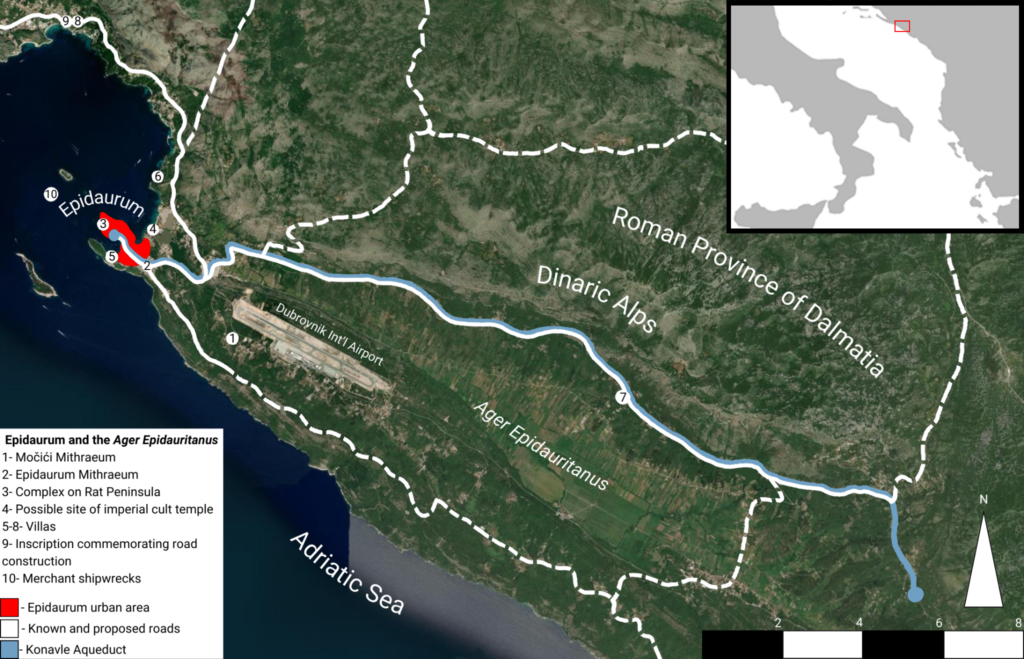
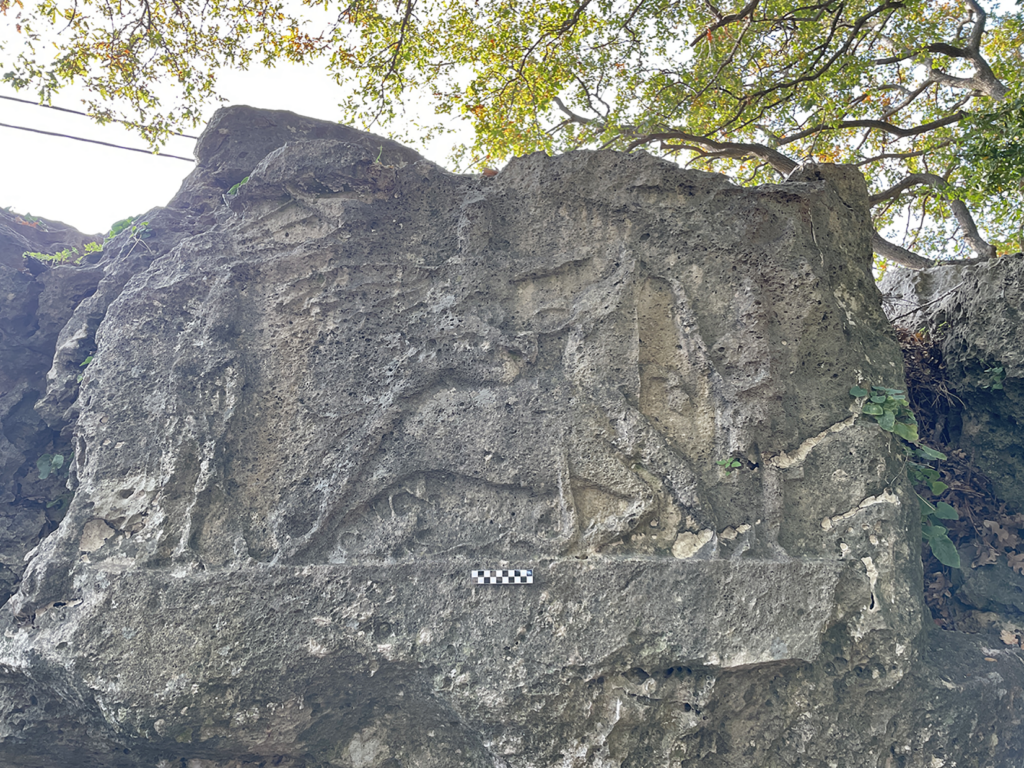
The sanctuary lies just under four kilometers from modern Cavtat, near ancient Epidaurum on Croatia’s Adriatic coast. Its main feature is a weathered relief of Mithras carved directly into limestone above the mouth of a natural grotto. The scene is unmistakably Mithraic: Mithras kills the bull, accompanied by the dog, snake, scorpion, torchbearers, Sol, Luna, and the raven.
The iconography follows the shared visual language of the cult. The setting around it does not.
No roof, no benches, and no clear indoor ritual hall
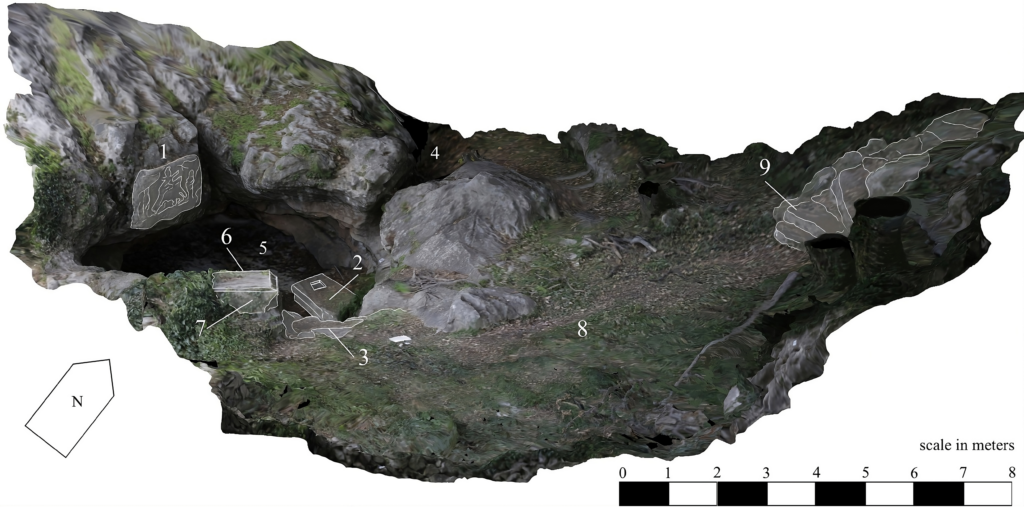
Wilson and McCarty found no convincing evidence that the sanctuary was ever enclosed by a built structure. There are no visible roof cuts, no postholes, no Roman roof tiles, and no carved benches comparable to those known from other mithraea.
The cave itself is also too small to have served as the main ritual hall. Its usable space is about 17.7 square meters, too restricted for the reclining communal meals usually associated with Mithras worship. Known mithraea were generally larger, with main cult rooms averaging around 68 square meters.
The position of the relief is another clue. From inside the cave, the image is awkward to view. From the clearing outside, however, it becomes the obvious focal point. That clearing forms a natural depression about 14 meters across, offering roughly 120 square meters of gathering space.
In practical terms, the outdoor clearing seems to have worked better as the sanctuary’s main ritual area than the cave itself. If this interpretation is correct, Močići may be one of the rare known examples of an open-air Mithras sanctuary.
A real cave and spring, not an imitation
The choice of location was probably deliberate. Mithras had strong associations with rocks, caves, and water. Many Mithraic communities created artificial cave-like environments inside built sanctuaries, using enclosed rooms, rough stone textures, or symbolic decoration to evoke a grotto.
At Močići, no imitation was needed. The cave was already there.
A natural spring also rises inside the grotto, fed by the karstic geology of the region. Water had an important place in Mithraic imagery, including scenes where Mithras draws water from rock with an arrow. In many sanctuaries, these ideas were represented through architecture or ritual installations. At Močići, they were part of the site itself.
The sanctuary therefore seems to have grown from the landscape rather than being imposed on it. Rock, water, and hillside were not background details. They helped shape how Mithras was made present in this place.
Silvanus adds a Dalmatian layer
Inside the cave is a second damaged relief, usually identified as Silvanus, a Roman god associated with woods, animals, fields, and rural life. Only part of the figure survives, but the goat-like legs recall the Pan-like form in which Silvanus was often represented in Dalmatia.
His presence gives the sanctuary a local character. The hills around Epidaurum were tied to agriculture, animal husbandry, quarrying, and rural estates. A spring in such a setting could have been useful in daily life as well as meaningful in worship.
Mithras and Silvanus do not need to be seen as rivals. Roman sacred spaces often allowed multiple divine figures to coexist. At Močići, the same cave and spring may have made sense for both gods.
A destination sanctuary above Epidaurum
Močići was not a convenient urban shrine. Reaching it from the coast required a deliberate walk into the hills. The researchers describe it as a destination sanctuary, a place that demanded effort from its visitors.
That effort changes how the rituals can be imagined. Without a storage room, worshippers likely carried vessels, food, and ritual materials to the site. Without fixed benches, they may have sat or reclined directly on the ground. If shared meals formed part of the ceremonies, the experience would have been very different from the controlled interior spaces of Rome, Ostia, or military frontier settlements.
The sanctuary cannot yet be precisely dated. Without excavation, inscriptions, or datable finds, its use can only be placed broadly within the main period of Mithras worship in the Roman Empire, from the 2nd to the mid-4th century CE.
A local form of Roman mystery cult worship
Močići does not erase the broader patterns of Mithraism. The tauroctony shows that the community used the central image of the cult and understood its shared visual language. But the sanctuary complicates the idea that Mithras worship always depended on the same architectural formula.
Here, worshippers did not build a standard mithraeum and decorate it to resemble a cave. They found a cave, a spring, and a rock face, then made Mithras present there.
That is why this Croatian sanctuary matters. It shows that Roman mystery cults were not only repeated across the empire. They were also adapted to local ground, local gods, and local ways of life.
At Močići, Mithras was carved into Dalmatian limestone and worshipped beside running water, in a sanctuary open to the hills.
Wilson, I. S., & McCarty, M. (2026). Situating a rock-born god: place, practice, and geologies of Mithras-worship at Močići (Croatia). Journal of Roman Archaeology, 1–29. doi:10.1017/S1047759426100774
Cover Image Credit: Ian Wilson and Matthew McCarty, 2026