
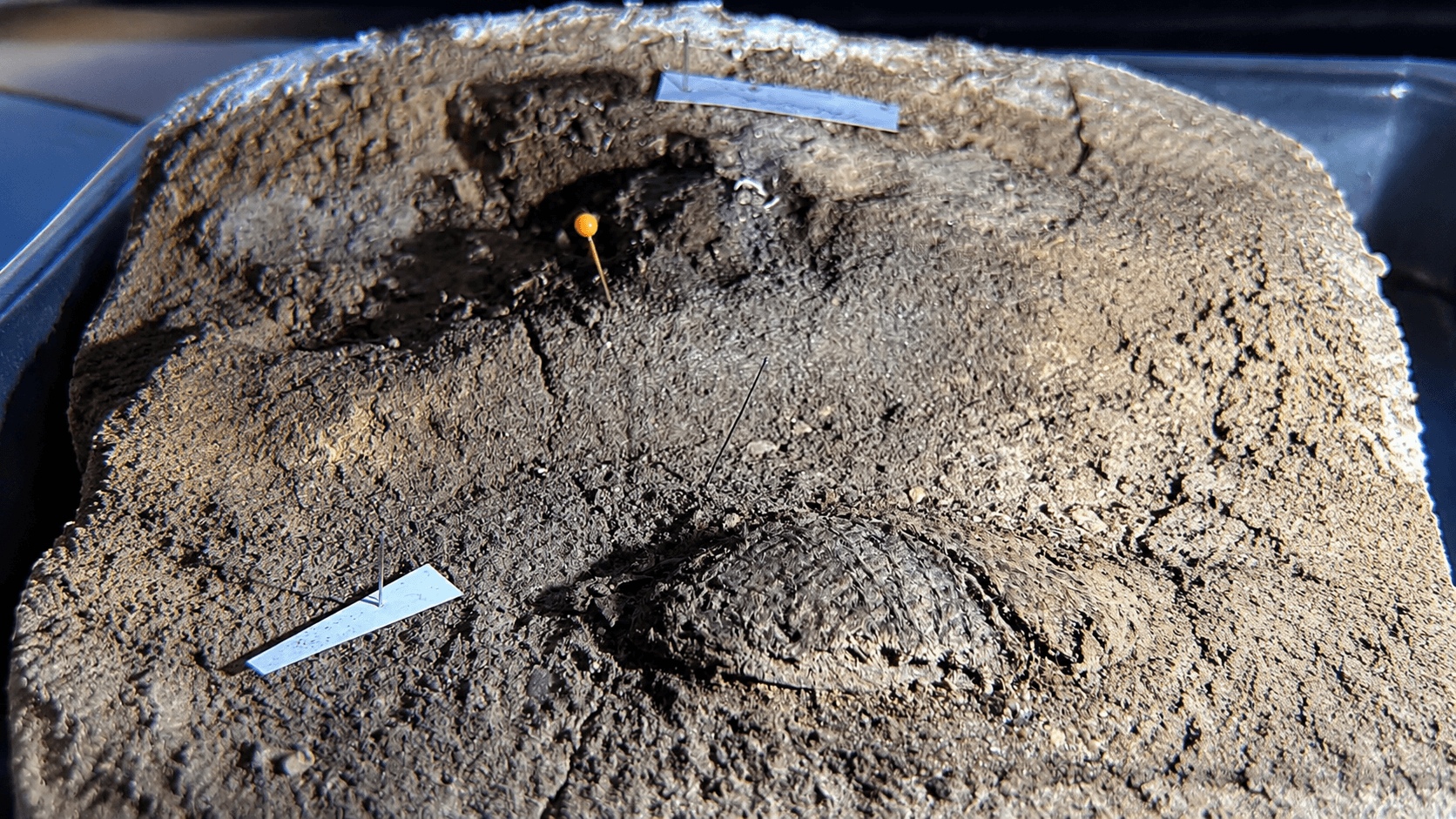
A child buried in western Denmark during the Viking Age was laid to rest wearing two oval brooches that preserved fragments of wool and linen clothing. One of the brooches had been repaired before the burial, raising the possibility that it was already an old or valued possession.
The grave was excavated in 2024 at Skonager, near Varde in West Jutland. It formed part of a cemetery containing infants, children, young people and adults—the first Viking Age graves found in Varde Municipality since 1988.
Two brooches preserved layers of Viking clothing
Ordinarily, little would have survived. West Jutland’s acidic soil is particularly destructive to bones and organic materials. At Skonager, however, metal corrosion around the brooches preserved sections of fabric that would otherwise have disappeared.
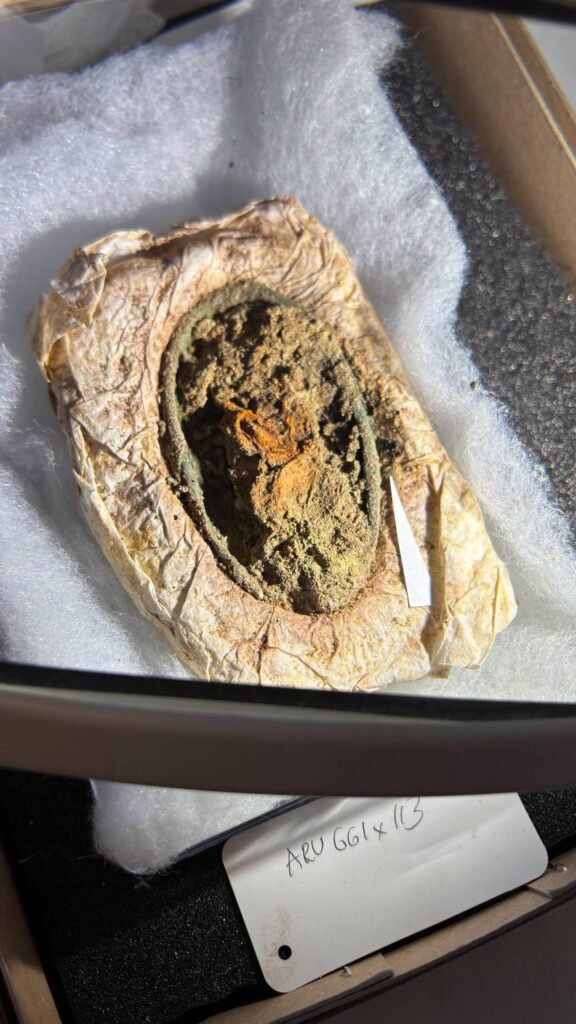
The textiles are now undergoing detailed conservation and analysis. Researchers hope to determine how the child’s clothes were made, which fabrics formed the inner and outer layers, and whether traces of their original colors remain.
The oval ornaments belong to a type known in Danish as skålspænder, often called bowl-shaped, shell or oval brooches in English. Viking Age women typically wore them in pairs to fasten the straps of an outer garment.
Textile fragments remain attached to both sides of the Skonager brooches. Their positions may allow researchers to examine how different fabrics were arranged around the fasteners rather than studying isolated fibers without their original context.
Early examination has identified both wool and linen. Similar finds elsewhere in Scandinavia have linked linen to clothing worn closer to the body and wool to outer garments, but the precise arrangement at Skonager has yet to be established.
Although paired oval brooches are strongly associated with female dress, they do not by themselves establish the biological sex of the child. The ornaments show how the individual was presented at burial; the surviving human remains must be examined separately.
Because the fabric is extremely fragile, archaeologists removed the area containing the brooches, textiles and associated remains as a single block of soil. Conservators at Konserveringscenter Vejle are excavating the block under controlled laboratory conditions.
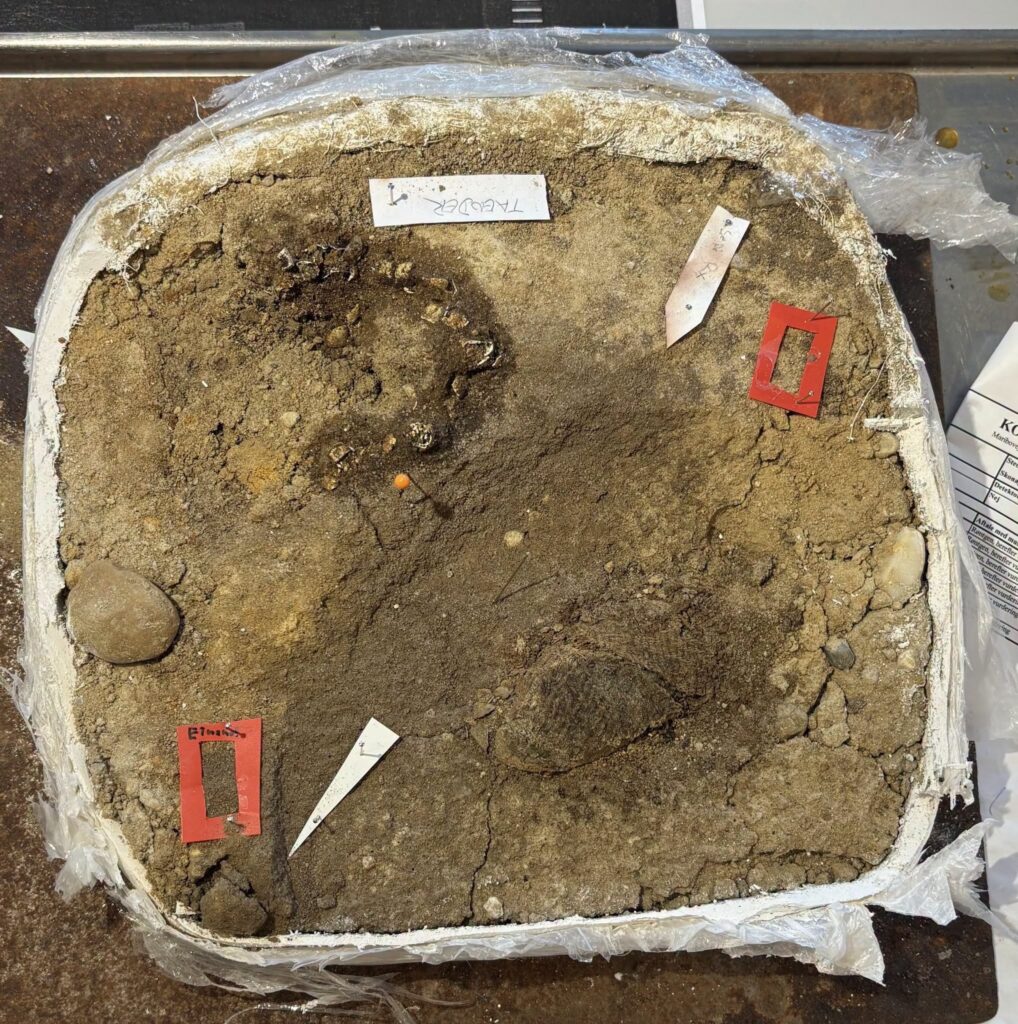
Working through the soil gradually reduces the risk of losing tiny fibers or separating them from the objects and garment layers to which they belonged.
Textile specialist Lise Ræder Knudsen will examine the fibers, weave, spinning quality and any surviving evidence of seams or folded edges. These details could reveal not only the materials used but also how the clothing was constructed.
An old repair raises an unanswered question
One brooch carries clear evidence of an ancient repair. This shows that the ornament broke and returned to use before it entered the grave.
It may simply have been repaired during the child’s lifetime. Another possibility is that it had previously belonged to someone else and was passed down before being worn with the burial clothing.
Researchers plan to radiocarbon-date samples from the textiles. Metal cannot be dated through C14 analysis, so the results will be compared with the brooch’s typology, manufacture and known chronological range.
If the cloth proves noticeably later than the brooch type, the result could strengthen the heirloom interpretation. It would not settle the question by itself, since radiocarbon analysis produces a date range and jewelry types can remain in use for extended periods.
For now, the repair offers firm evidence only of continued use. Whether that use extended across more than one generation remains to be determined.
Tests may recover the garments’ original colors
Researchers also plan to look for chemical traces of dyes. The fibers’ present appearance does not necessarily reflect their original color, as burial conditions and contact with corroding metal can alter textiles substantially.
Dye analysis may establish whether either garment was deliberately colored. Combined with the fabric quality and weaving technique, the results could offer clues to the labor, materials and technical knowledge invested in the child’s clothing.
Color could carry social meaning in Viking Age Scandinavia, but it was not a straightforward indicator of rank. Any evidence of dyeing will need to be considered alongside the brooches, other grave goods and the wider cemetery.
Teeth could add a personal history
Teeth also survived in the grave, providing another uncommon source of information from the acidic soils of western Jutland.
Specialists from ADBOU, the anthropology unit at the University of Southern Denmark, will examine the dental remains. Changes in tooth enamel can record periods of illness or nutritional stress experienced while a child was growing.
Stable isotope analysis may also help researchers investigate whether the individual grew up near Varde or came from another region.
The wider Skonager cemetery represents several age groups and has produced iron knives, amber beads and glass beads. Its discovery is particularly important because Viking Age graves are rarely found in this part of Denmark.
The conservation work is unlikely to produce a complete dress. What survives consists of small textile fragments held in place by two corroded brooches. Their position, material and relationship to the repaired ornament could nevertheless reveal how one Viking Age child was dressed for burial—and whether part of that clothing assemblage had a history older than the grave itself.
Cover Image: One of the oval brooches emerging from the soil block removed from the Viking Age child’s grave at Skonager. Credit: Arkæologi Vestjylland