
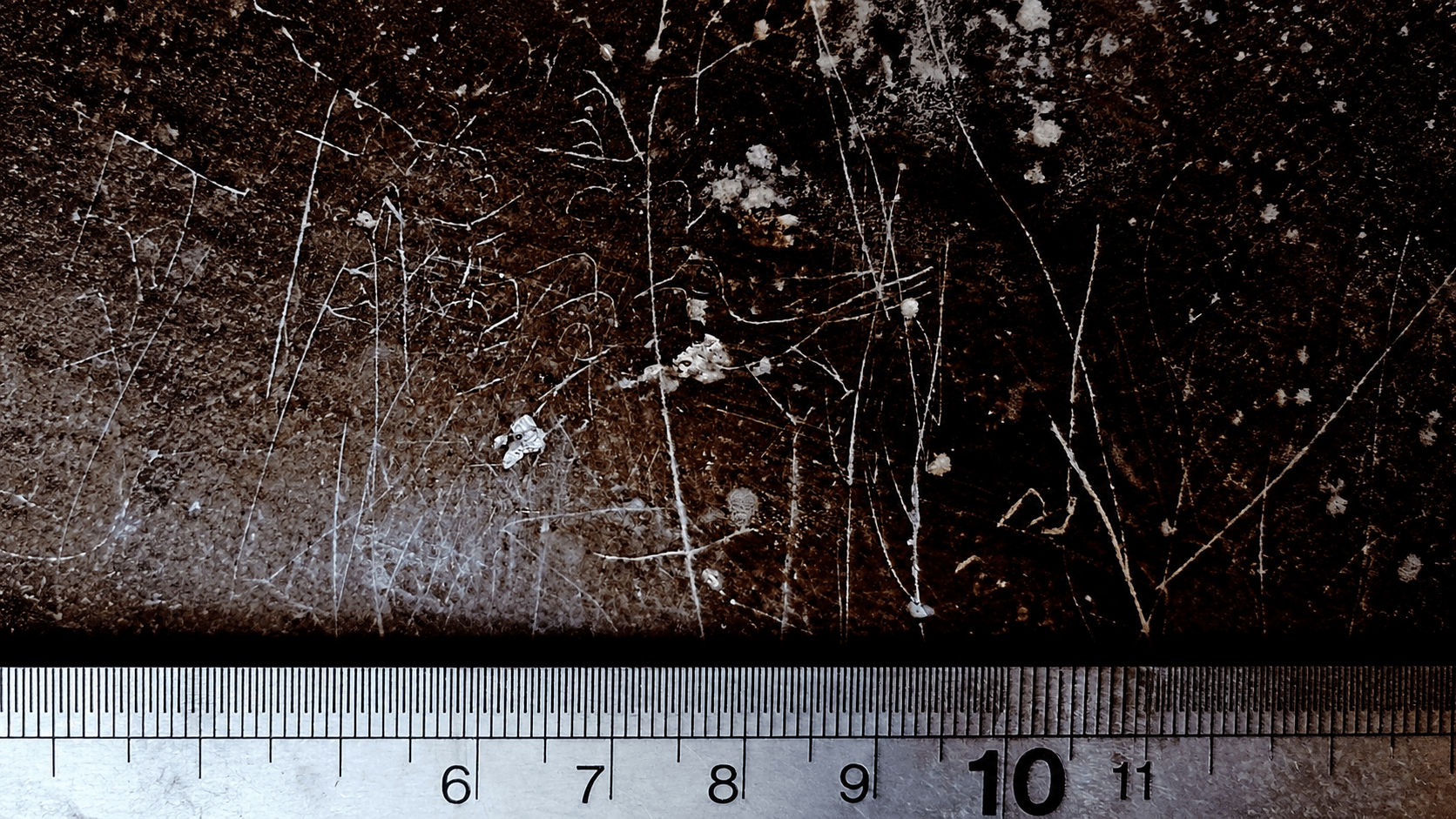
A tiny Sasanian bird carving discovered beside a Pahlavi inscription in southern Iran may offer a rare glimpse into religious ideas during the empire’s final centuries.
The carving was documented in the Marvdasht plain of Fars Province, close to a Pahlavi inscription associated with the salvation and fate of the soul. At only 3 by 2 centimeters, it is among the smallest examples of Sasanian rock art reported in Iran.
Iranian archaeologist Abolhassan Atabaki, who announced the find, described it as the smallest known Sasanian rock carving depicting a bird. That claim has not yet been established through a published comparative study.
The bird was created with a pointed tool, using thin, shallow incisions to trace its outline. This restrained technique is far removed from the deep-cut royal reliefs for which the Sasanian period is best known. A similar needle-carved image believed to depict a Sasanian king was previously documented on the cliffs overlooking nearby Istakhr.
A bird beside a religious inscription
The carving’s importance lies largely in its position beside the late Sasanian inscription. According to Atabaki, the bird appears to relate to ideas expressed in the text, particularly the salvation of the soul.
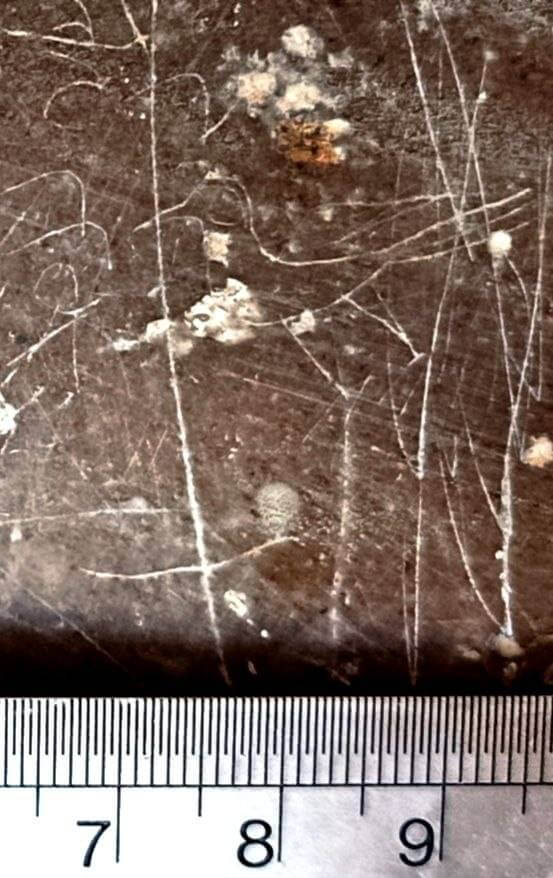
Historian Najmeh Ebrahimi, who examined the image from a symbolic perspective, believes the placement was deliberate. Birds could represent movement between the earthly and spiritual worlds in ancient Iranian thought, while flight provided a natural metaphor for the soul’s departure from the body.
The Marvdasht bird appears to be perched on a branch. Ebrahimi interprets the branch as a symbol of life and continuity, with the bird representing the spiritual realm. Together, the two elements may have complemented the message of the neighboring inscription.
This reading remains an interpretation rather than a settled conclusion. A full archaeological publication, including a detailed reading of the Pahlavi text and an examination of the rock surface, will be necessary to establish whether the carving and inscription were made at the same time.
An unusual discovery in Marvdasht
The location gives the small image added significance. Marvdasht contains one of the richest concentrations of ancient monuments in Iran, including Persepolis, Naqsh-e Rostam, Naqsh-e Rajab and the remains of Istakhr.
The region remained politically and religiously important long after the Achaemenid period. Sasanian rulers used its cliffs for large reliefs showing royal investitures, military victories and ceremonial encounters with divine figures. Naqsh-e Rostam and Naqsh-e Rajab preserve some of the best-known examples.
The newly reported bird belongs to a very different scale of rock art. It carries no obvious display of royal authority and could easily escape notice without close examination of the stone.
Birds and plants were familiar elements of Sasanian visual culture. They appeared on metalwork, textiles and architectural decoration, sometimes arranged together in symmetrical compositions. Their meaning depended on context and was not necessarily religious in every case.
Atabaki argues that some of these visual traditions survived the collapse of the Sasanian Empire in the seventh century and later developed within Islamic-period Iranian art. Birds perched on flowering branches became particularly common in Persian manuscript painting under the Ilkhanid, Timurid and Safavid dynasties.
The tiny Marvdasht carving cannot establish that long artistic continuity on its own. Its combination with a Pahlavi inscription is more immediately important, offering a rare example in which a simple image may have been used to reinforce a written religious message.
Details about the precise location and circumstances of the discovery have not been released. The finding was announced through the Iranian news outlet Jamaran, based on statements from Atabaki and Ebrahimi.
Cover Image: The tiny bird motif incised into a rock surface in the Marvdasht plain measures approximately 3 by 2 centimeters. Credit: Abolhassan Atabaki/Jamaran.