
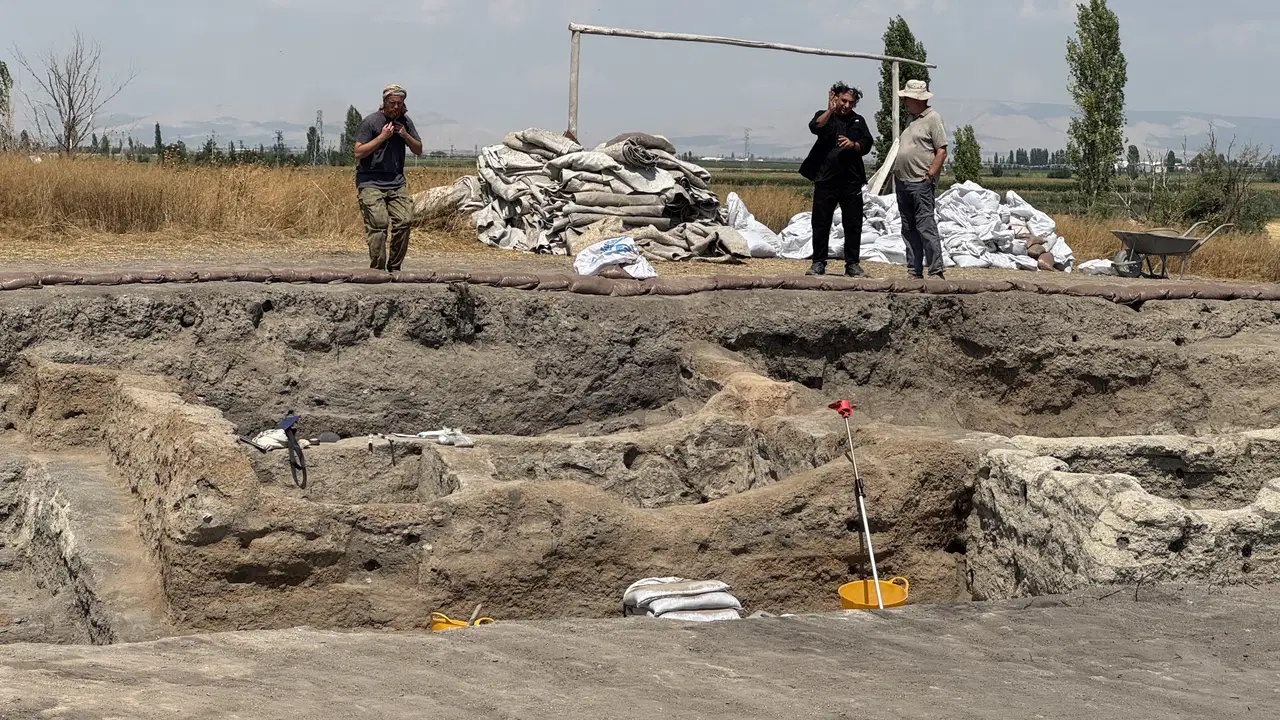
Eight infant skeletons found beside Çatalhöyük’s “House of the Dead” are raising new questions about how the Neolithic community treated its youngest dead. Preliminary examination indicates that none of the babies was older than about six months.
Infant graves are not uncommon at Çatalhöyük, where generations buried their dead beneath floors and platforms. The new group stands out because of its location. Rather than being reported inside an ordinary home, the eight infants were found beside a complex that appears to have been separated from daily household life.
The surrounding buildings include burial compartments, decorated walls, platforms, animal-horn installations and clay reliefs. Archaeologists are studying the graves to understand how this area functioned during the final centuries of occupation on Çatalhöyük’s East Mound.
A building unlike Çatalhöyük’s ordinary homes
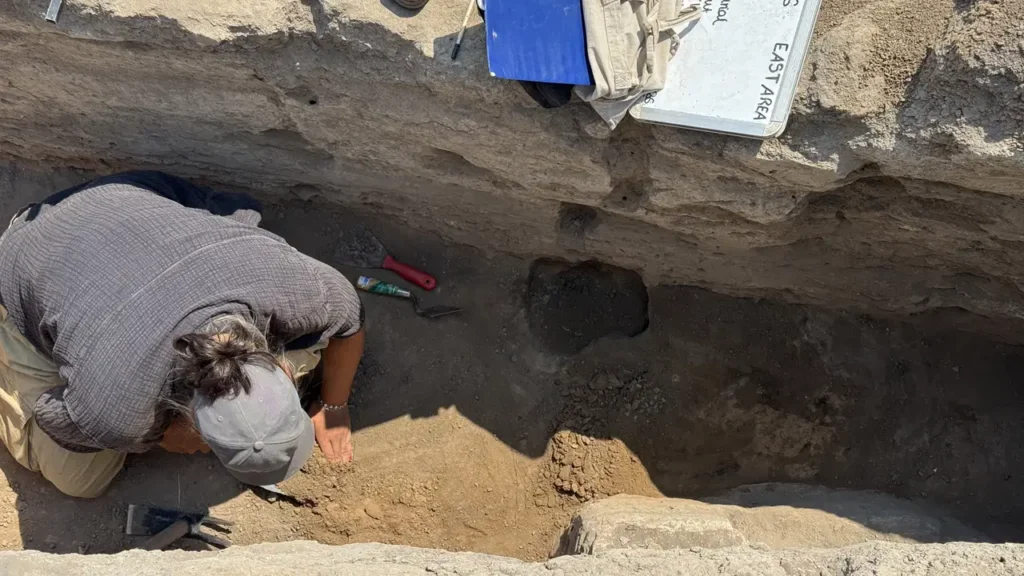
The complex was identified during work in the East Area, where excavations are examining the centuries around 6000 BC.
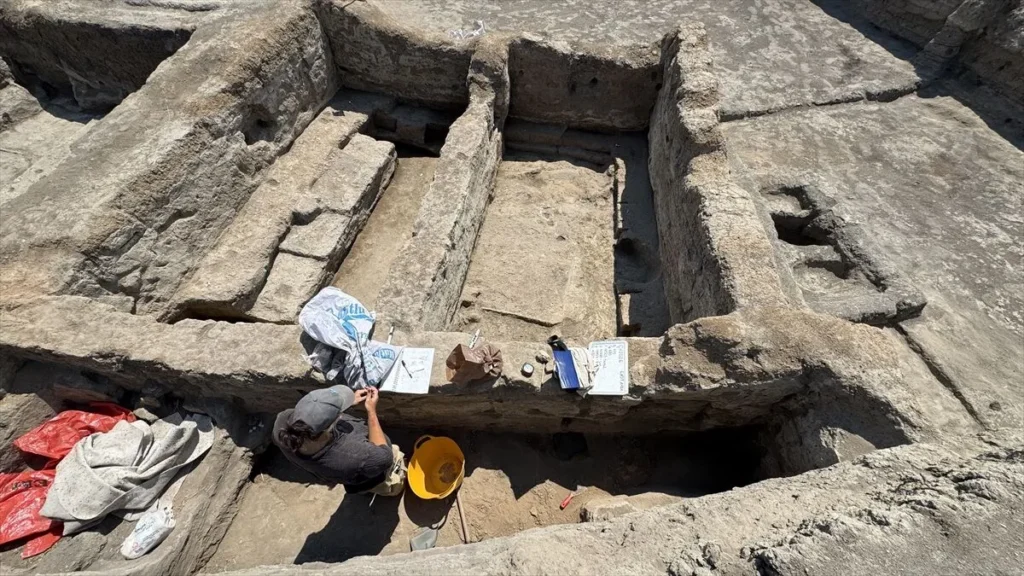
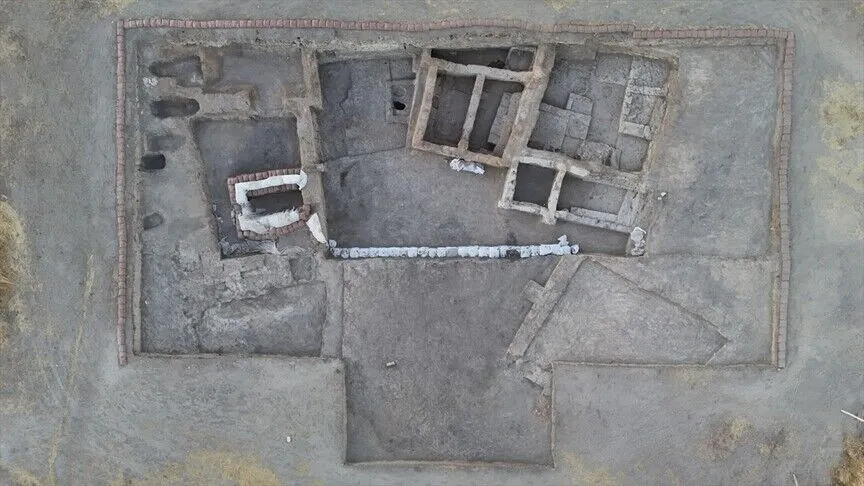
Prof. Dr. Ali Ozan, director of the Çatalhöyük excavations, said finds from the complex indicate that it was not used for routine domestic activities. A building arranged around a courtyard contained 18 burials in a series of small compartments, leading the team to call it the “House of the Dead.”
Across the surrounding open area, archaeologists exposed another structure containing platforms, wall decoration, horn installations and reliefs modeled in clay. These features suggest that the building may have served a ritual purpose, although its precise function has not been established.
The eight babies were found directly beside the House of the Dead. Anthropologists have estimated that the oldest was approximately six months old.
The announcement does not establish whether the infants were buried together or placed there on separate occasions. No cause of death has been reported. Claims of an epidemic, disaster or mass burial would therefore go beyond the available evidence.
Prof. Arkadiusz Marciniak of Adam Mickiewicz University in Poznań, who directs work in the East Area, is examining the buildings and burials with the project’s anthropologists. Their research is focused on what happened during the closing phase of occupation on the eastern mound.
Babies did not always follow adult burial rules
Çatalhöyük’s dead remained unusually close to the living. Residents commonly placed bodies beneath the floors and raised platforms of mud-brick houses, sometimes returning to the same burial area repeatedly.
Later graves could disturb earlier skeletons. Some burials were reopened, and skulls or other bones were occasionally removed after decomposition. The house was therefore more than a residence: it held the physical remains and memories of earlier generations.
Infants and newborns appear to have been treated with greater flexibility than adults when burial places were selected.
Previous excavations found very young children beneath platforms, in side rooms, near hearths and ovens, and within building foundations. Several newborns could occupy a small space, while others were placed in individual graves. One infant was even found inside a reed basket or mat preserved when a building burned.
Researchers have proposed several explanations for this variation. Practical considerations may have made side rooms or foundations easier to open without interrupting household life. Some locations could also have carried meanings connected with the beginning of a building, food storage or the place of a newborn within the community.
None of those interpretations provides a simple rule. The burial record instead shows that age influenced—but did not determine—where someone was placed.
Against this background, the latest eight infants form a distinct group. Their graves belong beside a building already associated with numerous dead, within an architectural setting that seems to have lacked the usual signs of domestic occupation.
Was this place reserved for particular burials?
The discovery raises the possibility that certain deaths were being handled outside the traditional household setting during Çatalhöyük’s later history.
This does not mean that burials suddenly moved out of homes. Domestic interment continued to shape life at the settlement, and the relationship between the infant graves and surrounding buildings still requires close study.
The eight babies may have been brought to the same place because of their age. Alternatively, the location might have served a particular group whose identity cannot be established from the preliminary announcement. The sequence of graves and construction phases will be critical to distinguishing a repeated burial custom from a single episode.
Even without that answer, their placement adds to evidence that late Çatalhöyük contained buildings with functions extending beyond ordinary residence.
Çatalhöyük was already changing
People occupied Çatalhöyük’s East Mound from approximately 7100 to 5950 BC. At its height, thousands lived in adjoining mud-brick houses across the settlement on the Konya Plain.
The area containing the House of the Dead was settled around 6250 BC. Ozan said its architecture and spatial organization differ in some respects from those of Çatalhöyük’s earlier and middle phases.
Around 6000 BC, people also began occupying the neighboring West Mound. Both mounds were inhabited for a short period before the eastern settlement was abandoned and life continued to the west during the Early Chalcolithic.
This change took place across generations rather than through a single moment of collapse. Communities reorganized where they lived while retaining some practices and altering others.
The House of the Dead, the possible ritual building and the adjacent infant graves belong to this changing landscape. Their importance will rest not only on the skeletons but also on the order in which the graves, walls, platforms and open areas were created.
For archaeologists, the immediate question is a precise one: why were eight babies, all younger than six months, buried in this particular corner of late Çatalhöyük?