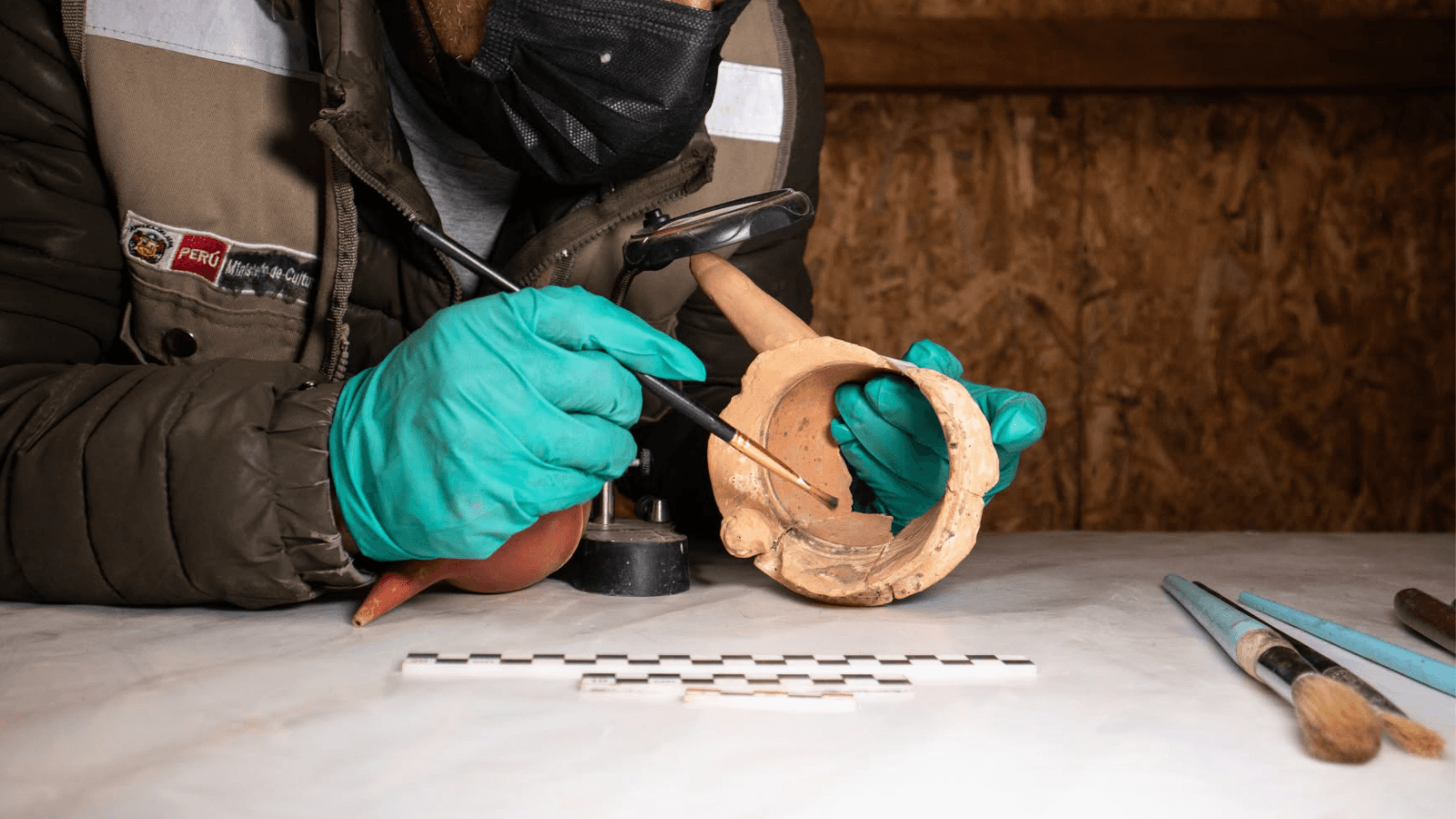
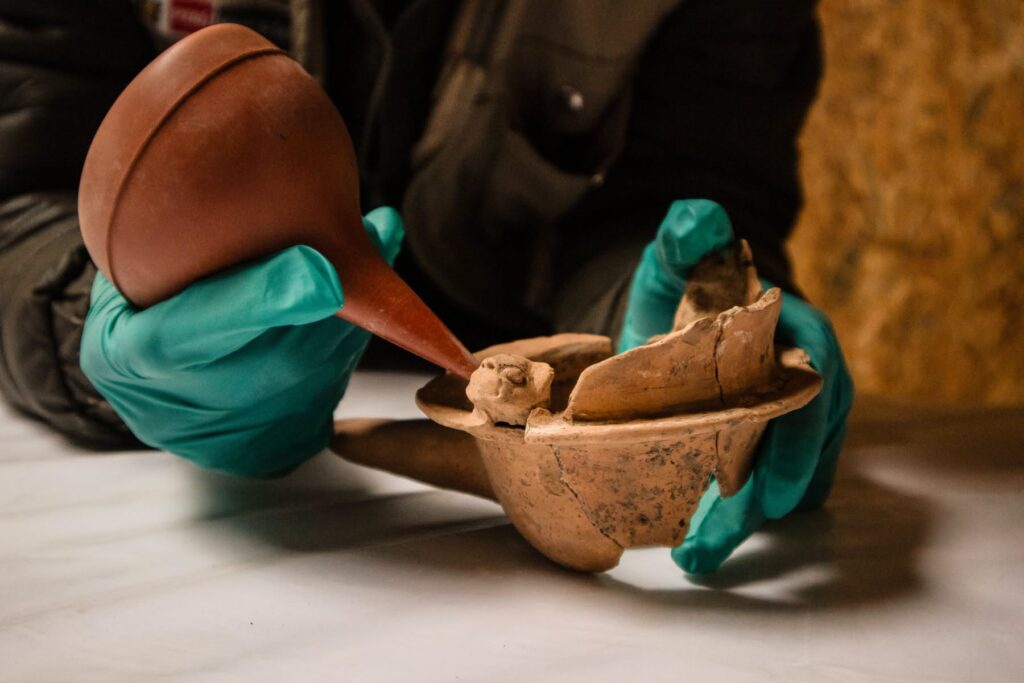
Archaeologists working at Marcahuamachuco in northern Peru have uncovered a ceramic vessel modeled with the head of a puma, providing new evidence about ceremonial activity at one of the most important archaeological centers in the northern Peruvian Andes.
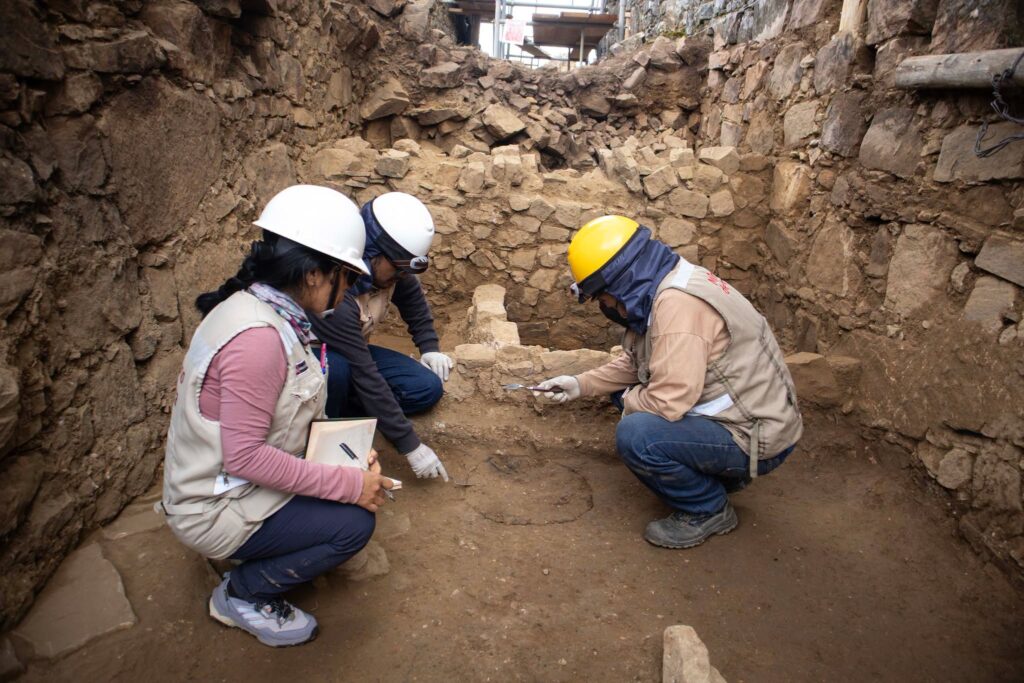
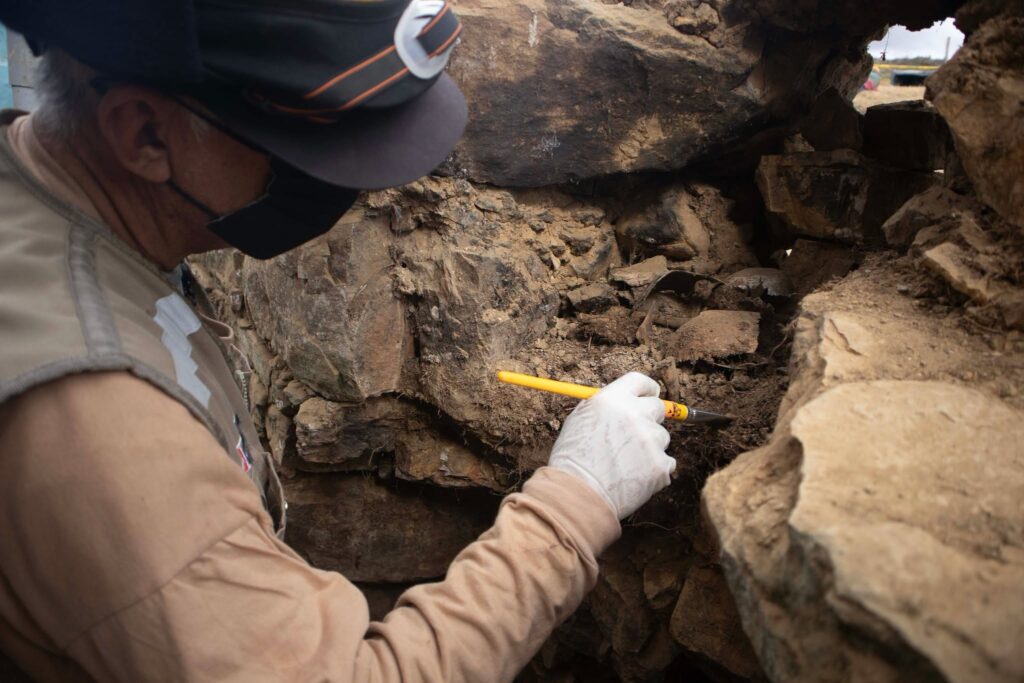
The vessel was recovered during archaeological research and conservation work in the West Wall subsector of Marcahuamachuco, in Peru’s La Libertad region. Excavations in the same area also produced human and animal bones, ceramic fragments and stone artifacts, according to Peru’s Ministry of Culture. The investigated spaces have been dated to approximately AD 850–950.
Among the discoveries, the puma-headed vessel has attracted particular attention. Rather than simply bearing a painted image, the ceramic object incorporates a modeled representation of the animal’s head. Archaeologists believe its characteristics and archaeological context may connect it with ceremonial activities, although its precise function has not yet been established.
Marcahuamachuco was far more than an ordinary settlement. Located on a high plateau about 3,600 meters above sea level, the archaeological complex covers roughly 260 hectares and contains an extensive concentration of monumental stone architecture.
UNESCO describes Marcahuamachuco as the most representative center of the ancient Huamachuco cultural tradition and identifies the site as a major sanctuary that attracted communities from across the surrounding region.
New evidence for ceremonial activity
The latest discoveries appear to strengthen the interpretation of Marcahuamachuco as a place where ceremonies and large communal gatherings played an important role.
Manuel Ruperto Cerdán Vergel, head of Executive Unit 007 Marcahuamachuco, said the investigations indicate that festivals and ritual activities formed an important part of the social dynamics of the communities using this section of the site.
“Each fragment of pottery, bone fragment or recovered object constitutes evidence that allows us to reconstruct different aspects of the history of Marcahuamachuco and understand the complexity of the societies that occupied this territory,” Cerdán Vergel said.
Animal remains recovered from the West Wall provide another part of that picture. Archaeologists identified bones belonging to camelids and guinea pigs, showing that both formed part of the animal resources used by people at the site.
Researchers are studying these remains to better understand food consumption and other activities associated with the occupation of the area. Their context may eventually help determine whether food preparation or consumption was connected with communal or ceremonial gatherings.
Earlier archaeological research has already shown that parts of Marcahuamachuco were closely associated with worship, pilgrimage and the commemoration of the dead. Some monumental buildings contained human burials incorporated into their thick walls, while other structures may have accommodated people visiting the complex.
Marcahuamachuco developed between roughly AD 400 and 1200, centuries before the rise of the Inca Empire. Its monumental architecture includes large halls with niches, multi-level galleries, plazas and the massive structure known as El Castillo.
Elsewhere in northern Peru, recent excavations have also uncovered new evidence for how Moche communities produced ceramics in specialized workshop-houses.
The scale of the complex reflects the considerable labor invested in its construction and the importance the site held for communities living across the northern Andes.
Connections beyond Marcahuamachuco
The latest excavations are also producing evidence that Marcahuamachuco was not isolated despite its high-altitude location.
Cerdán Vergel said archaeological materials indicate exchange connections with other regions, including Cajamarca and Huancavelica. These contacts suggest that Marcahuamachuco participated in broader networks linking communities across different parts of the Andes.
Such evidence is particularly important for understanding a period when regional societies were developing increasingly complex political, economic and religious relationships.
The newly discovered puma-headed vessel therefore forms part of a much broader archaeological picture. Together with animal remains, ceramics, stone artifacts and evidence of regional exchange, it is helping researchers reconstruct how people used Marcahuamachuco’s monumental spaces more than a thousand years ago.
Taken together, the finds suggest that ceremonial gatherings, food consumption and regional interaction were important elements of activity in this part of Marcahuamachuco, offering a clearer view of life at one of the major archaeological centers of Peru’s northern highlands.