
A newly unearthed brown bear skull from the ancient city of Viminacium in Serbia has shed unprecedented light on the dark underbelly of Rome’s celebrated amphitheater culture. Dated to the 3rd century CE, the skull provides the first direct osteological evidence that wild animals, far from being exotic spectacles alone, were brutalized, caged, and repeatedly exploited for entertainment in the Roman Empire.
The study, led by Nemanja Marković of the Institute of Archaeology in Belgrade, with contributions from Bruce Rothschild (Indiana University) and Danijela Popović (University of Warsaw), was published on September 1, 2025 in Antiquity (Cambridge University Press) under the title A spectacle of the Roman amphitheatre at Viminacium: multiproxy analysis of a brown bear skull.
A Silent Witness to Systematic Abuse
Analysis revealed severe injuries: a fractured jaw, untreated infection, and bone damage indicating the bear endured prolonged suffering before death. Extensive dental wear suggests the animal spent years gnawing on iron bars, a grim sign of lifelong captivity.
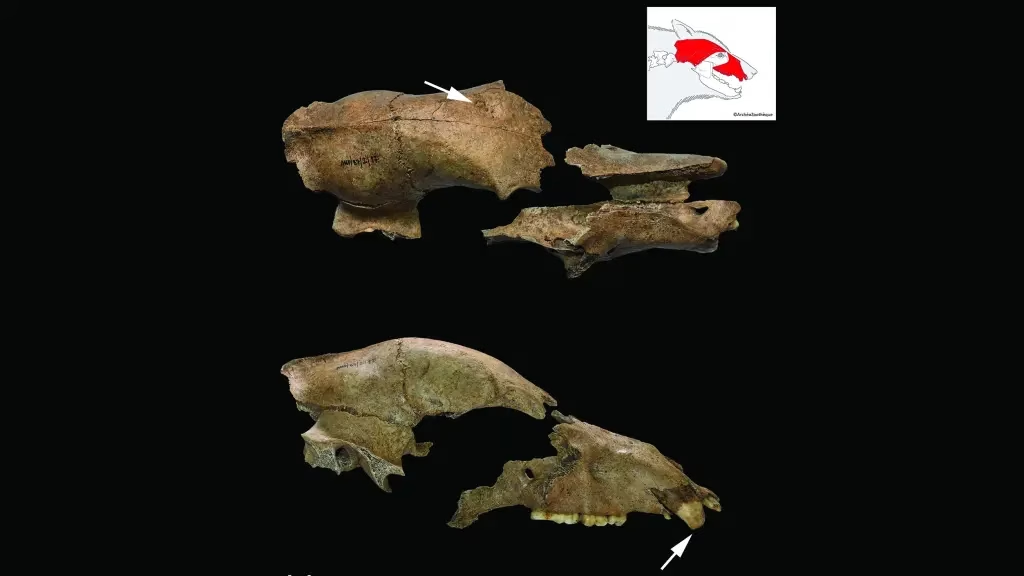
While Roman mosaics and written accounts reference bears in arena games, this skull is the first physical proof of such cruelty. Researchers argue it rewrites our understanding of the Roman games, moving beyond literary or artistic depictions to forensic evidence.
From Local Prey to Imperial Propaganda
DNA analysis confirmed the bear was native to the Balkans, suggesting animals used in Roman spectacles were not solely imported from distant lands but sourced locally from conquered regions. Viminacium, a key military hub on the Limes Moesiae, reveals its amphitheater’s role as more than an entertainment venue: it was a stage for imperial power, turning dominance over nature into propaganda.
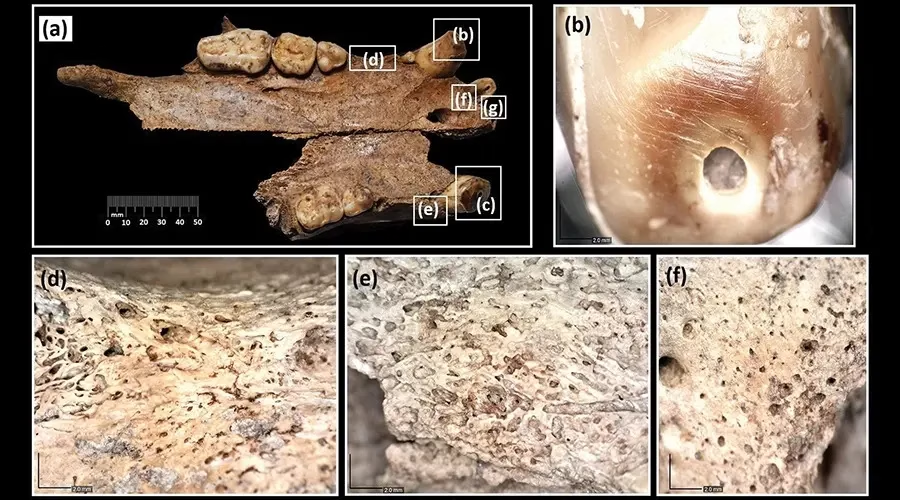
Shattering the Glorious Arena Myth
Popular culture often romanticizes Roman amphitheaters as architectural marvels. This discovery pierces that narrative, showing they were also theaters of fear and cruelty. The empire’s public games turned both humans and animals into tools of political control, where violence was normalized and glorified.
Multiproxy Archaeology at Work
The study exemplifies the power of multiproxy analysis, combining ancient DNA sequencing, microscopic bone pathology, and historical data to reconstruct the animal’s life and death. This interdisciplinary approach offers not only archaeological insight but also a sobering reflection on humanity’s exploitation of animals across millennia.