
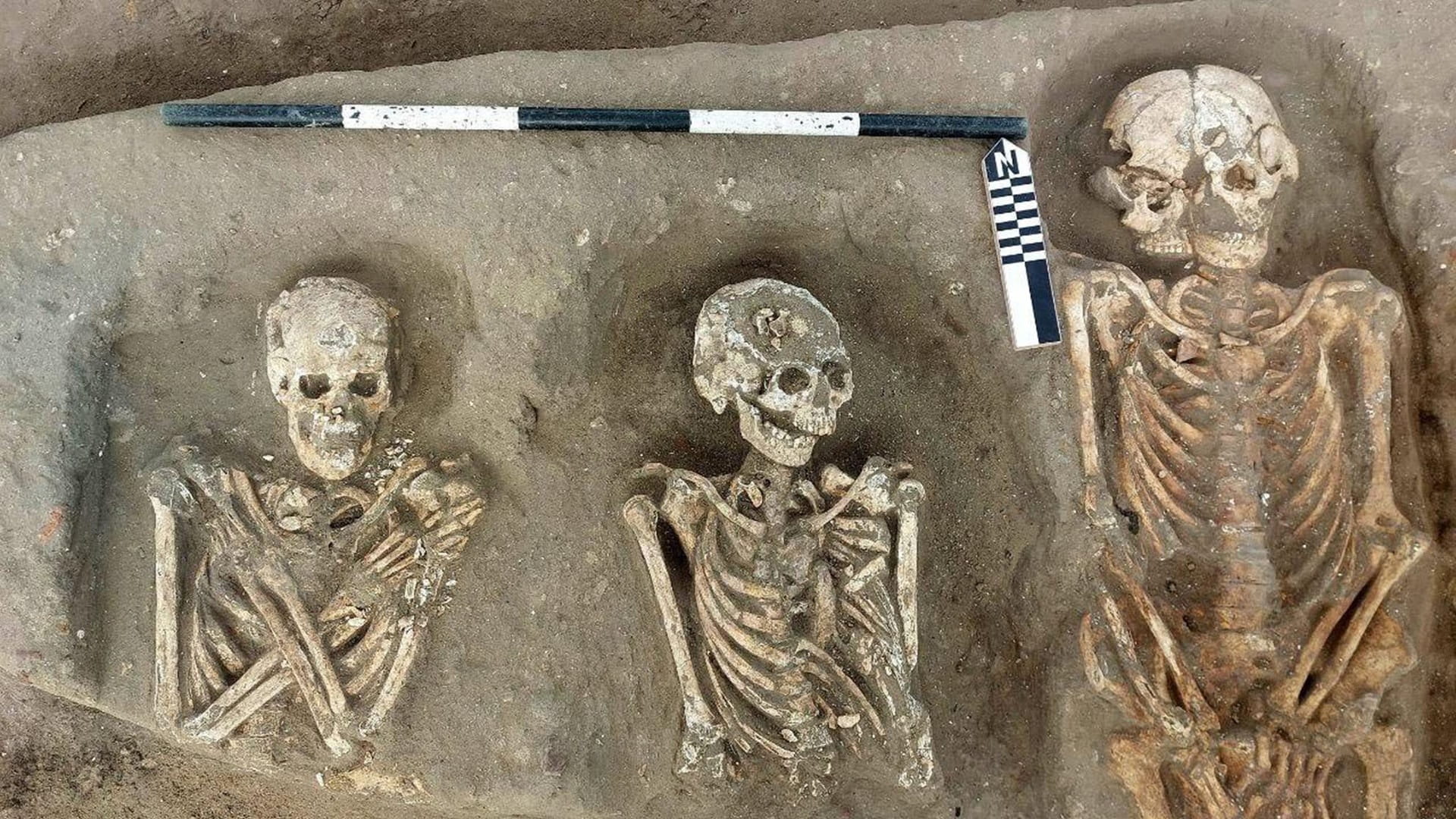
Archaeologists at Tell Kom Aziza in Egypt’s Beheira Governorate have uncovered part of a Greco-Roman cemetery built above much older settlement layers, revealing a site that was used and reused for thousands of years in the Nile Delta.
The excavation, carried out by an Egyptian archaeological mission from the Supreme Council of Antiquities, revealed graves, coffins, ovens, storage jars, bread-making molds, stone tools and animal bones. Together, the finds suggest that Tell Kom Aziza was not only a burial ground in its later phases, but also a place of daily activity in earlier periods.
The site appears to have been occupied or used across several major phases of Egyptian history, beginning in the Old Kingdom and continuing through the New Kingdom, the Late Period and into the Greek and Roman eras.
Different burial customs found in the same cemetery
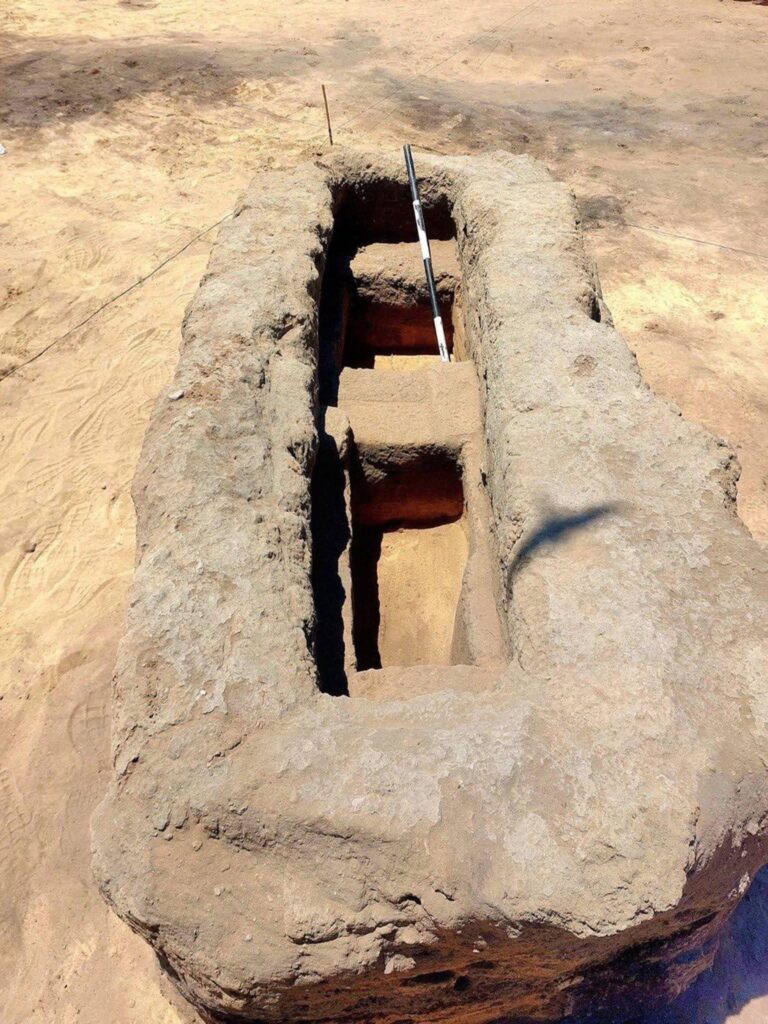
The newly uncovered cemetery contains several types of burials. Some individuals were placed directly into simple pits dug into the earth. Others were buried in graves framed with mud brick.
More elaborate burials included painted plaster coffins and barrel-shaped pottery coffins. The latter are known from Ptolemaic-period funerary practices and are among the more recognizable coffin types used in Egypt during that era.
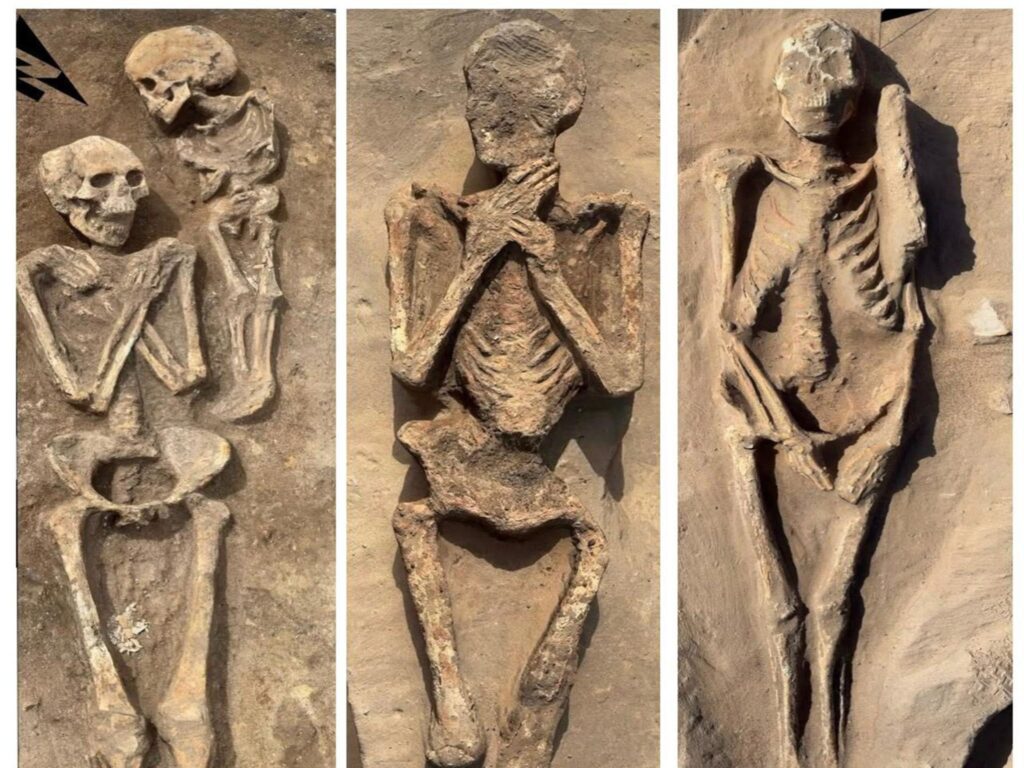
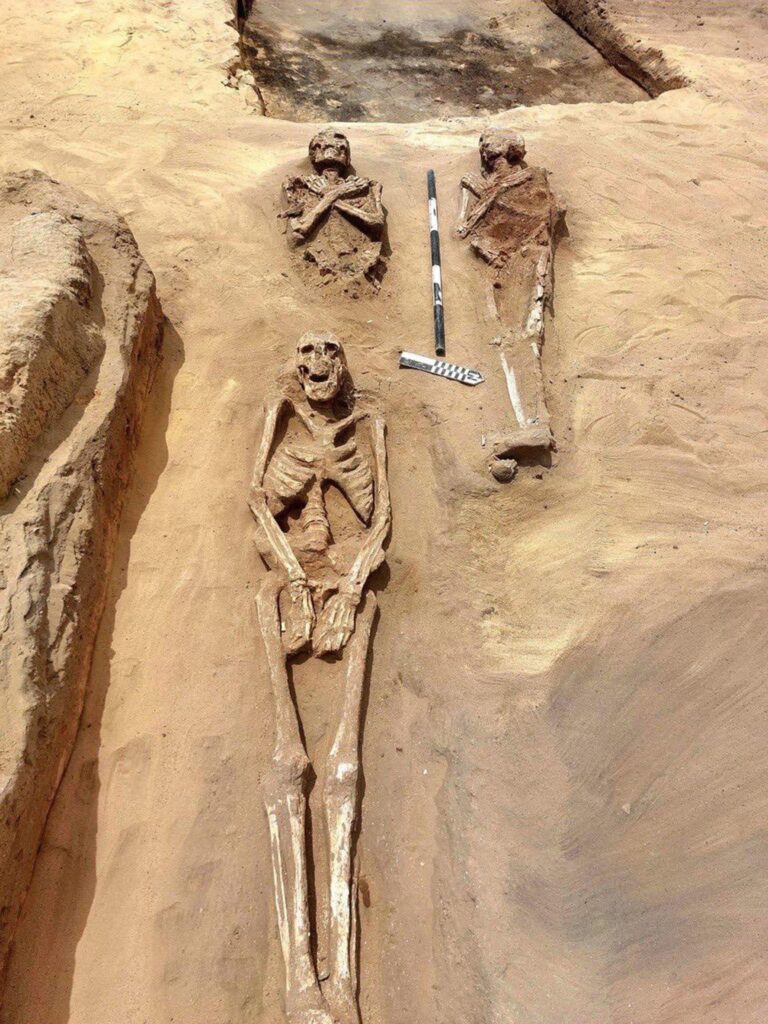
Preliminary study of the human remains also showed variation in burial orientation and body position. Some graves followed a north-south axis, while others were arranged east-west.
The position of the hands differed from burial to burial. In some cases, the hands were folded over the pelvis. In others, they were placed near the neck, crossed over the chest or left straight beside the body. The crossed-arm position, often associated with Osirian imagery, suggests that at least some burials may have carried a strong religious meaning.
The range of burial forms points to a cemetery used by communities with more than one funerary tradition, or over a period long enough for burial customs to change.
A cemetery built over an older living area
The most important part of the discovery may lie beneath the graves. Archaeological layers at Tell Kom Aziza show that the Greco-Roman cemetery was established over earlier settlement levels.
Finds from these layers include pottery vessels, stone containers, tools, ovens, storage jars and bread-making molds. These are not the objects of a cemetery alone. They point to cooking, food storage, craft activity and daily work.
Large quantities of fish, bird and animal bones were also recovered. These remains may help researchers understand what people at the site ate, how they used the surrounding Delta environment and which animals played a role in their economy.
For archaeologists, this combination is valuable. It allows Tell Kom Aziza to be studied not only as a burial ground, but as a place where people lived, worked, prepared food and later buried their dead.
Rare wild boar burials raise new questions
One of the most unusual discoveries at the site was the presence of complete wild boar burials in one archaeological layer. Such finds are rare in ancient Egyptian funerary settings.
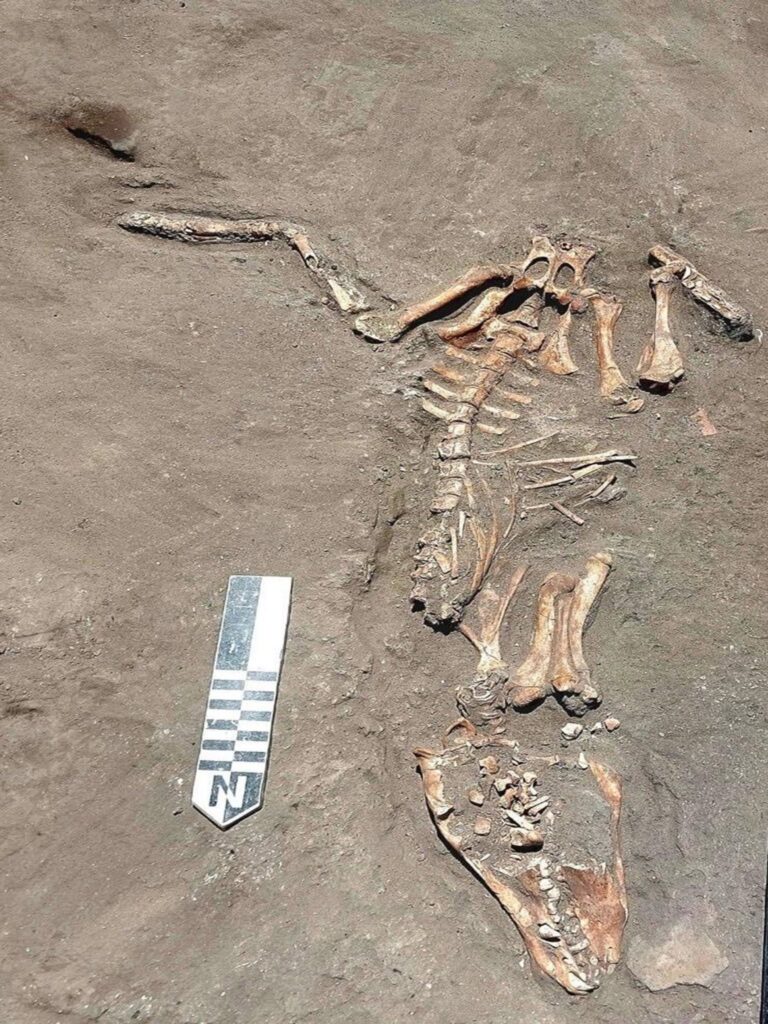
The wild boar had a complicated symbolic place in ancient Egyptian belief and was associated in some traditions with the god Set. That connection makes the discovery especially interesting, but it does not yet provide a simple explanation.
Researchers will need further study to determine whether the wild boar burials were linked to ritual activity, local subsistence practices, hunting, food production or another use of the site during one of its phases.
The find is important precisely because it resists an easy answer. It adds a strange and very specific detail to a site already marked by long-term use and changing functions.
Tell Kom Aziza was used in more than one way
Egypt’s Ministry of Tourism and Antiquities said the discovery confirms the archaeological importance of Tell Kom Aziza as one of the promising multi-period sites in the Nile Delta.
The evidence now points to a place that changed function over time. In earlier periods, the area appears to have supported settlement and daily activity. In later phases, especially during the Greco-Roman period, part of it became an intensive burial zone.
That shift matters. It shows how one location in the Delta could be reused across centuries, with each period leaving different traces in the soil.
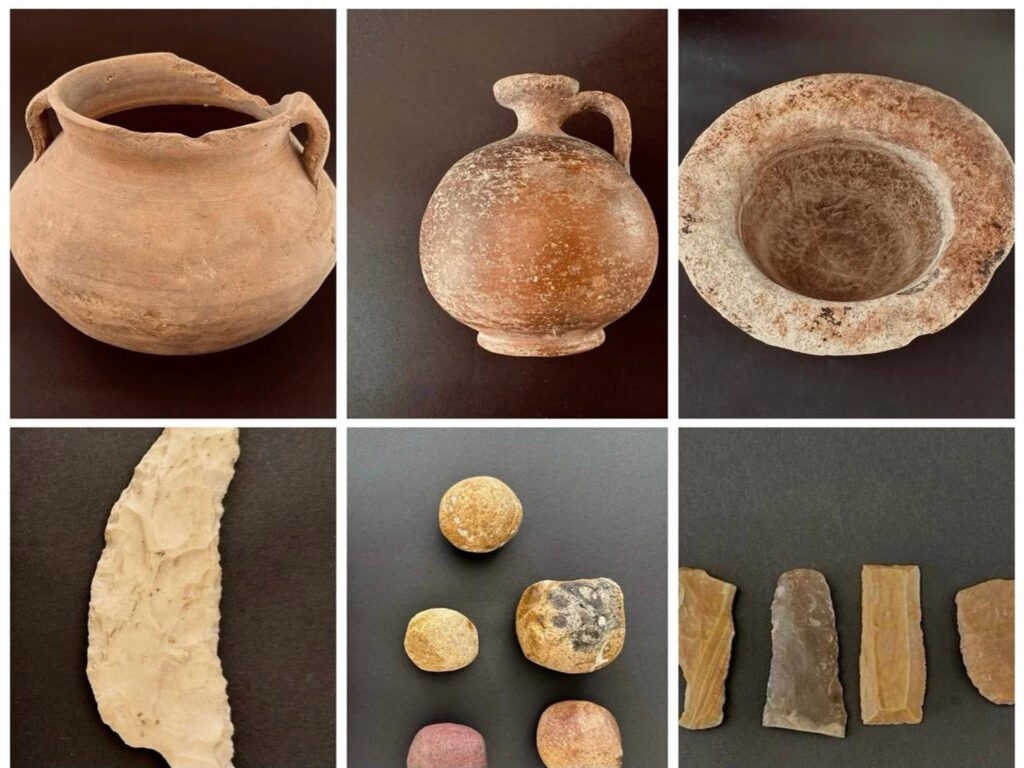
The graves reveal changing funerary customs. The ovens and molds point to food production. The storage containers suggest domestic or economic activity. The animal bones preserve evidence of diet and local resources. The wild boar burials add a rare and still unresolved element to the picture.
Future excavation seasons are expected to clarify the cemetery’s full extent, the dating of individual burial phases and the meaning of the wild boar remains. For now, Tell Kom Aziza stands out as a site where death, daily work and long-term settlement history overlap in one compact archaeological record.
Cover Image Credit: Ministry of Tourism and Antiquities