
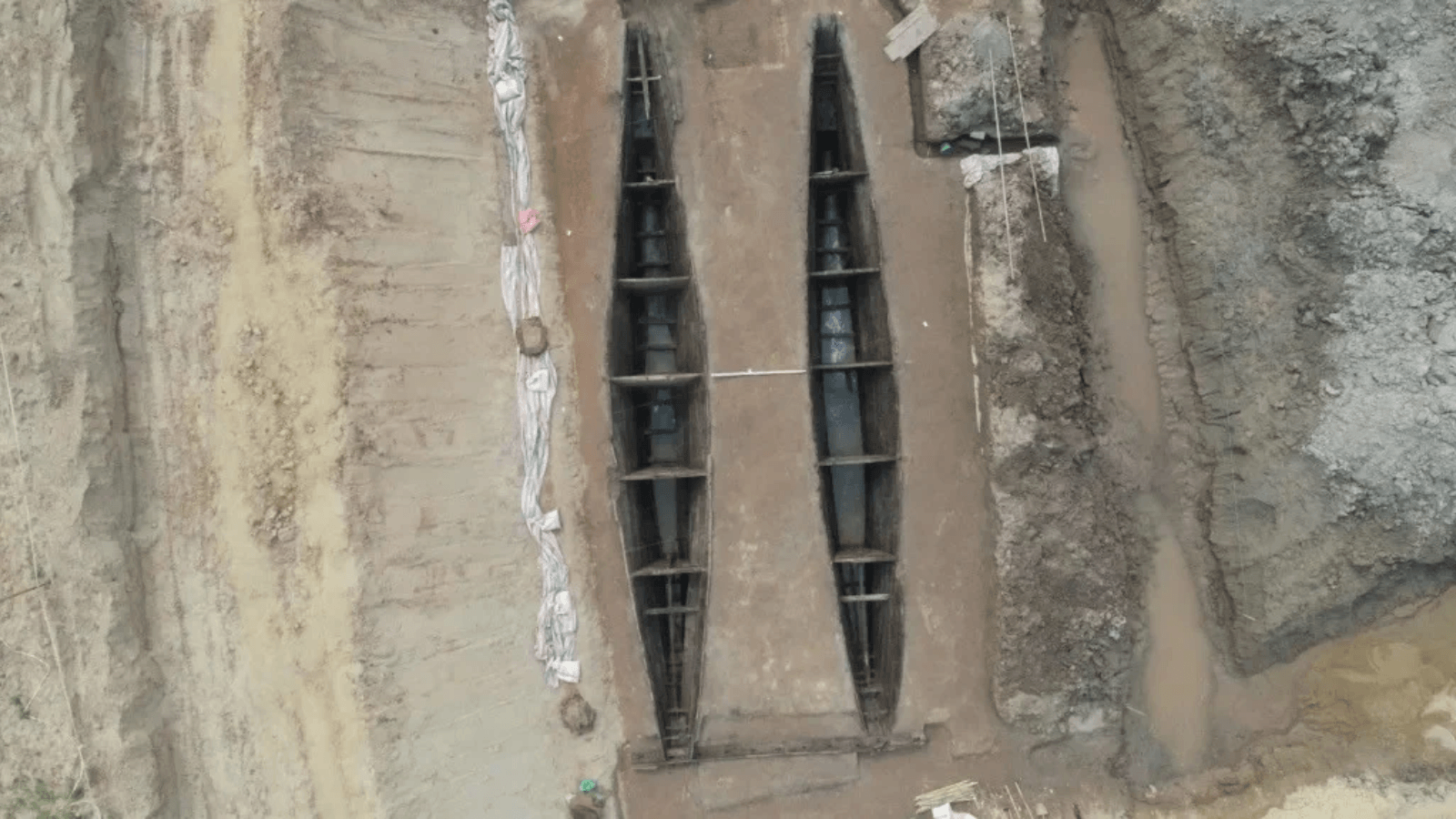
Thousands of seeds, fruit stones, and other plant remains have been recovered from two ancient wooden hulls in northern Vietnam. Some of the plants are associated with mountainous environments, raising the possibility that the vessels once carried goods along ancient river trade routes.
One of the most revealing finds from two ancient wooden hulls in northern Vietnam is small enough to fit in a palm: seeds, fruit stones, and even fruit stalks preserved in mud. The discovery has raised an intriguing possibility that forest products once travelled through the region’s waterways. But archaeologists still have to establish how those remains reached the structures.
The wooden hulls were discovered during work on a fish pond in Bắc Ninh Province, with archaeological excavations carried out in 2025. Each measures more than 16 meters long and approximately two meters wide. Built with wooden joints and pegs rather than metal nails, the two connected hulls may once have supported a larger platform. Radiocarbon dating of their timber points to around the second century AD, during the late Đông Sơn period.
Thousands of Plant Remains Hidden in the Mud
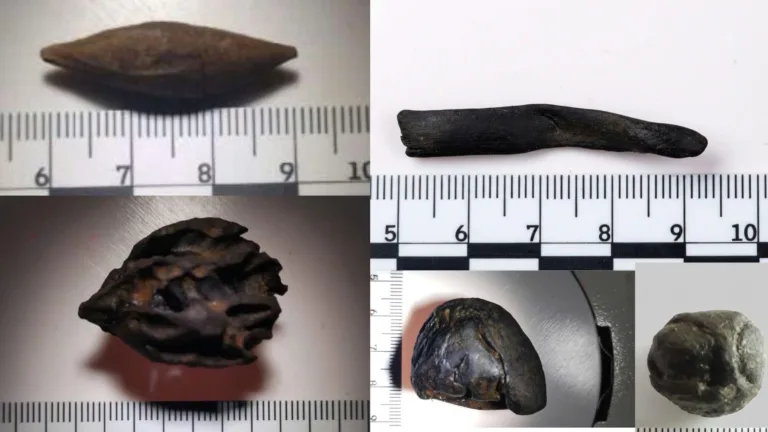
A research team including Dr. Nguyễn Thị Mai Hương of Vietnam’s Institute of Archaeology examined sediment collected from inside and around the wooden structures. Among the material recovered from 12 compartments were 5,084 unidentified seed and fruit fragments, alongside hundreds of recognizable specimens representing at least 20 plant groups.
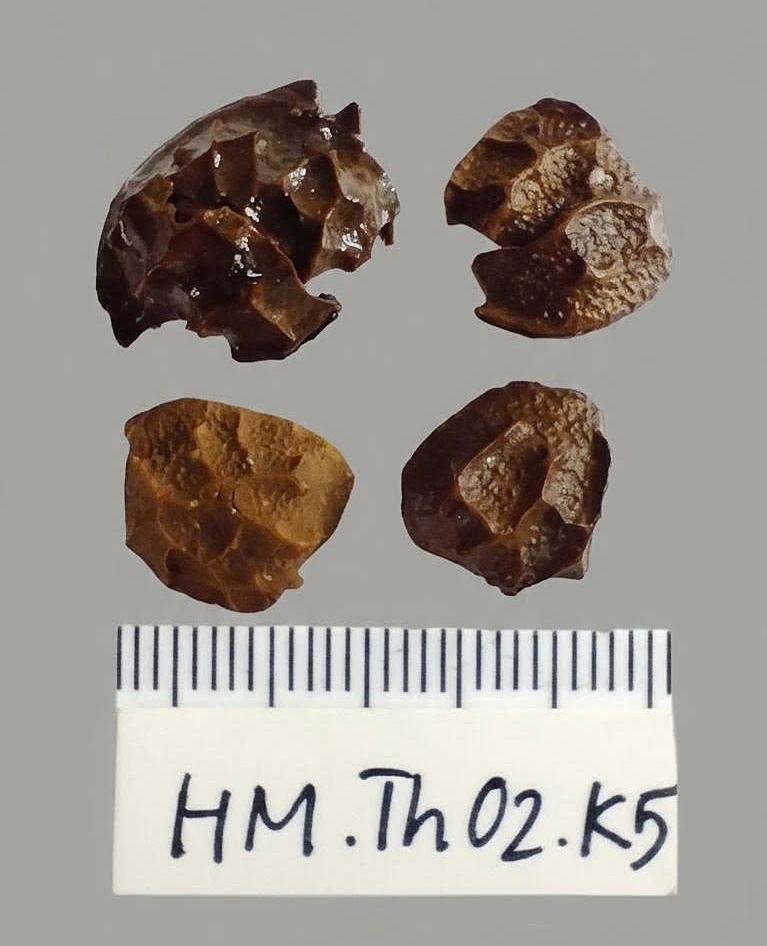
The collection includes apricots, plums, jujubes, legumes, chestnut fruit stalks, and remains of several forest trees. Researchers also identified gac seeds, mango remains, and fruits of Dracontomelon, a tree native to the region. Some fruits were preserved with their stalks still attached, an unusual survival made possible by the surrounding sediment.
According to researchers, oxygen-poor conditions beneath layers of clay and mud helped protect the organic material from decay. Some specimens were also preserved through charring, leaving behind recognizable traces of plants that would otherwise have disappeared.
The distribution of the finds may be equally revealing. Plant remains became more concentrated toward one end of the first hull, while the second contained a greater variety of specimens. One compartment alone yielded more than 1,700 seed and fruit fragments, raising the possibility that particular spaces were used for storing food or other products.
A Possible Trade Route Between Mountains and Lowlands
Among the most interesting discoveries are chestnut fruit stalks and remains of Canarium, a group of trees associated with forested upland and foothill environments. Their presence in the lowlands of northern Vietnam raises questions about how these products reached the site.
Researchers suggest that some of the plants may have been transported from mountainous communities to settlements along the river system. Such exchanges would help explain how people obtained forest products and food from different ecological regions nearly 2,000 years ago.
However, not every seed or fruit necessarily represents cargo. Some remains may have come from food consumed by people using the structures, while others could have accumulated naturally through flooding or vegetation growing nearby. The research team has therefore distinguished possible transported products from material more likely to have entered through natural processes.
There is another unanswered question: were these structures actually travelling boats? Although some specialists interpret the connected hulls as part of a large river vessel, others suggest they may have supported a stationary floating structure near the riverbank. That distinction could substantially change how archaeologists interpret the botanical deposits.
Further research will focus on identifying the remaining plant fragments and directly dating selected specimens. Although the wooden structures have been dated to around the second century AD, scientists have not yet established that the botanical remains belong to the same period.
For now, the seeds and fruits offer a promising new way to investigate the relationship between ancient communities, their food resources, and the waterways of northern Vietnam. Whether they represent cargo, everyday meals, or natural deposits, these small remains may help researchers understand how people interacted with the landscape around them.
Cover Image: Two ancient wooden hulls discovered at the Hà Mãn archaeological site in Bắc Ninh Province, northern Vietnam. Credit: Dr. Pham Van Trieu.