
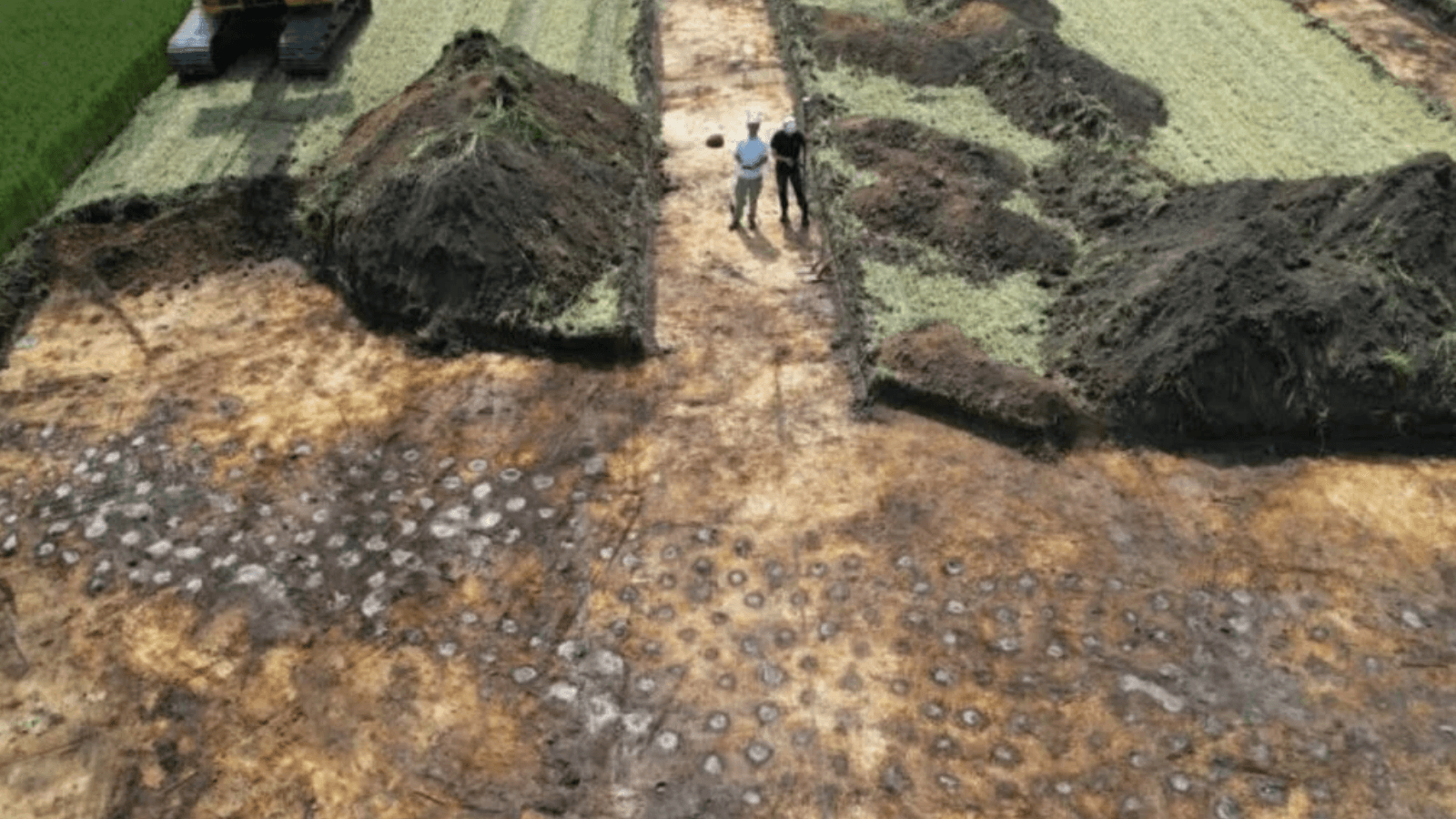
A prehistoric defensive barrier discovered in western Denmark may reveal previously unknown tensions during the Early Iron Age. Built across an ancient travel route, the structure suggests that communities were attempting to control movement through a strategically important part of the landscape.
Archaeologists investigating a field near Schæfergårde in western Jutland have identified a 2,500-year-old line of closely spaced postholes that may once have supported a wooden defensive barrier. The discovery, made during excavations ahead of a road expansion project, offers new evidence of possible military threats in a region where relatively few archaeological investigations have been conducted.
The structure dates to approximately 500 BC and lies across Drivvejen, an ancient route that served as an important corridor through western Jutland for centuries, possibly much longer. Its position has led archaeologists from Museum Vest to suggest that local communities may have constructed the barrier to prevent an approaching force from advancing along the route.
An Ancient Route Blocked by Defenses
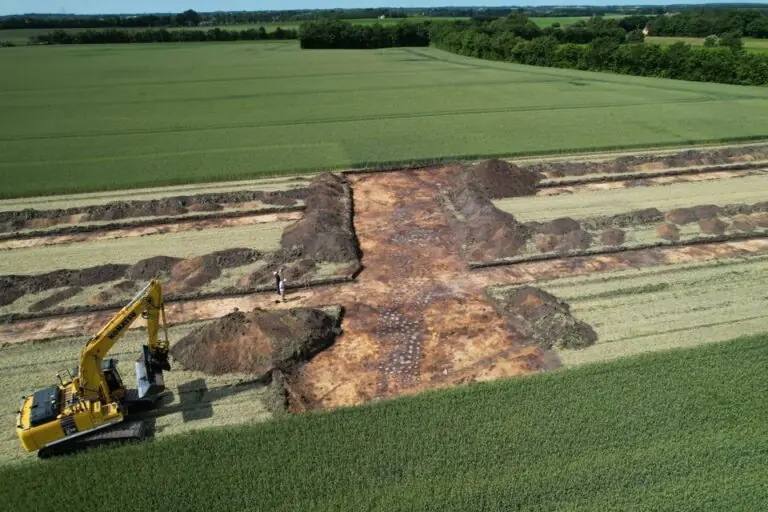
The feature belongs to a type of structure known in Danish archaeology as a hulbælte, consisting of closely spaced holes that may have held sharpened wooden stakes. Similar installations have been documented elsewhere in western Jutland, but the newly discovered alignment is particularly significant because of its relationship to Drivvejen.
Michael Alrø Jensen, a museum inspector at Museum Vest, described the discovery as entirely unexpected. His team’s leading interpretation is that people living in the area feared an army approaching from the north and attempted to control or block its passage.
Such a defensive measure would suggest that movement along important routes was a potential source of tension during the Early Iron Age. However, the evidence does not establish that an invasion or battle actually occurred. The identities of those who constructed the barrier and the people they may have feared also remain unknown.
Archaeologists hope that further investigation will reveal additional sections of the posthole alignment and provide a clearer understanding of the structure’s extent and purpose.
A Much Older Weapon Found Nearby
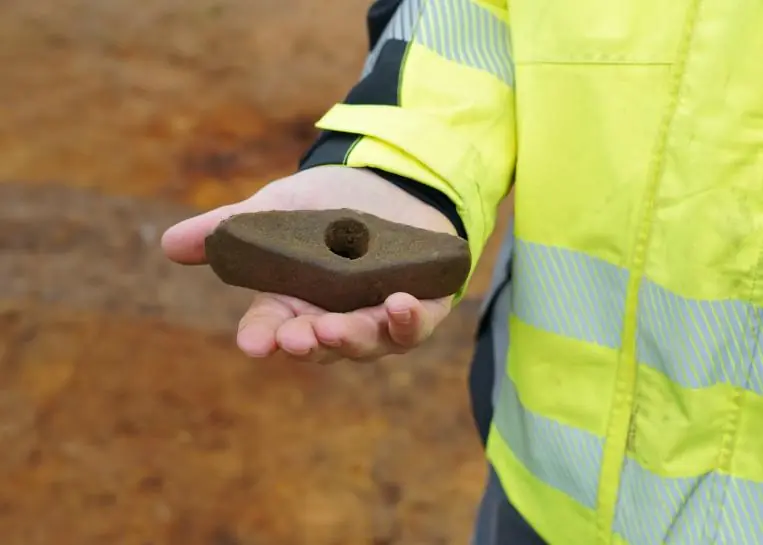
The defensive barrier is only one of several discoveries made during archaeological investigations along Route 11 between Varde and Korskro. Near a protected burial mound, researchers also discovered a stone battle axe dating back approximately 4,500 years.
The axe was recovered from a Stone Age grave, where archaeologists believe it may have been deposited as a burial offering for a possible warrior. Although the weapon and the defensive barrier were found during the same archaeological project, they belong to different periods separated by approximately 2,000 years.
Other finds include remains of houses, farmsteads, graves, and burial urns spanning several periods, from the Stone Age through the Bronze and Iron Ages to the Viking Age. The concentration of discoveries within a relatively small area is helping researchers reconstruct a much longer history of settlement in western Jutland.
According to Museum Vest, the excavations have substantially expanded archaeological knowledge of an area that had previously received limited investigation. The settlement remains may also help explain how communities gradually developed from dispersed farmsteads into more established villages.
The investigations are taking place ahead of the Danish Road Directorate’s expansion of Route 11. Museum Vest will continue excavations through the autumn, including work around burial mounds where additional urns have been identified.
For researchers, the unresolved question is whether the Iron Age barrier can provide further evidence of how communities defended important routes and responded to perceived threats in prehistoric Denmark.
Cover Image: Aerial view of the 2,500-year-old posthole alignment discovered near Schæfergårde in western Denmark. Archaeologists believe the holes may have supported a defensive barrier across an ancient travel route. Credit: Museum Vest.