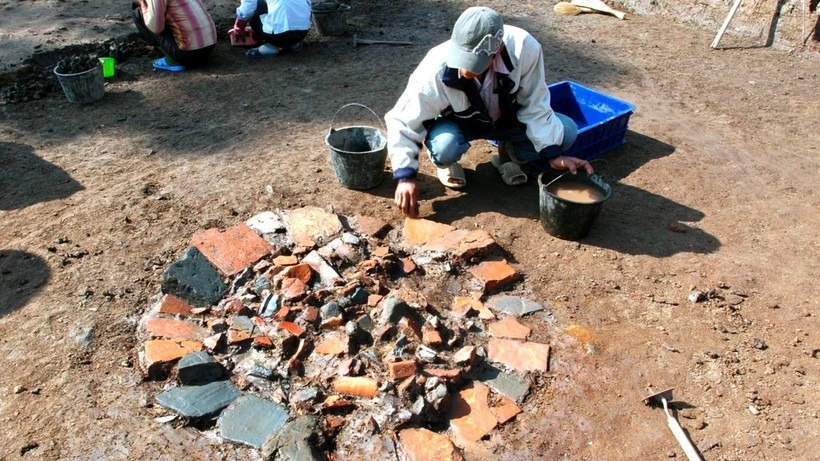
Thang Long Imperial Citadel, the ancient heart of Vietnam’s royal power, is gradually revealing the secrets of its kings and queens. From millions of excavated artifacts to the decoding of long-lost palace architecture, researchers are reconstructing the cultural, political, and architectural legacy of dynasties that shaped the nation for more than a thousand years.
Located in present-day Hanoi, the Imperial Citadel of Thang Long stands as one of Southeast Asia’s most significant archaeological sites. Once the political and cultural center of Vietnam through successive dynasties—including the Ly, Tran, Early Le, Mac, and Later Le—the citadel today exists largely in fragments buried beneath layers of history. Yet these fragments are telling a powerful story.
A UNESCO World Heritage Site of Global Importance
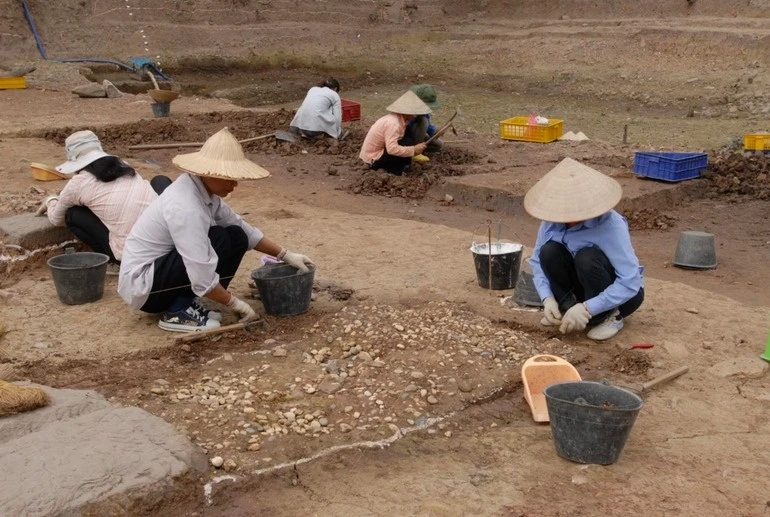
In October 2010, the Imperial Citadel of Thang Long was officially recognized as a UNESCO World Heritage Site. This designation followed groundbreaking archaeological discoveries made between 2002 and 2009 at 18 Hoang Dieu Street and the construction site of Vietnam’s National Assembly building.
Archaeologists uncovered 53 architectural foundation remains, seven wall foundations, and six ancient wells—clear evidence of a once-magnificent royal capital during the Ly Dynasty (11th–13th centuries). These findings are widely regarded as one of the most important archaeological discoveries in Vietnam’s history.
According to Dr. Ha Van Can, Director of the Institute of Archaeology, these achievements “lay a scientific foundation for deepening and clarifying the outstanding universal value of the Thang Long Imperial Citadel and bringing that value to the public.”
Decoding the Architecture of Lost Palaces
The most remarkable breakthrough has been the reconstruction of palace architecture—often described as the “soul” of Thang Long.
Between 2011 and 2025, researchers implemented a long-term project titled “Review, Research, Evaluation of Value and Scientific Documentation of the Thang Long Imperial Citadel.” Through meticulous study of foundations, tiles, wooden elements, and structural traces, scholars have gradually pieced together the architectural form of Ly Dynasty palaces.
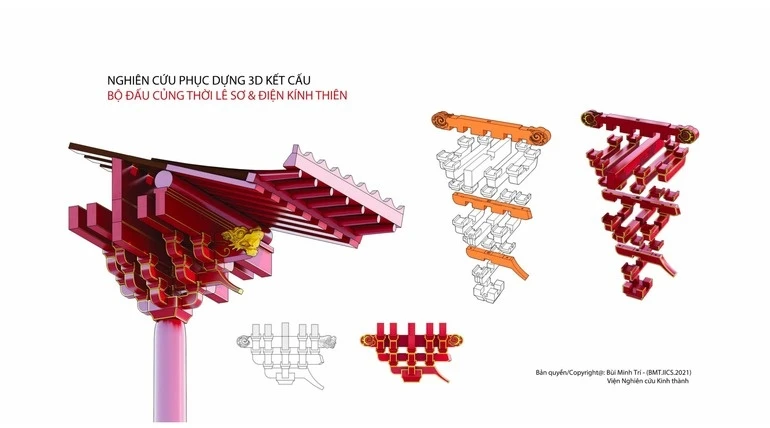
One key discovery was the sophisticated bracket system used to support palace roofs. This complex structural technique not only stabilized large wooden buildings but also served decorative purposes, demonstrating the exceptional craftsmanship of ancient Vietnamese builders.
In 2014, researchers successfully reconstructed 3D models of Ly Dynasty palace structures, marking a historic step in visualizing Vietnam’s medieval royal architecture. Further studies from 2015 to 2020 expanded these reconstructions, gradually forming a comprehensive architectural map of the imperial complex.
Associate Professor Tong Trung Tin, President of the Vietnam Archaeological Association, described the excavations as having “unprecedented scientific value in the history of Vietnamese historical archaeology.”
Layers of Earth, Layers of History
Each soil layer at the citadel site reveals traces of different dynasties. Beneath modern Hanoi lie architectural footprints that demonstrate the convergence and development of Eastern court architectural culture deeply rooted in Vietnamese identity.
Decorative roof materials from the Ly Dynasty were even discovered during the 2008–2009 construction of the National Assembly building. These findings confirmed that the area had continuously functioned as the political nucleus of Vietnam for centuries.
For researchers, every architectural remnant and every ceramic shard holds historical significance. Together, they offer a rare, tangible connection to royal life once thought lost to time.
Reconstructing Daily Life in the Ancient Royal Court
Beyond monumental architecture, archaeologists have focused on decoding everyday life within the imperial palace.
Excavations uncovered fragments of ceramics, porcelain, and earthenware used by kings, queens, and court officials. However, classifying and identifying millions of artifacts required extraordinary patience and scientific rigor. Determining each object’s type, function, age, and place of origin became a central challenge.
To address this, the Institute of Archaeology developed comparative research methods and a systematic terminology framework to accurately date and classify artifacts. These efforts produced groundbreaking discoveries that illuminate not only material life but also religion, diplomacy, trade, and social hierarchy within Thang Long.
Vietnamese Porcelain: A Scientific Breakthrough
One of the most significant findings involves authentic Ly Dynasty porcelain. Archaeologists discovered high-quality porcelain fragments comparable to China’s Song Dynasty ceramics, providing compelling evidence that porcelain production in Vietnam dates back to the Ly Dynasty.
This discovery reshapes understanding of Vietnamese technological and artistic achievements. It confirms that Thang Long was not merely influenced by foreign ceramics but also developed its own advanced ceramic traditions.
Research into discarded ceramics and kiln tools further revealed the existence of royal kilns in Thang Long. For nearly six centuries—from the Ly and Tran dynasties through the Early Le and Mac periods—these kilns produced high-quality ceramics exclusively for the royal court.
Ceramic pieces decorated with dragon motifs and inscribed with Chinese characters such as “Quan” and “Kinh” were identified as imperial-grade items. Based on dragon iconography, inscriptions, and superior craftsmanship, researchers concluded that these ceramics were manufactured in royal kilns and reserved for imperial use.
Evidence of International Trade Networks
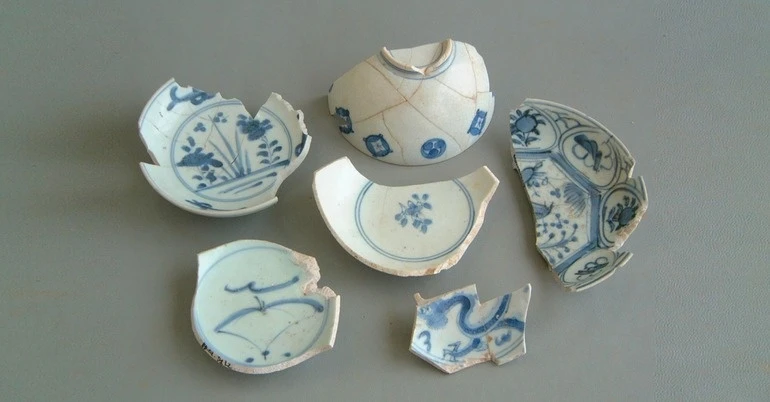
The citadel’s ceramic collection also includes imported wares, demonstrating Thang Long’s diplomatic and commercial connections across Asia.
Fragments of blue-and-white porcelain bowls and plates from Japan’s Hizen ceramic line, produced during the Edo period, were found at the site. These artifacts confirm that Thang Long was integrated into regional trade networks and maintained active diplomatic relations.
According to Dr. Ha Van Can, in-depth analysis of both Vietnamese and imported ceramics “visually reconstructs the material life and rituals of the imperial palace while confirming Thang Long’s diplomatic and trade position within the Asian network.”
A Living Legacy Beneath Modern Hanoi
Today, the Imperial Citadel of Thang Long stands not merely as a historical monument but as a living archaeological archive. Ongoing research continues to reveal new insights into royal rituals, palace construction techniques, and the daily lives of Vietnam’s ancient rulers.
What was once fragmented and silent beneath the soil is now emerging as a coherent narrative of cultural resilience, architectural mastery, and political continuity.
Through science, technology, and dedication, the relics of kings and queens are speaking again—telling the thousand-year story of Thang Long, the eternal capital whose legacy continues to shape modern Vietnam.
Source: Vietnam .vn