
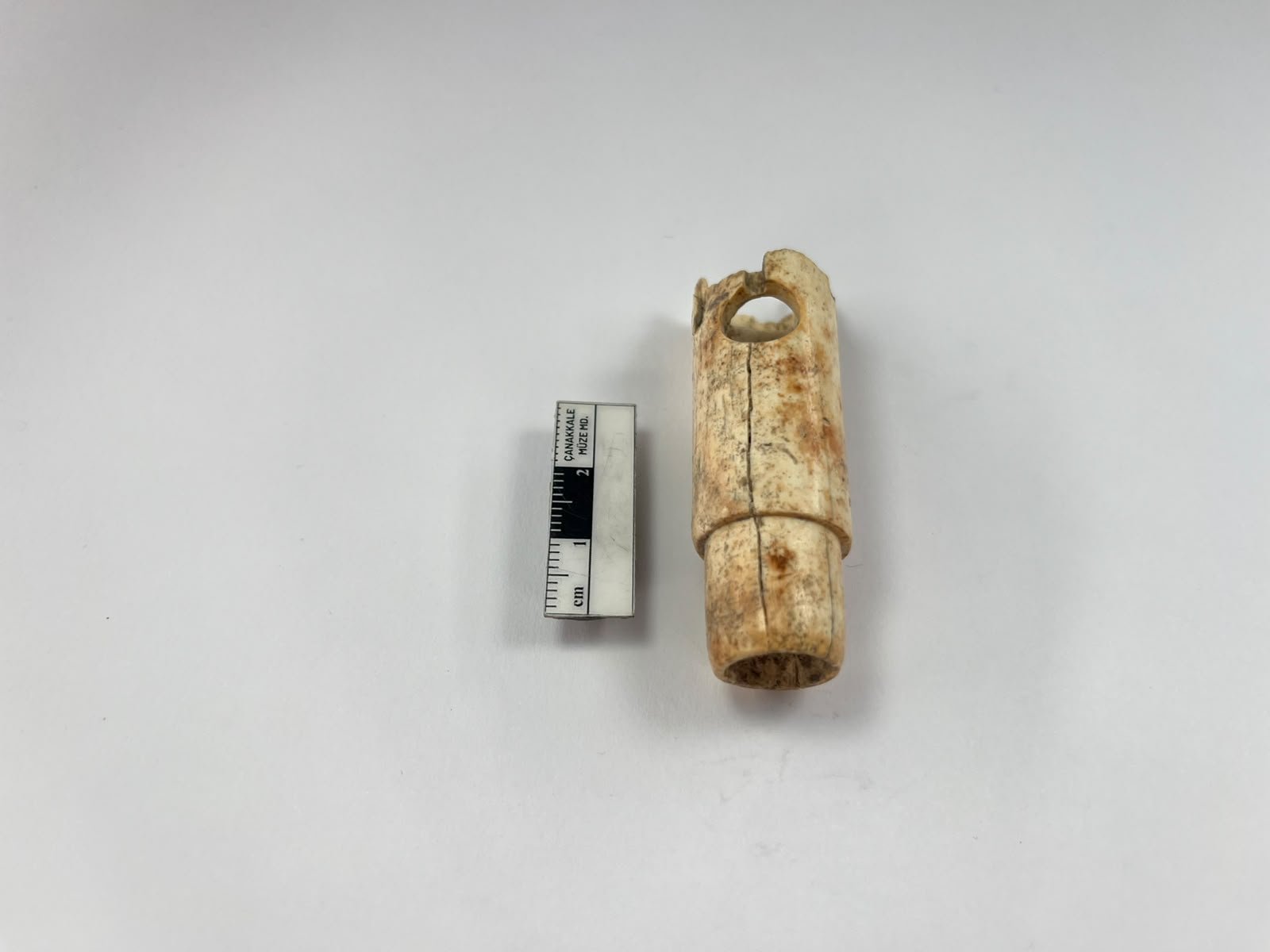
A 2,800-year-old bone flute has become the first musical instrument identified in more than 160 years of excavations at ancient Troy in Türkiye. The rare discovery provides direct physical evidence of musical activity at the site, where archaeologists have also recovered a 4,500-year-old human-shaped idol head dating to the Early Bronze Age.
The two discoveries were made during the 2026 excavation season under Türkiye’s Heritage for the Future project. Minister of Culture and Tourism Mehmet Nuri Ersoy announced the finds, which belong to periods separated by approximately 1,700 years.
For the archaeologists studying Troy, the flute represents something previously missing from the excavation record: an actual instrument that can be examined for clues about music in the ancient city.
A Bone Flute from Troy’s Archaic Period
The flute was recovered from an Archaic-period settlement deposit and dates to approximately 800 BC. According to the Turkish Ministry of Culture and Tourism, no identifiable musical instrument had previously been recovered from Troy despite its long history of archaeological investigation.
Part of the instrument’s head section, which connected to its body, has survived. This detail may allow researchers to examine aspects of its construction and function, although the ministry has not provided a detailed technical description or identified the precise type of flute.
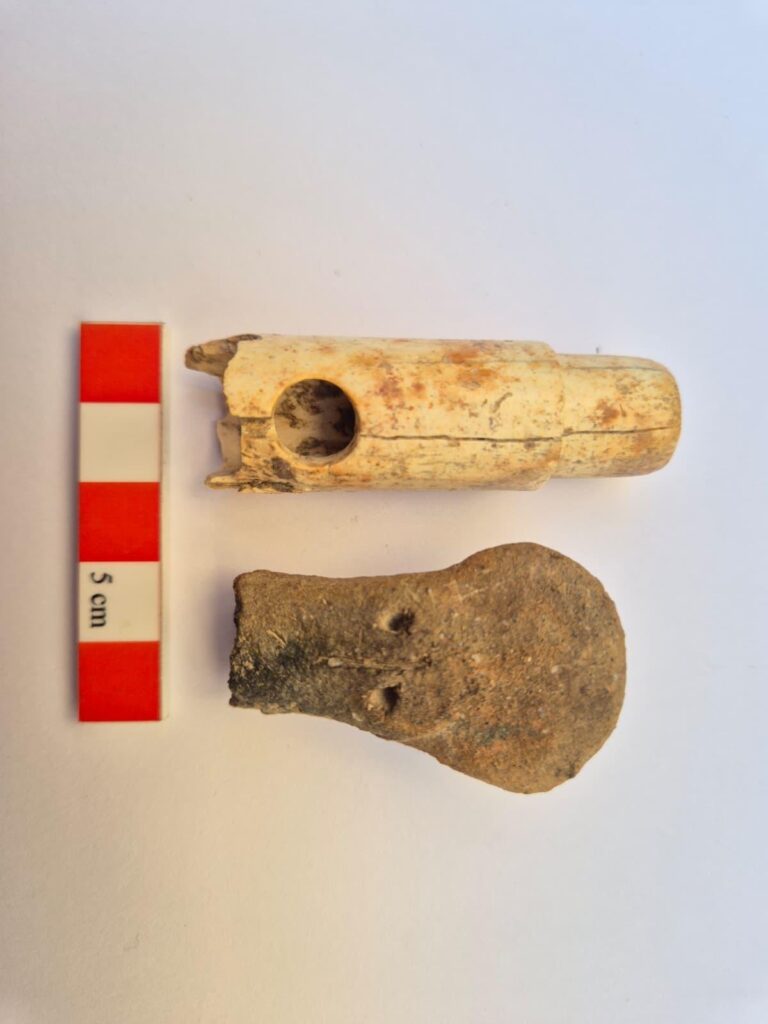
Its survival is particularly valuable because musical instruments made from organic materials are often poorly represented in archaeological collections. Bone may endure under conditions that destroy wooden or reed instruments, leaving an uneven record of ancient musical traditions.
The discovery does not establish how or where the flute was played. Musical instruments were used in religious and social settings throughout the ancient Mediterranean, but no specific performance or ritual context has been identified for this example.
What makes the find unusual is its place in Troy’s excavation history. After generations of research into the settlement’s buildings, fortifications, pottery, and other objects, archaeologists finally have an identifiable musical instrument from the site itself.
A Much Older Discovery at the Troy II Gate
The excavation season also produced a small anthropomorphic idol head near the city gate associated with Troy II. Dating to approximately 2500 BC, the object belongs to the Early Bronze Age, long before the period represented by the newly discovered flute.
Human-shaped idols are known from third-millennium BC settlements across western Anatolia, including earlier discoveries at Troy. Their similarities and differences can help researchers investigate how communities represented the human form and whether artistic traditions were shared between settlements.
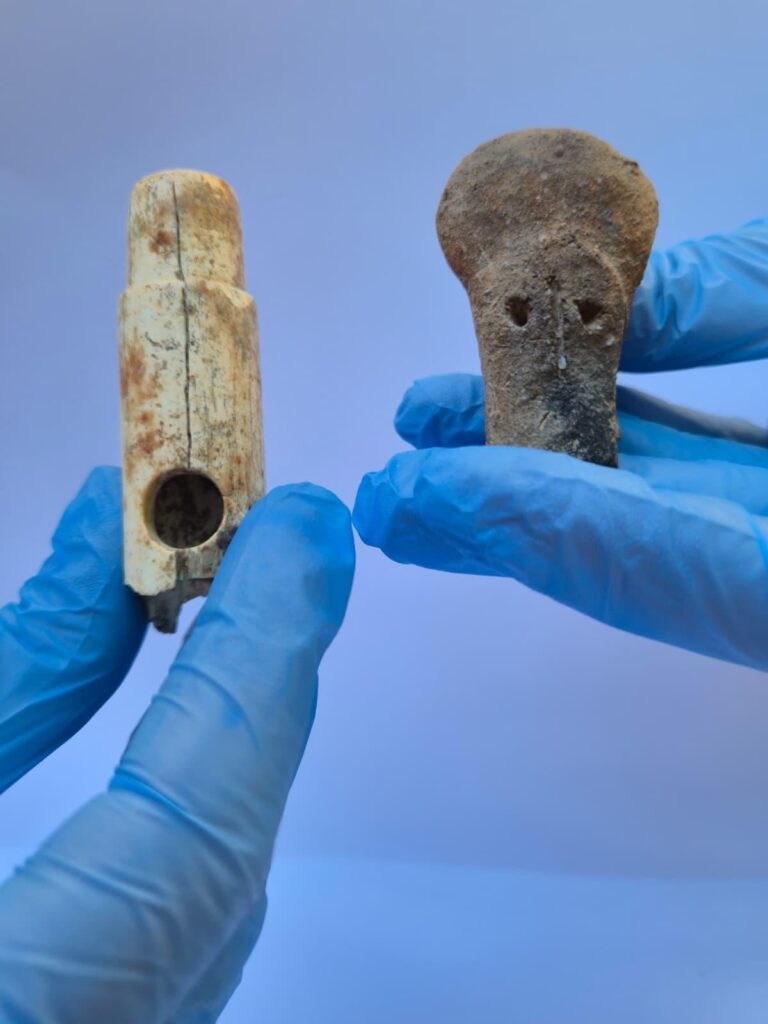
The newly recovered head may provide another point of comparison, particularly because its discovery location is known. However, its proximity to the city gate does not establish its original purpose or demonstrate that it was associated with activities carried out at the entrance.
During the Troy II period, the settlement was part of a wider cultural environment linking western Anatolia and the Aegean. Researchers expect the idol head to contribute to studies of symbolic expression and regional connections, although its specific meaning remains uncertain.
What Remains to Be Investigated
Neither discovery has yet been accompanied by a detailed published scientific analysis. Questions remain about the flute’s original form and use, as well as the idol head’s manufacture and archaeological context.
Turkish authorities say both objects will undergo further study and conservation. For now, the flute stands out as a particularly rare addition to Troy’s archaeological record: the first known instrument from a city that has been excavated for more than a century and a half.
Cover Image: The 2,800-year-old bone flute discovered during the 2026 excavations at ancient Troy in Türkiye. It is the first musical instrument identified in more than 160 years of archaeological investigations at the site. Credit: Türkiye Ministry of Culture and Tourism.