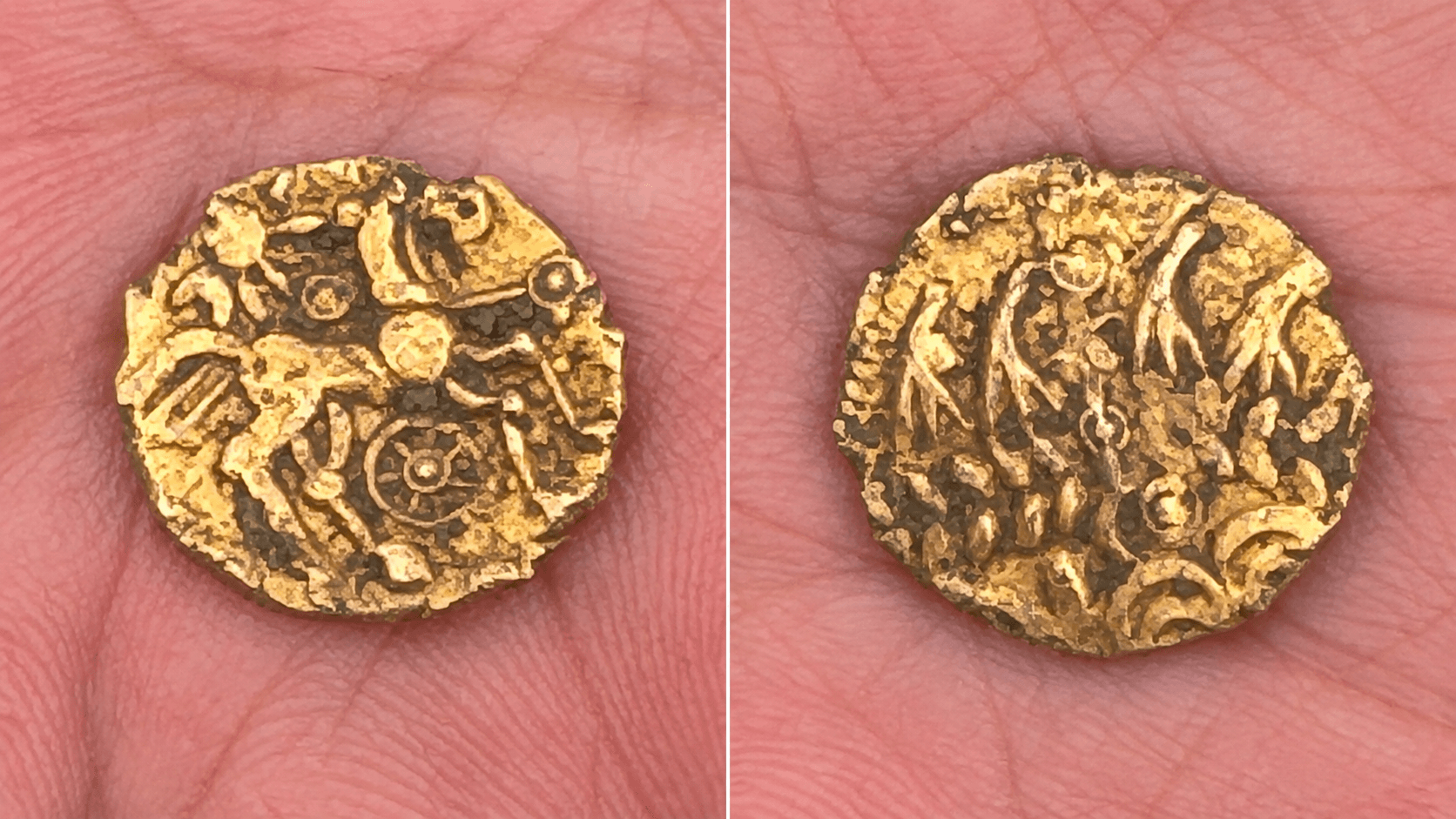
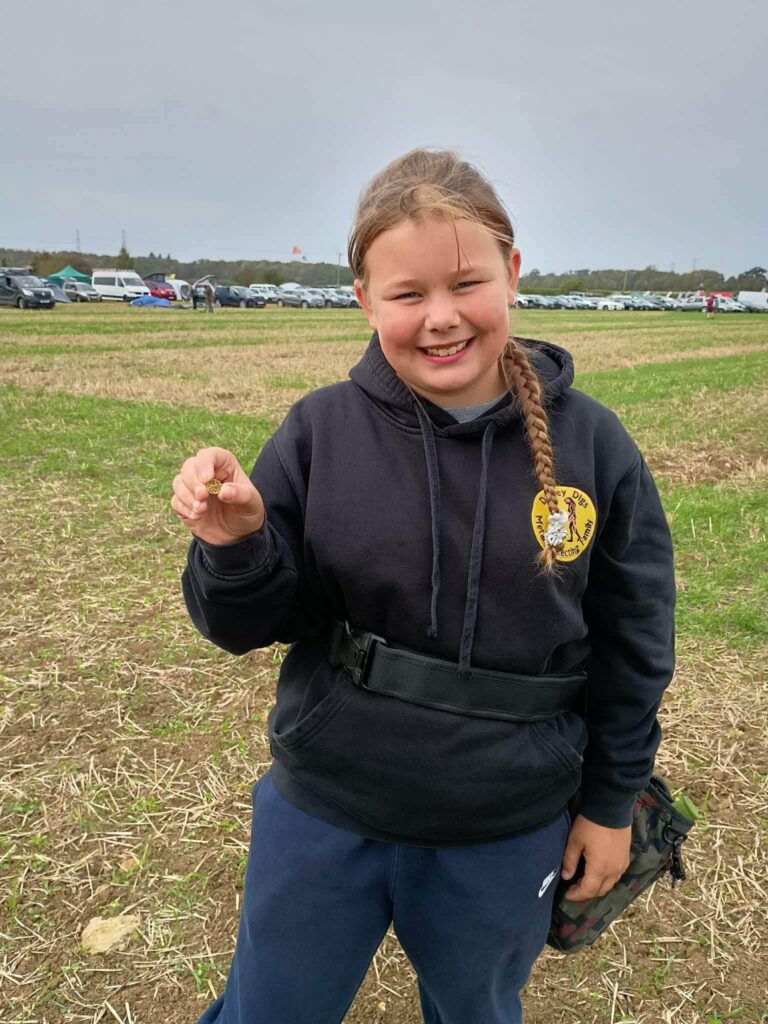
An 11-year-old metal detectorist named Darcey made a discovery she is unlikely to forget when she uncovered a Celtic gold coin just ten minutes into a weekend rally at Cirencester, England.
The small coin has been provisionally identified as a Selsey Dahlia gold quarter stater, a type generally dated to the first century BC. According to the event organizers, it was the first Celtic gold coin Darcey had ever found.
A Remarkable Start to the Rally
Darcey discovered the coin shortly after the rally began. Photographs shared by Rally Organiser show her holding the tiny gold piece, which had remained underground for roughly 2,000 years.
She has already contacted her local Finds Liaison Officer to begin the process of recording the discovery through the Portable Antiquities Scheme. A specialist examination should confirm the coin’s identification, date, weight and metal composition.
Recording its exact findspot will also preserve information that could otherwise be lost once the coin is removed from the ground. That context may help researchers understand how Iron Age gold currency circulated beyond the regions where particular types are most commonly found.
Why It Is Called the “Selsey Dahlia”
Selsey Dahlia quarter staters are linked to the Atrebates and Regini of southern Britain. Comparable examples are usually dated to around 60–50 BC, although Darcey’s coin has yet to receive an official date.
The unusual name comes from the flower-like symbol above the horse on the reverse. The design normally includes a horse facing right with three tails, a beaded mane and a small wheel beneath its body.
The opposite side carries an abstract wreath pattern. This design ultimately developed from the head of the Greek god Apollo seen on earlier continental coins, but British die cutters gradually transformed the portrait until little of the original face remained.
Comparable Selsey Dahlia coins measure only around 12 millimeters across and weigh approximately 1.3 grams. Darcey’s example has not yet been formally measured, so its exact dimensions remain unknown.
While the gold coin made for an extraordinary beginning to the weekend, Darcey’s decision to report it is just as important. Once recorded, the discovery will become part of the archaeological evidence available to researchers and future generations.
Cover Image: Both sides of the Selsey Dahlia gold quarter stater found by 11-year-old Darcey at a metal-detecting rally in Cirencester. Images published by Rally Organiser on Facebook.