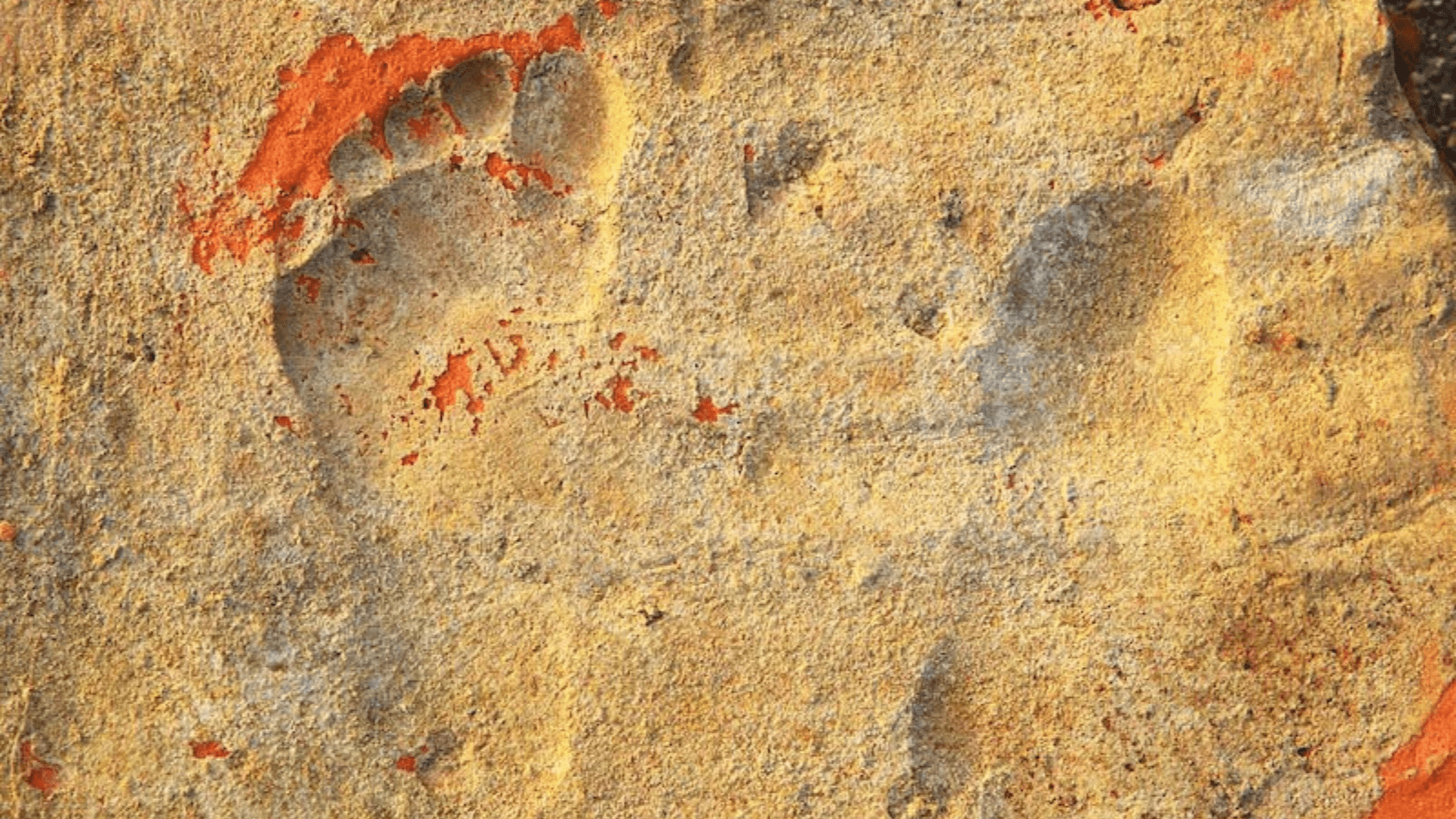
The monumental ruins of Stratonikeia preserve the names of rulers, the decisions of civic officials and the ambitions of wealthy builders. Its latest discovery records something far quieter: the footsteps of three children who lived nearly 1,900 years ago.
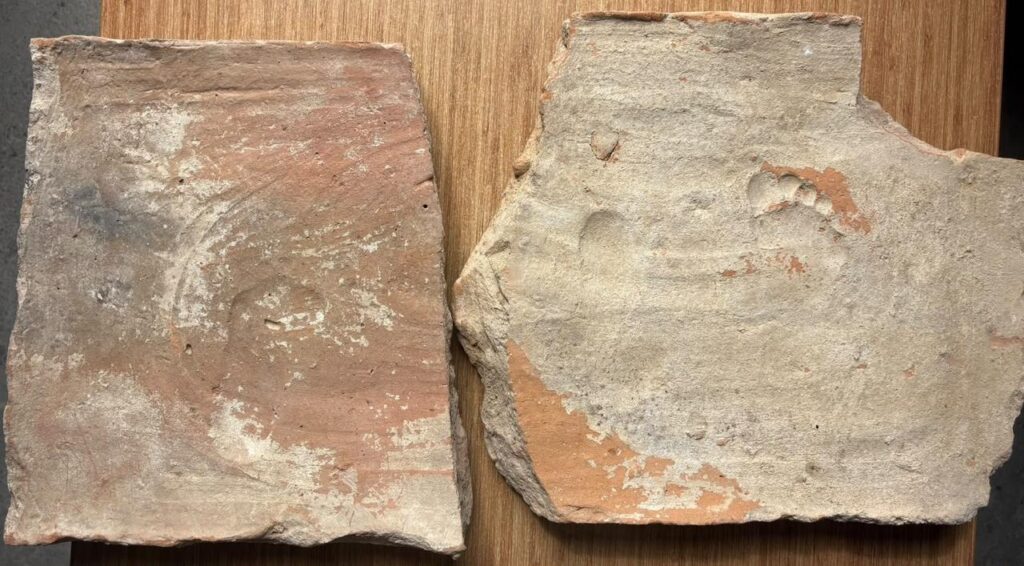
Archaeologists uncovered the footprints during excavations at a Roman bath complex in the ancient city, located in Muğla Province in southwestern Türkiye. The impressions were identified on fragments recovered from the building, offering rare physical evidence of children connected with the Roman bath complex.
Three Children Behind the Monumental Ruins
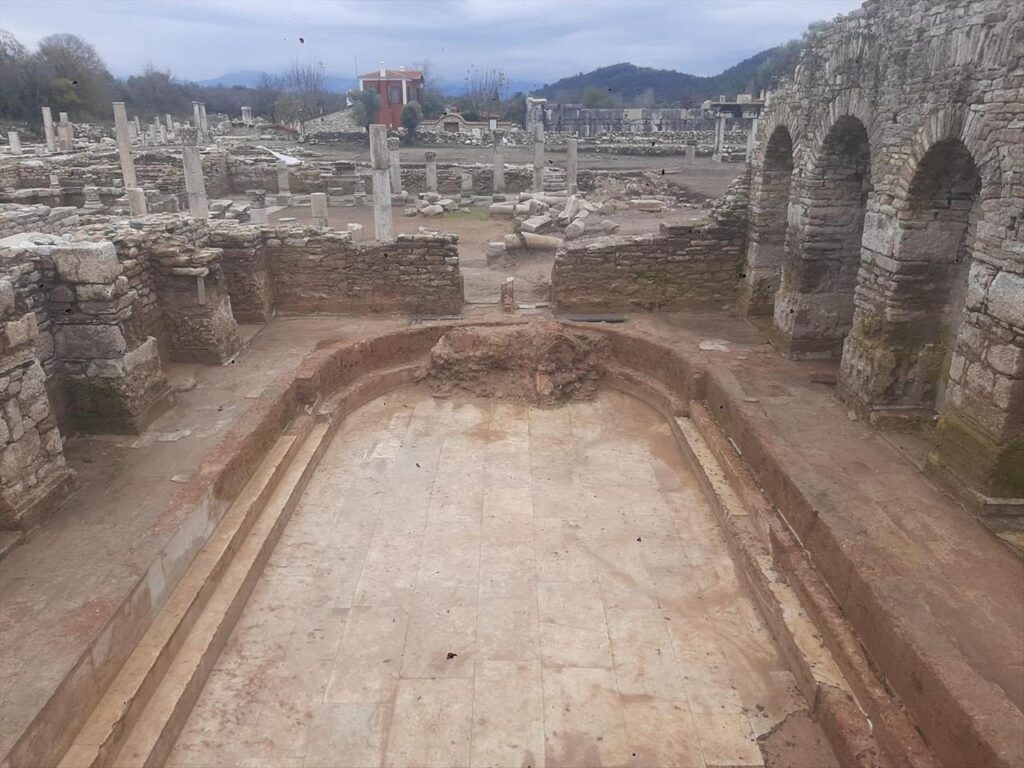
The excavation is being directed by Professor Bilal Söğüt, head of the Stratonikeia and Lagina archaeological missions. Recent work has focused on the Roman bath near the city’s western street, including its exercise court, changing room and cold-water section.
Known respectively as the palaestra, apodyterium and frigidarium, these areas formed an important part of Roman bathing culture. Such complexes were not used solely for washing; they were also places where residents exercised, socialized and spent time away from their homes.
In the frigidarium, archaeologists uncovered pools and niches along with architectural elements from the bath. Materials belonging to the roof were found where they had fallen when sections of the building collapsed in antiquity.
Among the fragments were impressions attributed to three children. The excavation team has dated the footprints to approximately 1,900 years ago, placing them within the Roman period of the city.
The circumstances in which the marks were created have not yet been described in detail. It is therefore unclear whether the footprints were made during the construction of the bath, during later repairs or under entirely different conditions.
What survives is a brief record of movement rather than a carefully produced object. Unlike a statue or inscription, the footprints were never intended to carry a message into the future.
A Different View of Roman Stratonikeia
Stratonikeia is best known for the scale and quality of its marble architecture. The city contains a theatre, gymnasium, council house, temples, baths, monumental gates, fountains and a colonnaded street.
Its history, however, extends far beyond the Roman period. Archaeological investigations have documented settlement in the area from the Late Bronze Age onward, while the city later developed under Hellenistic rule and became an important urban center in Roman Caria.
The name Stratonikeia is associated with Stratonice, wife of the Seleucid ruler Antiochus I. The settlement continued to change long after the ancient city’s monumental buildings had lost their original functions.
Byzantine churches and houses were constructed among the earlier remains. Structures from the Turkish principalities, Ottoman period and early Turkish Republic later added further layers, creating a settlement where streets and buildings from widely separated centuries still stand beside one another.
Excavations at Stratonikeia began in 1977 and continue under Söğüt’s direction. The site was added to UNESCO’s World Heritage Tentative List in 2015 because of its unusually well-preserved and multi-layered urban landscape.
Footprints Without Names
Children rarely appear clearly in the monumental record of Roman cities. Public inscriptions usually document officials, benefactors and prominent families, while statues tend to commemorate gods, emperors and members of the urban elite.
Footprints belong to another kind of archaeological evidence. They preserve neither status nor identity, but the physical presence of people whose names were never recorded.
The three children at Stratonikeia remain anonymous. Archaeologists cannot yet say why they were near the bath or under what circumstances the impressions were created.
Their footprints nevertheless add something that the city’s marble monuments cannot provide. For a moment, Stratonikeia is no longer seen only through its rulers, buildings and inscriptions, but through three children who once moved through the Roman city and unknowingly left part of their lives behind.
Cover Image: A child’s footprint preserved on Roman-period building material uncovered at Stratonikeia in southwestern Türkiye. Credit: IHA