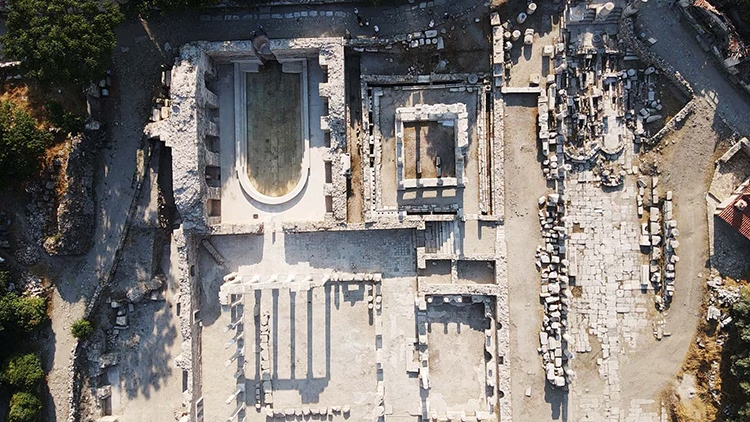
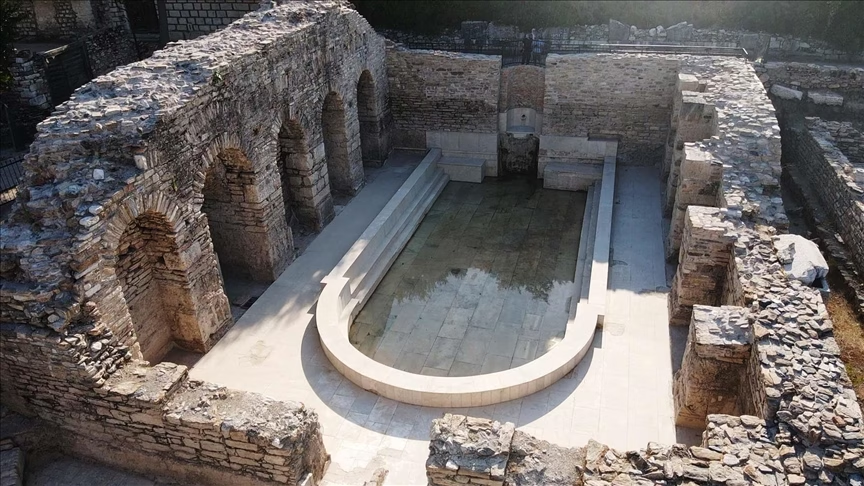
Nestled in Turkey’s Muğla province, the ancient city of Stratonikeia has long stood as a testament to layers of history—from its Hellenistic origins to the Roman, Byzantine, and Ottoman eras. Recently, a remarkable revival took place in the city’s well-preserved Roman bath: after almost 1,900 years, water was reintroduced into the pool, flowing once again through the original channels.
Bringing the Past to Life
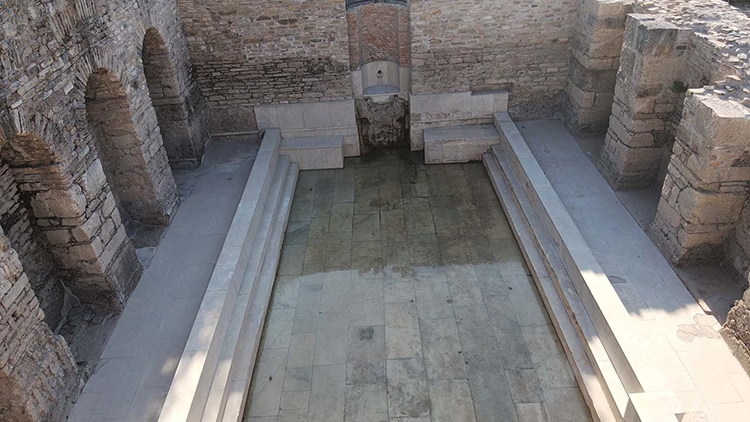
The excavation team, led by Professor Bilal Söğüt, completed extensive restoration work under the “Heritage for the Future” initiative. By carefully clearing and reopening the bath’s ancient water channels, they succeeded in restoring the bath’s core function—water circulation. Visitors now witness firsthand the engineering mastery of Roman architects and the sensory experience enjoyed by citizens almost two millennia ago.
Swimming or bathing in the pool remains prohibited to protect the delicate structure. Instead, the flowing water serves as a living demonstration, connecting today’s audience with ancient technology and daily life.
A City Through the Ages
Founded in the 3rd century BCE by Seleucid King Antiochus I in honor of his wife Stratonike, the city flourished through numerous empires and cultures. From Hellenistic foundations to Roman grandeur, and later Byzantine, Menteşe Beylik, Ottoman, and Republican influences, Stratonikeia offers an unparalleled historical mosaic.
The city is famed not only for its gladiator schools but also for monumental structures like its gymnasium, temples dedicated to Zeus and Hecate, and its assembly hall. Excavations have also uncovered a rare Roman-era library and colorful mosaics, enriching our understanding of its vibrant past.
Echoes of Gladiators and Inscriptions
Archaeologists have discovered inscriptions that record the names, victories, and deaths of gladiators who trained and fought in Stratonikeia. These writings illuminate the city’s social fabric and the role gladiatorial combat played in public entertainment and communal identity.
Living History in Motion
Today, Stratonikeia is much more than a static archaeological site. Thanks to meticulous conservation and functional restoration, it acts as a living museum where ancient history flows—literally. The reactivation of the Roman bath’s water system is a striking symbol of this philosophy, inviting visitors to engage with a tangible, dynamic past rather than mere stone ruins.