
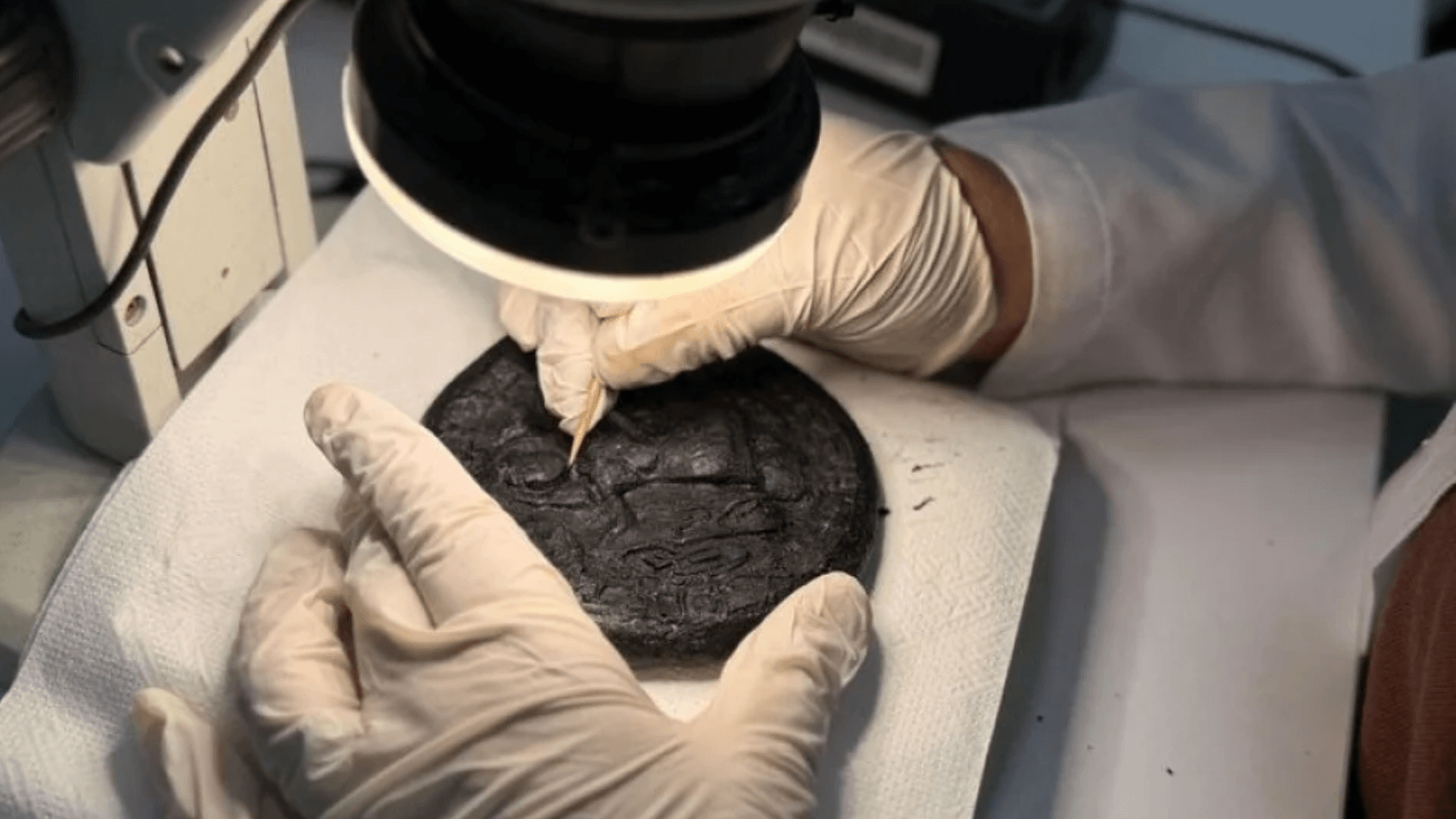
Five remarkably preserved Byzantine bread loaves discovered in southern Türkiye may have served a purpose beyond Christian worship. Their discovery inside ancient grain storage facilities suggests that people may have used the decorated loaves as protective talismans, hoping to safeguard their harvests and ensure agricultural abundance. The interpretation adds another dimension to one of the most unusual archaeological discoveries from early medieval Anatolia.
Archaeologists discovered the five carbonized loaves in 2023 during excavations at Topraktepe, ancient Eirenopolis, in the Ermenek district of Karaman. Dating to the seventh and eighth centuries AD, the loaves survived approximately 1,300 years with their religious decorations and distinctive shapes still recognizable.
Bread as a Symbol of Divine Protection
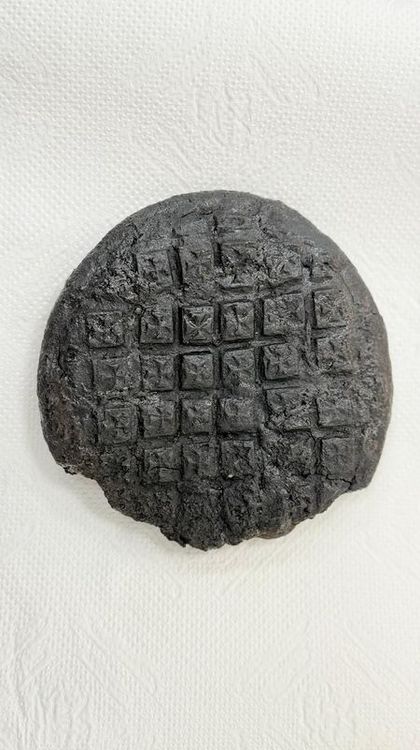
Among the five Byzantine bread loaves discovered at Eirenopolis, one bears an unusual depiction of Jesus alongside a Greek inscription expressing gratitude to Christ. Unlike conventional Byzantine representations of Christ Pantocrator, the image portrays Jesus as a sower. The other four loaves carry impressions resembling Maltese crosses.
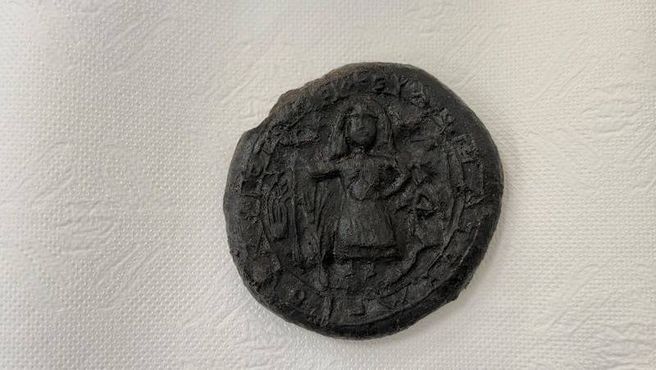
Although researchers initially associated the discoveries with Christian communion rituals, their archaeological context offers another explanation.
Mustafa Cengiz Özduygulu, director of the Ankara Regional Laboratory for Restoration and Conservation, suggested that people may have deliberately placed the bread inside grain silos to protect their stored crops. The discovery of wheat and rye bread within storage areas containing their respective grains strengthens this interpretation, although it does not conclusively establish their ritual function.
For agricultural communities whose survival depended on successful harvests, the image of Christ as a sower may have carried particular significance. The decorated bread could have embodied prayers for prosperity and protection against natural damage or the evil eye.
Preserving 1,300-Year-Old Bread
The specialists completed a two-year conservation and restoration program in February 2026, according to statements from the conservation team.
Exposure to intense heat carbonized the bread, allowing its fragile structures and surface decorations to survive. Archaeologists recovered the fragments together with their surrounding soil, while conservators maintained their existing moisture levels and tested different preservation materials.
Scientific analyses also established that the ancient bakers prepared unleavened bread using molds. Following extensive testing, specialists stabilized the surviving fragments and prepared them for public exhibition.
Whether the loaves served as communion bread, protective talismans, or objects combining both traditions remains open to investigation. Their discovery nevertheless illustrates how closely religious belief, agriculture, and everyday material culture could intersect in Byzantine Anatolia.
Cover Image: A conservator carefully cleans the surface of a 1,300-year-old carbonized Byzantine bread loaf bearing a depiction of Christ the Sower. Credit: Türkiye’s Ministry of Culture and Tourism