
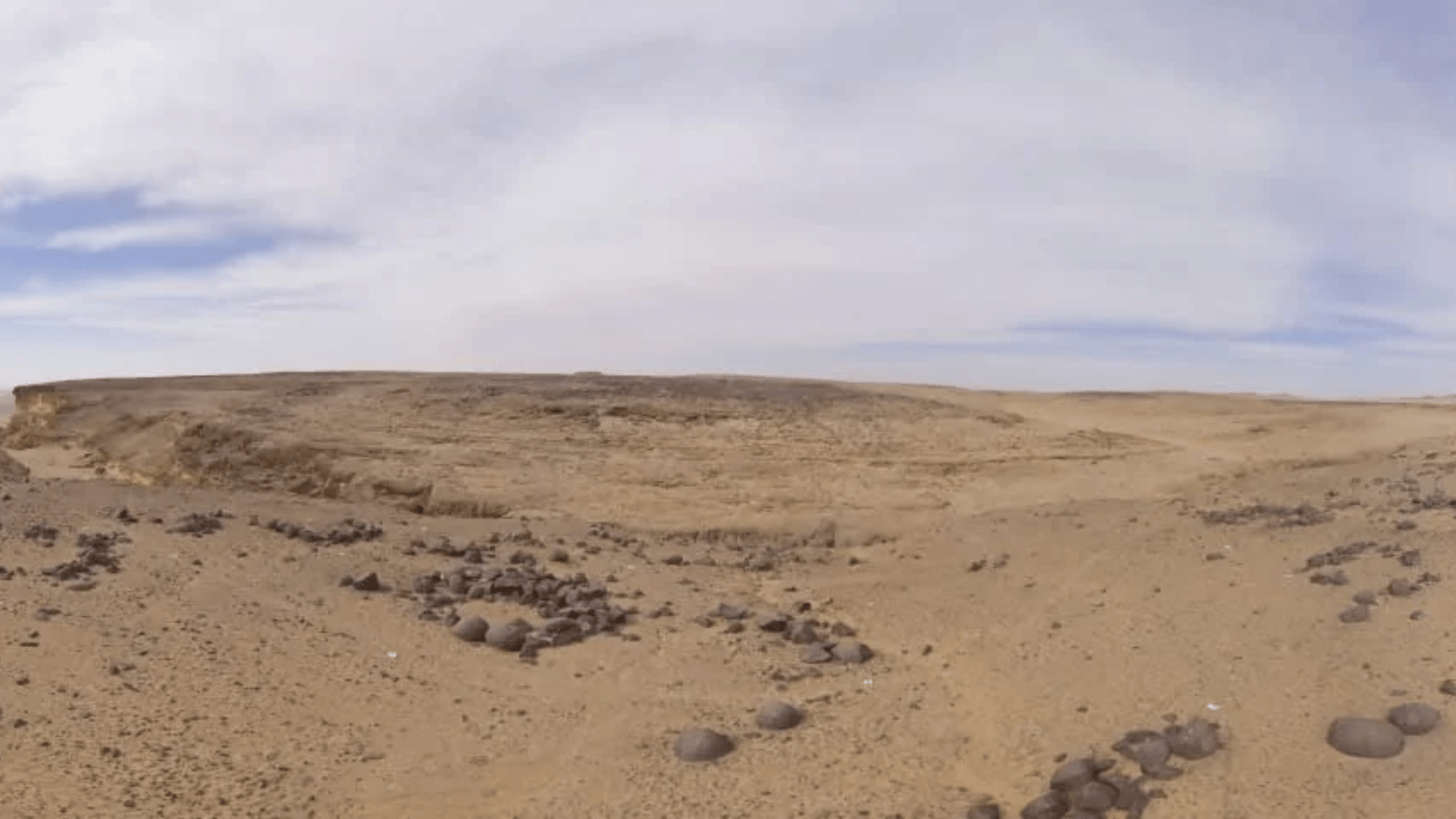
Archaeologists have discovered one of the largest prehistoric settlements known in Egypt’s Western Desert, dating back approximately 8,500 years to a time when the Sahara supported lakes, grasslands, and thriving human communities. Located in the Farafra Oasis, the settlement contains around 200 archaeological features, including stone structures, hearths, and extensive concentrations of stone tools. The discovery provides compelling evidence of organized residential life in the Egyptian Sahara thousands of years before the emergence of pharaonic civilization.
Egypt’s Ministry of Tourism and Antiquities announced the discovery following investigations by a joint Egyptian-Italian archaeological mission working under the Farafra Oasis Prehistoric Project (FOPP) in cooperation with the Supreme Council of Antiquities. The settlement, which researchers call Site 1, lies along the eastern edge of the Farafra Depression.
Evidence of an Organized Prehistoric Settlement
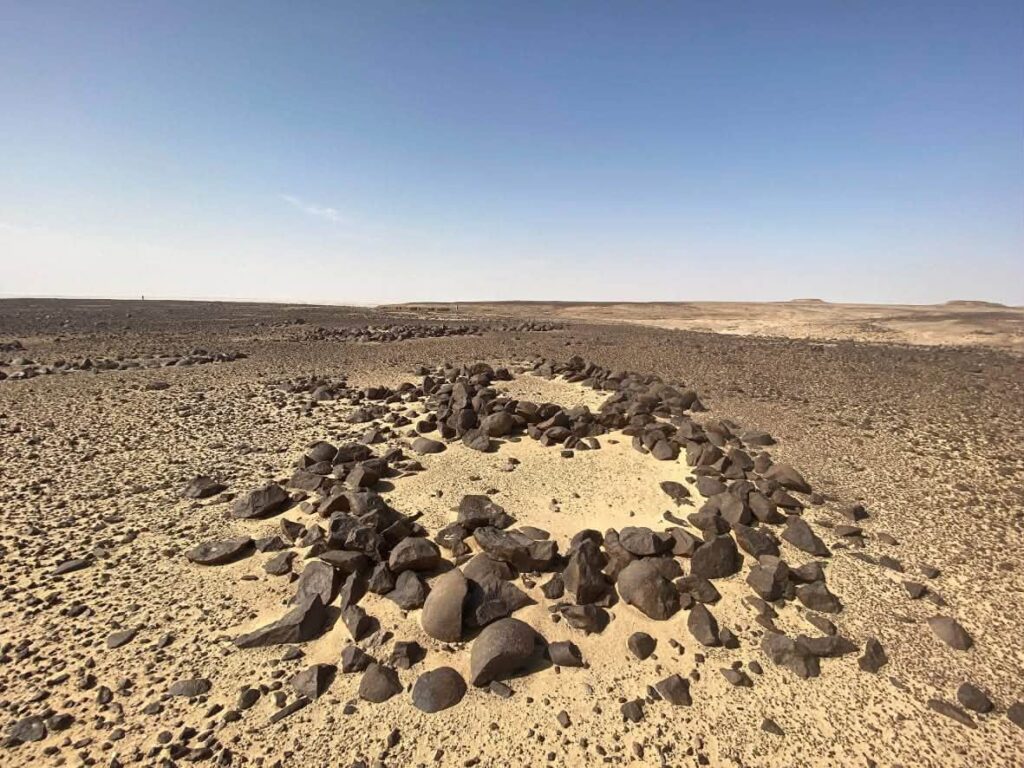
The number and distribution of archaeological remains suggest that the site served a more substantial purpose than a temporary desert camp. Researchers identified stone structures, hearths, and concentrations of tools associated with everyday domestic activities.
The spatial arrangement of these features suggests that prehistoric inhabitants organized their living areas around different activities. Preliminary findings also indicate that communities occupied the area repeatedly or for extended periods, although archaeologists have yet to determine whether people lived there throughout the year.
The discovery raises important questions about the emergence of more stable residential communities in the Egyptian Sahara. Establishing longer-term settlements depended on reliable natural resources, particularly water. Evidence of similar developments has also emerged elsewhere, including the discovery of an 11,000-year-old Neolithic village in Saudi Arabia.
For archaeologists, the scale of the Farafra settlement presents an opportunity to investigate how prehistoric communities organized their living spaces during this significant period of human history.
Life in the Sahara Before the Desert
The landscape surrounding Farafra looked remarkably different 8,500 years ago. During the African Humid Period, increased rainfall transformed large parts of North Africa, supporting freshwater lakes, grasslands, and diverse animal populations across areas that are now among the driest on Earth.
Geological and geoarchaeological investigations at Farafra have documented ancient lake deposits and sedimentary basins, confirming that the region experienced substantially wetter conditions during the Holocene.
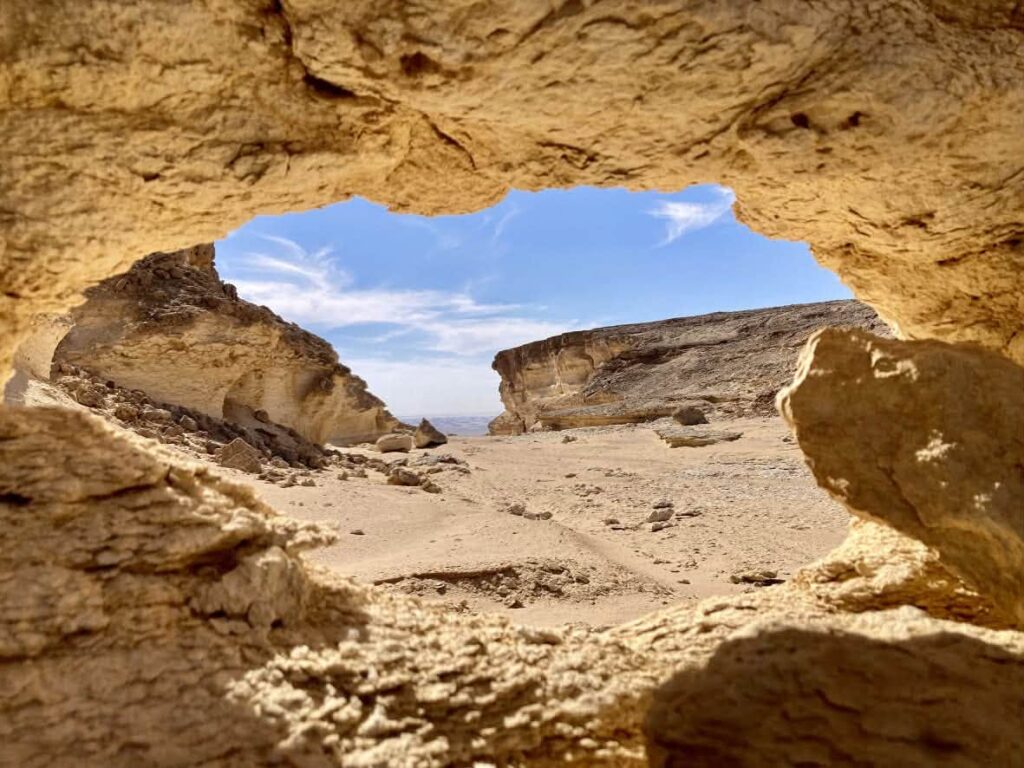
These environmental resources likely influenced where prehistoric communities established their settlements. The inhabitants also had access to local stone, which they used to construct shelters and manufacture tools for everyday activities.
As rainfall declined over subsequent millennia, communities across the Sahara faced shrinking water sources and increasingly challenging living conditions. The archaeological record at Farafra offers an opportunity to examine how these environmental changes influenced human mobility and settlement strategies.
Building on Four Decades of Research
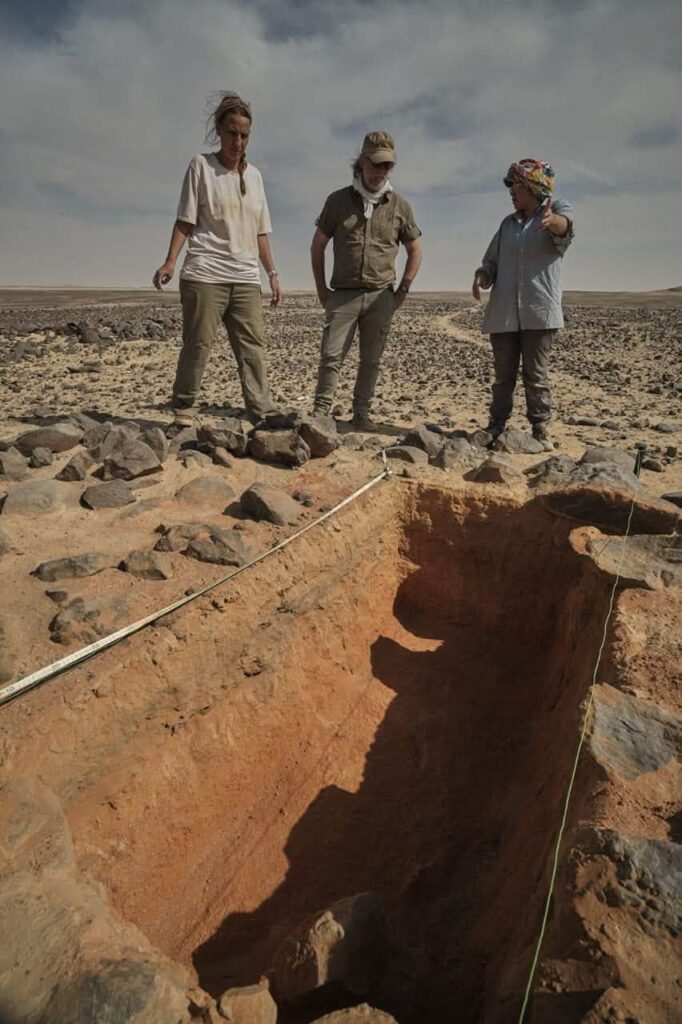
The Egyptian-Italian mission began exploring the previously uninvestigated upper plateau in 2023. During the 2025 field season, researchers expanded their work through archaeological surveys, excavations, geographical mapping, photographic documentation, and geological studies.
Mission director Giulio Lucarini explained that comparisons with archaeological material from Wadi el-Obeiyid in Farafra, as well as prehistoric sites in the Dakhla and Kharga oases, helped the team establish the settlement’s preliminary age of approximately 8,500 years.
The discovery builds upon a long-running research initiative that archaeologist Barbara E. Barich launched in 1986. The Farafra Oasis Prehistoric Project investigates prehistoric population dynamics in Egypt’s Western Desert and the role of its oases in connecting communities across the eastern Sahara and the Nile Valley.
Earlier investigations at Farafra, particularly at Hidden Valley and Sheikh el-Obeiyid, documented the development of semi-sedentary village life and increasingly complex social organization during the Neolithic period.
The newly discovered settlement extends this archaeological record into a previously unexplored part of the oasis. Further excavations could help determine the duration of its occupation, the activities of its inhabitants, and how their communities responded to the gradual transformation of the Sahara.
Farafra preserves an important chapter of Egyptian prehistory beyond the Nile Valley, when communities established settlements around water sources that have long since disappeared beneath the desert landscape.
Cover Image: Remains of prehistoric stone structures at the approximately 8,500-year-old settlement in Egypt’s Farafra Oasis. Credit: Egypt’s Ministry of Tourism and Antiquities