
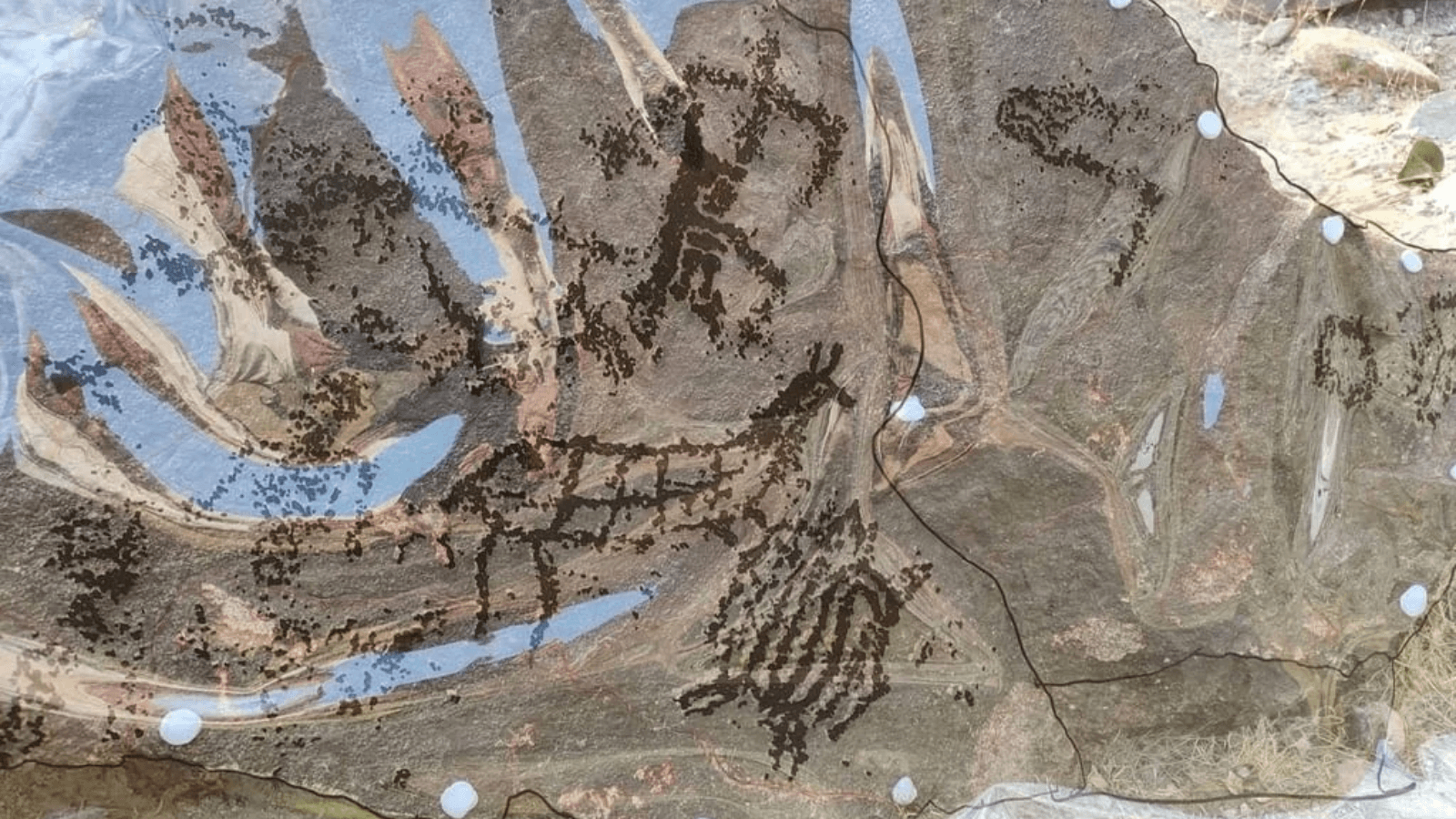
Archaeologists have discovered five prehistoric sea turtle carvings in Wadi Al-Helo, a mountainous valley in Sharjah, United Arab Emirates. Estimated to date back around 7,000 years, four of the engravings appear to depict leatherback sea turtles, the largest living sea turtle species. The discovery offers an unusual perspective on the relationship between Neolithic communities in southeastern Arabia and the marine environments beyond their mountainous surroundings.
According to the Sharjah Archaeology Authority, researchers documented the engravings during fieldwork in 2026, after local residents drew attention to the site in 2022. Archaeologists provisionally date the carvings to around 5000 BCE.
Sea turtle representations are exceptionally uncommon in the prehistoric rock art of the Oman Peninsula. Researchers know of comparable examples from only two other sites, making the Wadi Al-Helo discovery an important addition to the region’s archaeological record.
Prehistoric Artists Captured Distinctive Anatomical Features
Four of the five engravings display characteristics associated with the leatherback sea turtle (Dermochelys coriacea). Unlike other sea turtle species, leatherbacks lack a hard shell covered with large protective plates. Instead, their leathery backs feature distinctive longitudinal ridges.
The prehistoric artists reproduced these anatomical features in sufficient detail to help researchers identify the species. Their work suggests familiarity with a marine animal that would not ordinarily have formed part of the valley’s natural environment.
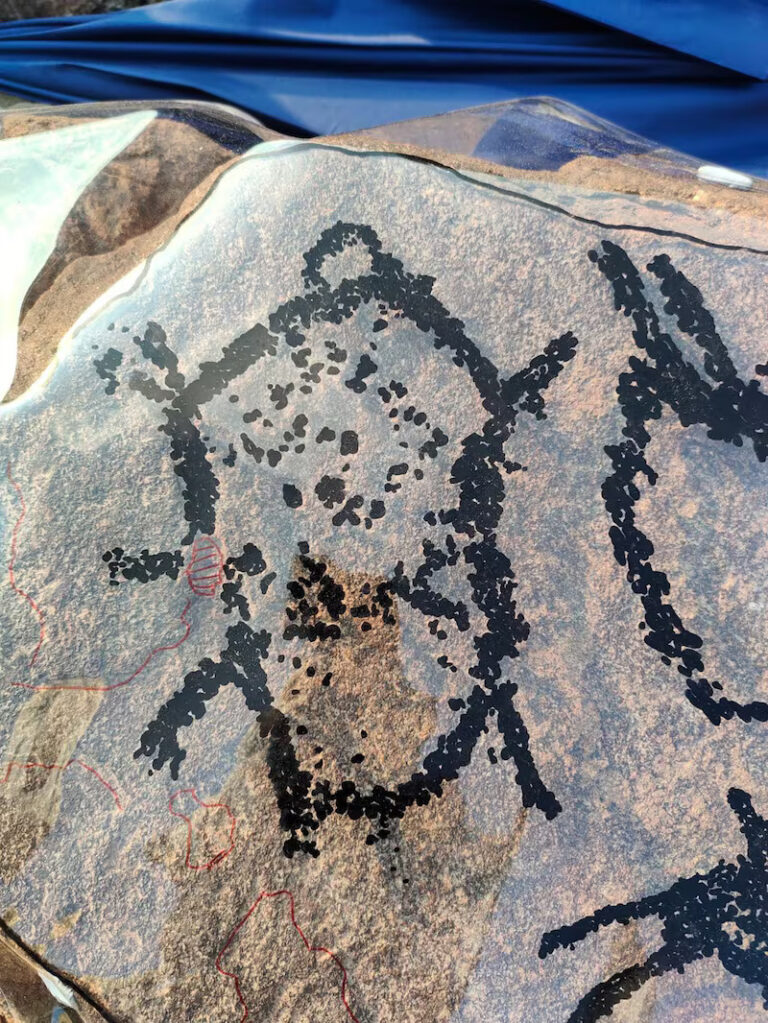
Whether the artists encountered leatherback turtles along the Arabian coastline or acquired their knowledge through contact with coastal communities remains uncertain. Archaeological discoveries elsewhere in the Emirates, however, demonstrate that prehistoric populations maintained connections between inland and coastal environments.
Tracing Arabia’s Ancient Connections With the Sea
On Marawah Island, off the coast of Abu Dhabi, archaeologists have identified one of the earliest known Neolithic settlements in the Arabian Gulf. Its inhabitants occupied the island from the early sixth millennium to the middle of the fifth millennium BCE, overlapping with the proposed age of the Wadi Al-Helo engravings.
A study published in Arabian Archaeology and Epigraphy examined nearly 8,000 fish bones from a Neolithic stone-built house on the island. The researchers documented an established fishing economy, demonstrating the importance of marine resources to early Arabian communities.
Evidence of contact between inland populations and the coast reaches even further into the past. A 2025 study published in PLOS ONE discusses two marine snail shells dating to around 8500 BCE from the Jebel Faya rock shelter in Sharjah. The researchers interpret these finds as evidence of contact with the coastline, approximately 50 kilometers away.
Although neither discovery establishes a direct connection with the artists of Wadi Al-Helo, both provide archaeological context for understanding how knowledge of marine environments could have reached prehistoric communities living in the interior.
A Marine Animal Among Arabia’s Mountain Wildlife
Wadi Al-Helo preserves numerous examples of prehistoric rock art, including representations of wild asses and ibexes. The newly documented sea turtles introduce a marine element into an artistic landscape that also records the animals of southeastern Arabia’s mountains and arid environments.
Other discoveries across the Arabian Peninsula, including recently documented rock engravings depicting animals and human-like figures in Oman, illustrate the diversity of the region’s prehistoric artistic traditions.
Thousands of years after the proposed creation of the turtle engravings, Wadi Al-Helo became an important center of copper production. Its metallurgical heritage earned the valley a place on the UNESCO World Heritage Tentative List in 2023.
The Uncertain Meaning of the Sea Turtle Engravings
Researchers have considered whether prehistoric communities attributed symbolic significance to sea turtles or valued them for medicinal purposes. Neither interpretation currently has conclusive archaeological support, and the original purpose of the engravings remains unknown.
Unlike animal bones or shell artifacts, which can document the exploitation and movement of marine resources, rock engravings record deliberate artistic choices. The Wadi Al-Helo figures therefore offer a different perspective on the animals that occupied a place in the cultural lives of prehistoric Arabian communities.
Establishing a more precise chronology for the engravings could help archaeologists determine their place within Arabia’s Neolithic artistic traditions. For now, the five sea turtles provide an unusual record of the marine world preserved in the mountains of southeastern Arabia.
Cover Image: Prehistoric sea turtle and animal engravings documented on a rock surface in Wadi Al-Helo, Sharjah, United Arab Emirates. Photo: Sharjah Archaeology Authority / WAM.