
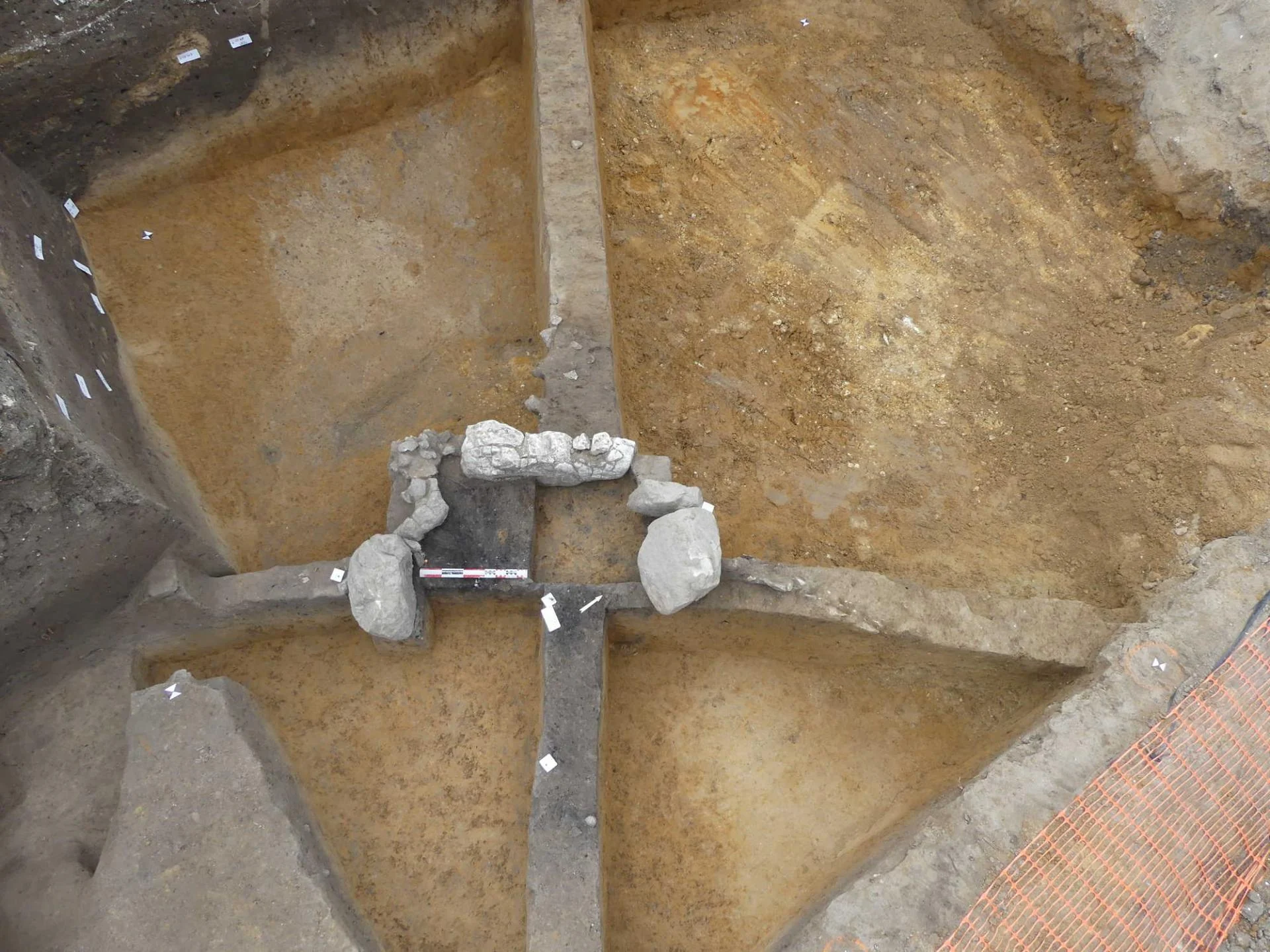
Archaeologists excavating in Gagny, east of Paris, have discovered a prehistoric megalithic stone cist and a stone arrangement stretching 10 meters in length. The discoveries form part of an archaeological site preserving nearly 5,000 years of human activity, including the remains of an early medieval settlement and the lost gardens of a 17th-century French château.
The French National Institute for Preventive Archaeological Research (INRAP) conducted the excavations between September 9, 2025, and May 29, 2026, ahead of a construction project. Covering 2,180 square meters in the heart of the modern town, the investigation initially focused on the development of Château Ferrari’s gardens but revealed a much older chapter of Gagny’s history.
A Prehistoric Megalithic Discovery
In the southern part of the excavation area, at the foot of a slope, archaeologists uncovered a stone arrangement measuring 10 meters long and more than three meters wide, alongside two features composed of hardened sand. Researchers provisionally attribute the stone arrangement to the Neolithic, although it could date as late as the Bronze Age.
Among the most significant discoveries was a megalithic stone cist that probably dates to the Late Neolithic or Early Bronze Age. Such structures, typically constructed from large stone slabs, frequently served as burial chambers in prehistoric Europe. However, archaeologists have yet to determine whether the Gagny cist had a funerary function.
The discovery adds to a growing body of archaeological evidence documenting prehistoric communities in the Paris region, including a 6,500-year-old cemetery with megalithic monuments and an unusual seated burial recently identified at Champigny-sur-Marne.
At Gagny, the prehistoric remains may indicate repeated human activity or a more permanent settlement. To establish their chronology and function, researchers collected samples for radiocarbon dating and optically stimulated luminescence (OSL), a technique that measures when mineral grains were last exposed to light. Micromorphological and sedimentological analyses will also help explain how the archaeological deposits formed.
An Early Medieval Settlement Shaped by Water
The excavation revealed evidence of human activity extending from the Early Middle Ages to the 16th century. Postholes, pits, ditches and the remains of a sunken-featured building point to a rural settlement where inhabitants constructed relatively lightweight buildings using timber and earth.
Several pits in the western part of the excavation area contained traces of intense heating, suggesting that craft activities may have taken place nearby, beyond the boundaries of the investigated site.
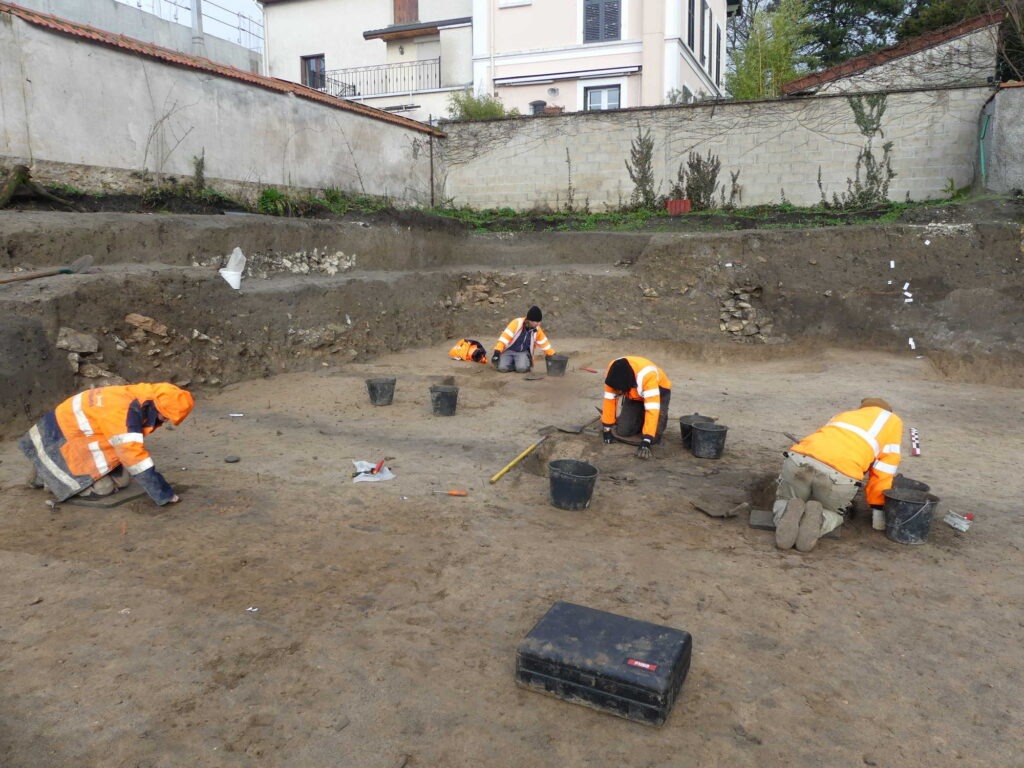
The neighboring Saint-Fiacre stream appears to have played an important role in shaping the settlement. Some ditches may have defined property boundaries, while other features suggest efforts to retain and manage water, potentially including wells.
Most of these remains date to the Early Middle Ages, although scattered evidence indicates more limited activity from the 11th century onward. A 16th-century foundation suggests the establishment of a more permanent property boundary, preceding the landscape’s transformation into an aristocratic estate.
Rediscovering the Lost Gardens of Château Ferrari
During the 17th and 18th centuries, the site formed part of the gardens belonging to Dominique de Ferrari’s château. The archaeological remains offer an opportunity to reconstruct the layout of the estate and understand how its owners adapted the landscape over successive generations.
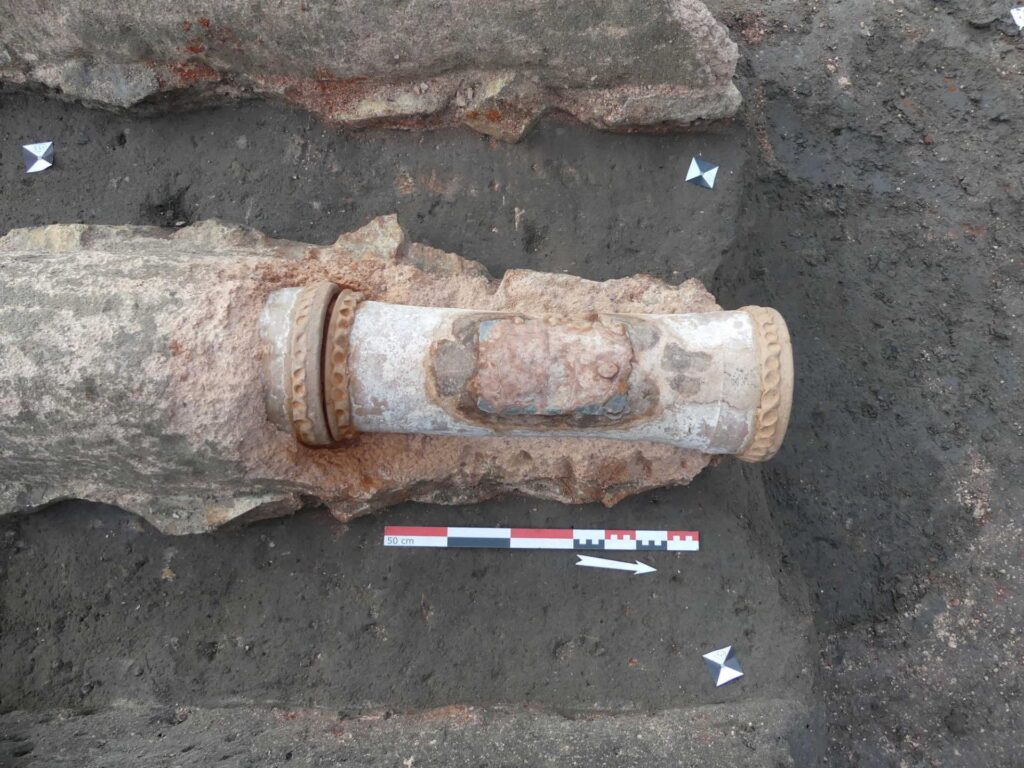
Excavations revealed the remains of at least two basins, planting pits, built water channels, two large terracotta water supply pipes and a garden path made from gypsum plaster and small stones. Archaeologists also identified pillars and a plaster-built structure that may have served as a well or a latrine.
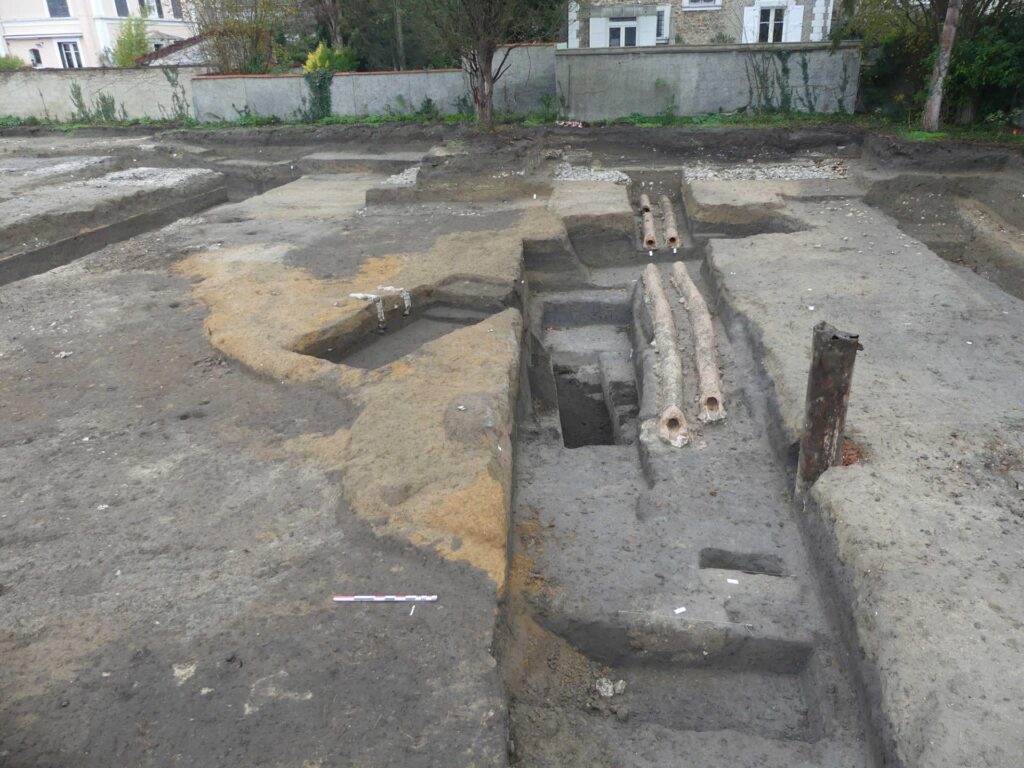
Two successive layers of garden soil, dating respectively to the 17th and 18th centuries, demonstrate that the estate’s gardens underwent modifications over time. Paths and deposits of building materials also preserve evidence of activity associated with the château’s construction.
By comparing these discoveries with historical records and surviving plans, researchers hope to reconstruct the gardens at different stages of their existence and establish how the estate’s water management system operated.
Five Millennia Beneath a Modern French Town
The most recent archaeological layers preserve foundations of buildings dating to the 19th and early 20th centuries, alongside animal skeletons, planting pits and sewer infrastructure. These remains document the gradual transformation of the former château grounds through agricultural and domestic uses into an increasingly urbanized landscape.
Within little more than 2,000 square meters, the Gagny excavation brings together evidence of prehistoric stone architecture, medieval rural life, aristocratic garden design and modern urban development. Each phase records a different way in which people used and reshaped the same landscape.
For archaeologists, the earliest structures remain among the most compelling discoveries. Ongoing scientific analyses may establish whether the megalithic cist and extensive stone arrangement belonged to a settlement, a funerary complex or another form of prehistoric activity, thousands of years before Château Ferrari occupied the site.
Cover Image: The megalithic stone cist discovered in Gagny, provisionally dated to the Late Neolithic or Early Bronze Age. Its original function remains uncertain. Photo: INRAP.