
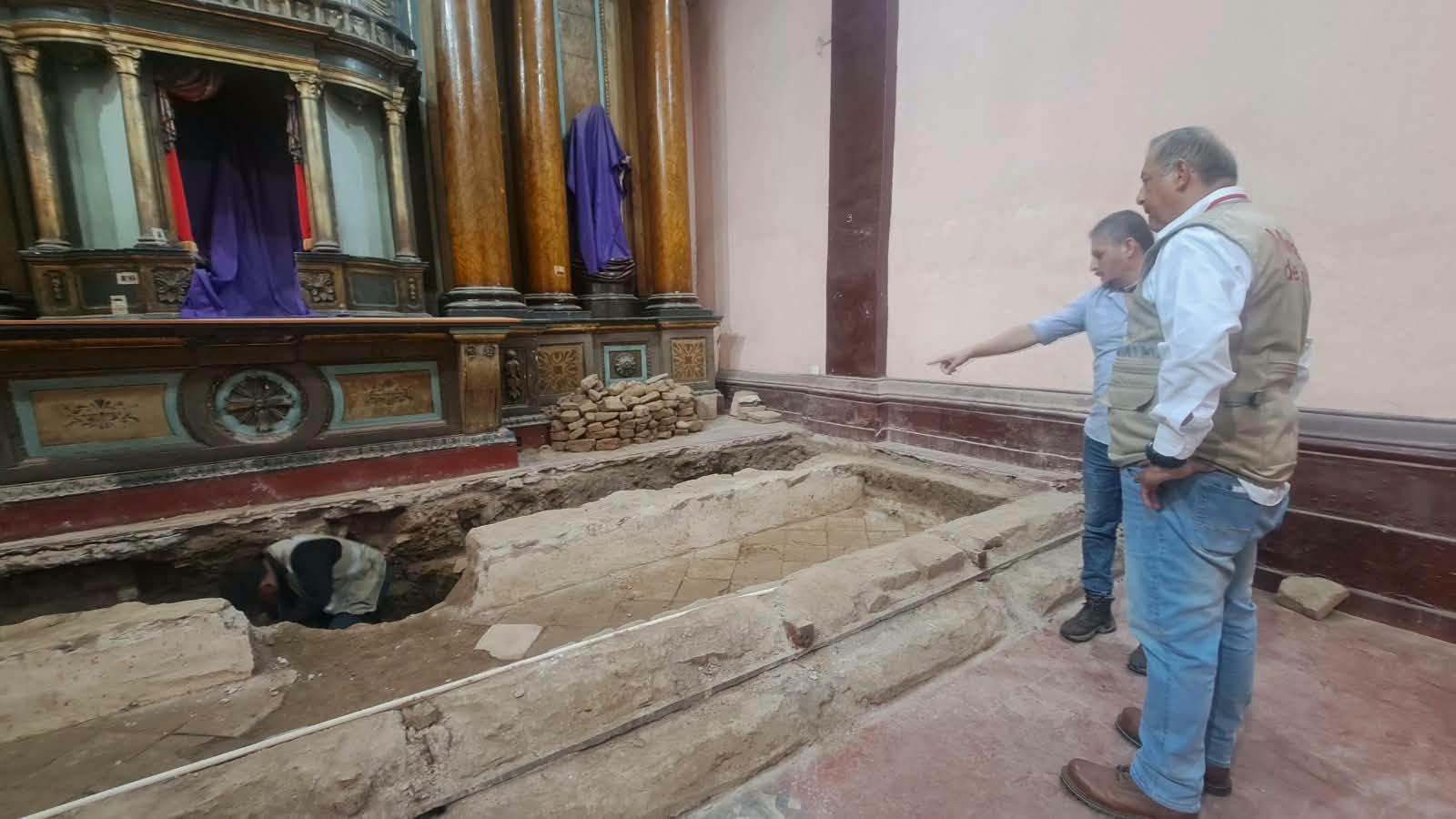
Archaeologists excavating a historic basilica in Callao, a Pacific port city near Peru’s capital, Lima, have discovered a natural grotto and an 18th-century child’s grave beneath the main altar. The grotto may once have sheltered a revered image of the Virgin Mary brought from Spain more than 400 years ago, while the child’s surviving footwear and decorated burial shroud offer insights into the social customs of colonial Peru.
The discoveries emerged during the first archaeological excavations at the Basilica of Nuestra Señora del Carmen de La Legua, one of South America’s important centers of Carmelite devotion. The Municipality of Callao leads the research through its PROGRESAMOS CALLAO program under the supervision of Peru’s Ministry of Culture.
According to the ministry’s announcement, excavations inside and around the basilica have identified architectural remains from the 17th and 18th centuries, revealing previously undocumented stages in the sanctuary’s development.
A Grotto That May Hold the Origins of a Four-Century-Old Religious Tradition
Beneath the main altar, archaeologists encountered a small natural grotto that may predate the earliest religious buildings at the site. Researchers believe it could have sheltered the image of Our Lady of Mount Carmel when the sanctuary was still a modest chapel.
The sacred image arrived in Callao from Spain in 1605, and historical documents suggest that a small chapel existed at the site around 1606. Over the following centuries, the sanctuary developed into an important pilgrimage destination, reflecting the spread of Catholic devotional traditions across Spanish colonial South America.
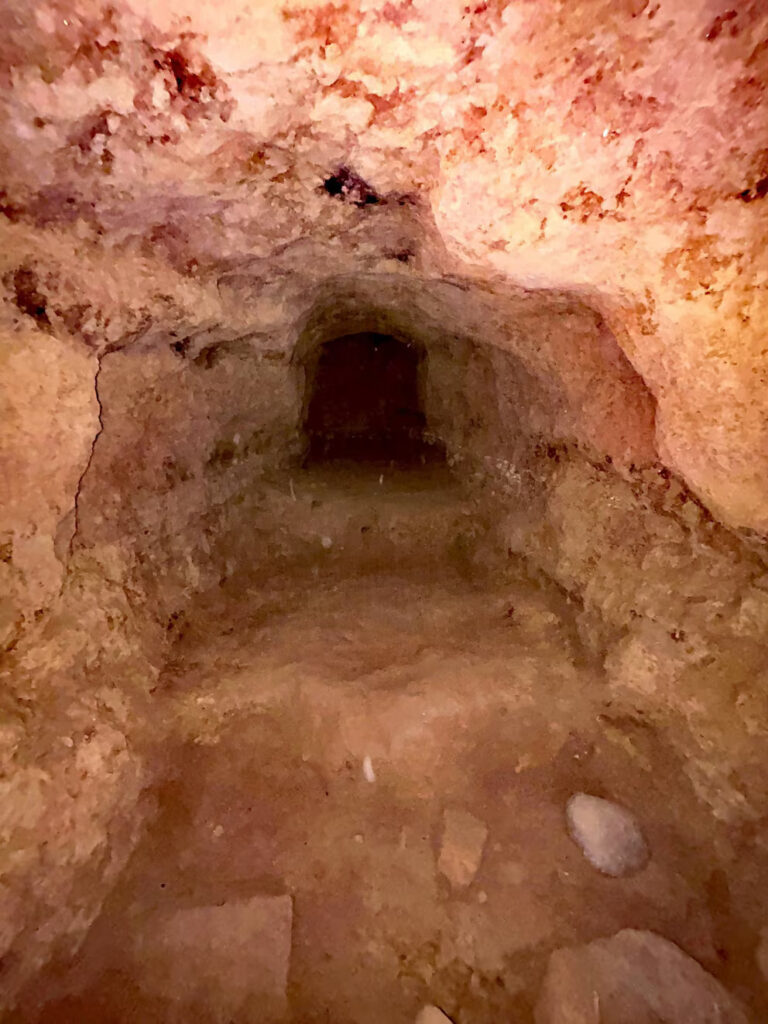
The grotto offers archaeologists a physical setting in which to investigate the sanctuary’s earliest history. Although researchers have yet to establish a definitive connection between the cavity and the original placement of the sacred image, its position beneath the altar makes it particularly significant.
A Three-Year-Old Child Buried With Shoes
Above the grotto, archaeologists encountered the remains of a child whose burial provides a different perspective on the sanctuary’s history. Dental examination indicates that the child was approximately three years old at the time of death.
Archaeologist Hugo Alfredo Benavides Seminario, who manages the municipal archaeological program, explained to El Peruano that the child still wore shoes and had an imported burial shroud with a decorative green border. These unusual details suggest that the family may have enjoyed considerable social and economic standing.
A colonial silver coin minted in 1782, which archaeologists recovered from the same layer, helps establish the burial’s chronological context. The people who buried the child covered the body with lime, a funerary practice that damaged both the bones and clothing, complicating efforts to learn more about the child’s identity.
The burial provides insight into religious devotion, social status and funerary customs in colonial Peru. Other discoveries, such as the 1,600-year-old infant burial associated with the Nasca culture, illustrate how archaeological research can illuminate the lives and deaths of children across different periods of Peru’s history.
A Sanctuary With a Forgotten Hospital History
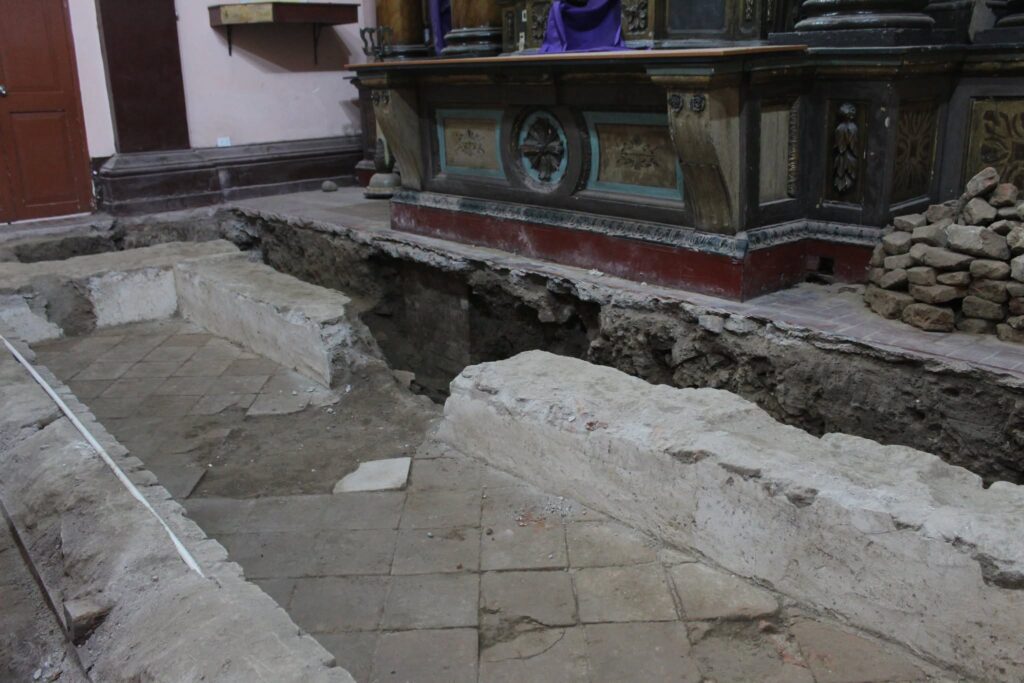
Beyond the grotto and the burial, excavations have revealed brick floors, painted adobe walls, ceramic fragments, decorative tiles, a cross and glass fragments from medical containers. Outside the basilica, archaeologists identified walls and channels associated with water management.
Historical documents offer further context. Judicial records from 1783 to 1793, held in Peru’s General Archive of the Nation, describe a religious complex administered by the Hospitaller Order of Saint John of God. The establishment maintained gardens, livestock enclosures and irrigation channels while also providing medical care to priests.
These findings suggest that the sanctuary played a broader role in colonial society than its present-day religious function might indicate. Archaeological evidence and archival research are gradually reconstructing a complex where worship, healthcare and everyday activities intersected.
The Municipality of Callao plans to incorporate part of the archaeological site into a museum display. An exhibition presenting the initial discoveries at the Callao Museum of History and Art was scheduled to open on November 26.
Together, the grotto, the child’s grave and the architectural remains preserve different chapters of the sanctuary’s history, from the establishment of Catholic devotion in the early 17th century to the lives of the communities that gathered around it.
Cover Image: Archaeological excavations beneath the main altar of the Basilica of Nuestra Señora del Carmen de La Legua in Callao, Peru, have revealed a natural grotto and a colonial-era child’s grave. Credit: Peru’s Ministry of Culture